Italy demands compensation from Germany over migrant arrivals
Italy demands compensation from Germany over what Rome calls a disproportionate share of Mediterranean rescue costs, a demand that has sharpened an already

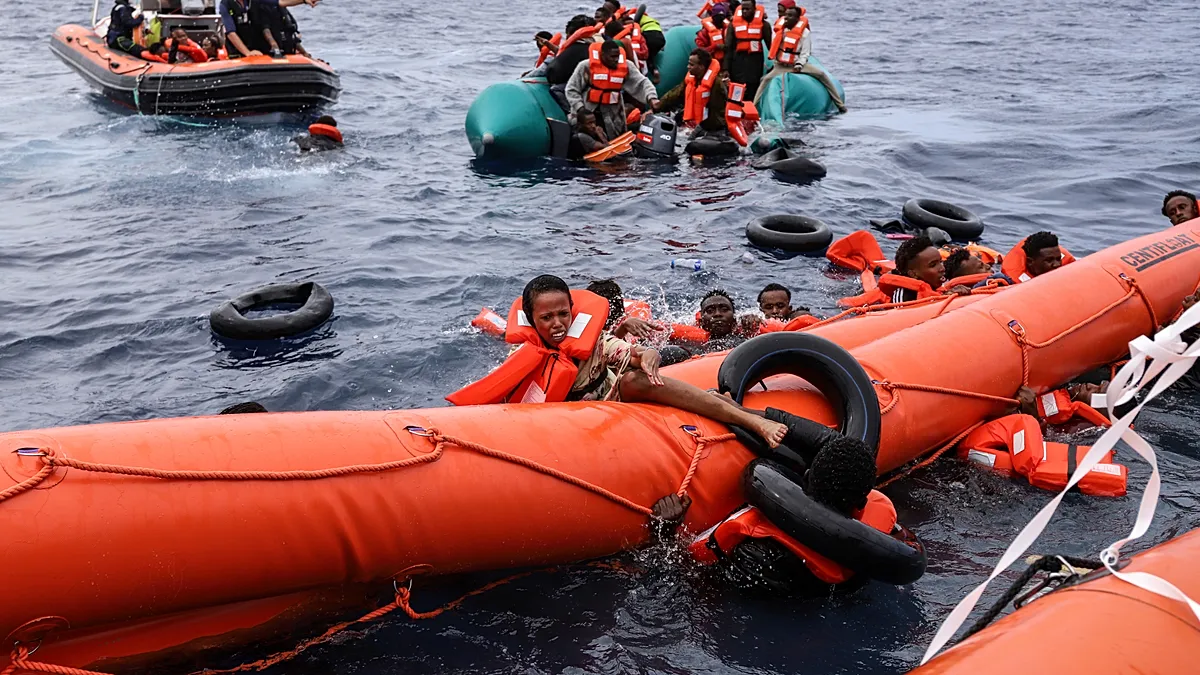
Table of Contents
Italy Demands Compensation from Germany Over Mediterranean Migrant Arrivals
Poinews.com – Italy demands compensation from Germany over what Rome calls a disproportionate share of Mediterranean rescue costs, a demand that has sharpened an already tense bilateral relationship. The Interior Ministry in Rome published updated statistics on privately operated rescue vessels in August 2026 and formally requested that Berlin contribute financially to offset expenses Italy says it has borne alone. At the centre of the dispute is a deceptively simple question: when migrants cross the central Mediterranean and land on Italian shores, who should bear the cost?
The Numbers Behind Rome’s Claim
Since Giorgia Meloni took office in October 2022, roughly 42,300 people have reached Italian ports aboard privately run rescue ships. Of that total, Rome attributes approximately 22,500 arrivals to German-based aid organisations. An additional estimated 4,500 passengers arrived on vessels operated by other European charities but registered under the German flag. Taken together, Italy calculates that nearly two-thirds of all private-rescue arrivals during this period can be linked to German-registered operations.
Interior Minister Matteo Piantedosi has stated plainly that Italy expects Berlin to make a financial contribution toward those costs. He has also drawn a firm procedural line: Rome will not entertain discussions about accepting back migrants who first entered the EU through Italy and subsequently filed asylum claims in Germany until the question of cost-sharing is resolved. In effect, Italy demands compensation from Germany before any repatriation talks can proceed.
A Three-Person Transfer Stalls
Germany has proposed sending three individuals back to Italy — people who initially crossed into the EU via Italian territory before later lodging asylum applications in Berlin. Under the bloc’s longstanding first-entry principle, such transfers are standard procedure. Rome, however, has signalled it may refuse entry altogether and instead return the three directly to Germany, effectively rejecting the mechanism until its financial grievance is addressed.
The revised EU asylum framework, which entered into force in June 2026, maintains the first-entry rule while introducing limited exceptions and a solidarity mechanism. According to the Interior Ministry, Piantedosi and his German counterpart Alexander Dobrindt (CSU) continue negotiating toward a bilateral arrangement that would formalise cost-sharing without waiting for the broader EU solidarity system to mature.
Political Pressure and a Route That Keeps Claiming Lives
Deputy Prime Minister Matteo Salvini has separately directed his criticism at the rescue operators themselves. He urged the governments in Berlin and Madrid to “rein in” their aid organisations, arguing that they should no longer be allowed to bring what he called “illegal immigrants” to the Italian coast. His remarks underscore how the compensation dispute has become entangled with broader domestic politics around immigration policy.
Aid groups stress that the crossing remains lethal. The Italian charity Emergency recently reported seven fatalities on a packed vessel off the Libyan coast; 57 survivors were pulled from the water, two in critical condition. German organisations Sea-Watch and Resqship separately reported locating three bodies in the Mediterranean. The International Organization for Migration (IOM) counts at least 872 deaths or disappearances on the central Mediterranean route so far this year. That tally covers only documented incidents; the actual figure is almost certainly higher, given that many events go unrecorded.
Frequently Asked Questions
Why is Italy seeking financial compensation from Germany specifically? Rome’s Interior Ministry links roughly two-thirds of private-rescue arrivals since October 2022 to German-registered vessels or German-based charities. Italy argues that the costs of harbour reception, medical screening, and onward processing fall disproportionately on Italian public services and should be shared by the country whose organisations facilitated the crossings.
What is the first-entry principle, and how does it apply here? Under EU asylum rules, the member state through which a person first enters the bloc is generally responsible for processing that person’s asylum claim. Germany has invoked this rule to propose returning three asylum seekers to Italy. Italy has signalled it will not accept the transfers until its compensation demand is met.
What happens if no bilateral deal is reached? The revised EU asylum framework introduced in June 2026 includes a solidarity mechanism intended to distribute responsibility more evenly. Until that mechanism is fully operational, disputes like the current one between Rome and Berlin are expected to continue, with each side pressing its position through diplomatic channels.