Spain train crash: What happened in the 17 minutes before the collision?
At least 69 people were killed and more than 100 injured when a Renfe AVE train struck the rear of a stationary Iryo service near Urda, in the central

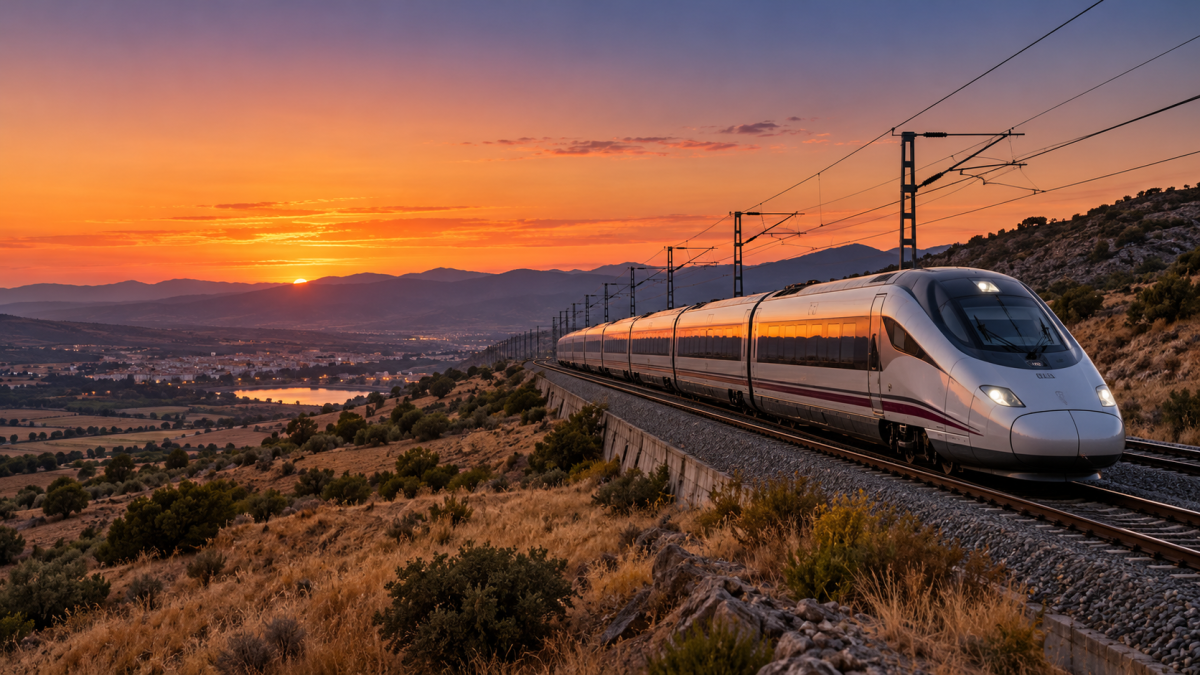
Table of Contents
Spain Train Collision Leaves Dozens Dead as Investigators Examine Control Decisions
Poinews.com – At least 69 people were killed and more than 100 injured when a Renfe AVE train struck the rear of a stationary Iryo service near Urda, in the central province of Toledo, on Wednesday 28 October. The crash occurred at 8:53 am at kilometre 118 of the Madrid–Seville high-speed railway.
The disaster involved Iryo train 6076, carrying 147 passengers including a baby, and Renfe’s AVE 2080, which had 397 people on board. It is Spain’s second major high-speed rail tragedy in less than a year, following the January 2026 crash at Adamuz in Córdoba, where 46 people died.
The cause has not been formally established. However, the focus of the technical and judicial inquiries is turning to a signalling failure and to instructions issued from Adif’s rail control centre at Madrid Atocha. Investigators are seeking to determine why the safeguards intended to keep trains separated did not avert the collision.
A failure on the high-speed line
Problems began at approximately 8:30 am, when an IT fault interrupted communications on a roughly 63-kilometre stretch of the Madrid–Seville route. The disruption disabled the LZB safety system, which exchanges information between trains and track infrastructure to help supervise traffic and maintain safe spacing.
Six trains were affected. Some had to halt while others adjusted their speed. The Iryo and AVE services involved in the crash were among those caught up in the interruption.
LZB has operated on this line since it opened in the 1990s. It is expected to be replaced by the newer European Rail Traffic Management System, known as ERTMS. Yet the technology outage alone does not account for why two trains ultimately occupied the same stretch of railway. Rail operations have fallback procedures for situations in which the primary signalling system is unavailable.
Those alternative arrangements are now central to the inquiry. They are intended to provide a controlled means of moving trains when normal automated protections cannot be used. The key issue is whether the relevant procedures were followed and whether controllers and drivers had the information needed to apply them safely.
The 17-minute sequence before impact
At 8:36 am, the Adif control centre authorised AVE 2080 to continue using the lineside signalling block system, or BSL. The instruction permitted “normal running” despite the failure of the main signalling equipment. The AVE driver asked for the instruction to be confirmed, and the controller confirmed it.
That wording has particular importance. A train operating under “driving on sight” conditions must travel at a speed that allows the driver to stop before reaching an obstruction. In this case, that method would have imposed a limit of 40 kilometres per hour.
Normal running, by contrast, allowed the AVE to proceed much faster. Transport Minister Óscar Puente called the decision from the control centre “inexplicable” and said the train should not have been allowed to resume in those circumstances.
“Inexplicable”
At 8:41 am, the Iryo driver told the Atocha control centre that her train was still stopped on the approach to Urda because transmission had been lost. The controller also gave permission for the Iryo train to continue.
Seven minutes later, at 8:48 am, the Iryo driver made contact again. She said she could not restore the LZB system and that the train remained stationary. The AVE was not instructed to stop during the period reflected in the communications released so far.
Five minutes after that warning, at 8:53 am, AVE 2080 hit the back of the Iryo train. The AVE had travelled about 25 kilometres from the point at which it received clearance to proceed.
Questions for the investigation
The timing places the emphasis squarely on the decisions made after the signalling system failed. Investigators will examine why the AVE was not ordered to reduce speed or halt after the control centre received notice that the Iryo service had not moved.
Recordings of operational communications, traffic records and data from both trains’ black boxes will be important in establishing the sequence. They may clarify what information was available at each stage, how it was interpreted and whether the control centre’s actions complied with the rules governing degraded signalling conditions.
The government has initially raised the possibility of human error at Adif’s control centre, although responsibility has not been assigned. Any conclusion will depend on the evidence gathered by the judicial and technical investigations.
For passengers, the case illustrates why railway safety systems are designed with overlapping layers of protection. A failure in one system should trigger procedures that still keep trains apart. The investigation must establish whether those layers were adequately activated on the Madrid–Seville line, whether communications were handled correctly and why a stopped train remained in the path of a service permitted to continue at normal speed.
The tragedy has also renewed scrutiny of resilience on a key high-speed corridor linking the Spanish capital with southern Spain. As investigators reconstruct the 17 minutes between the initial disruption and the collision, their findings will shape the understanding of how a signalling failure developed into one of the country’s deadliest recent rail accidents.
Related Reading
Frequently Asked Questions
What is Spain train crash?
Spain train crash is the main topic of this guide. The article explains the context, practical details, and next steps readers should understand.
Why does Spain train crash matter?
Spain train crash matters because readers are looking for a useful answer, not just a short summary. Good content should match search intent and help them decide what to do next.