Germany and Ukraine test armed ground robot for frontline deployment
Ukraine’s armed forces are expected to receive the first armed versions of a German-built ground robot before the end of 2026, following a joint development

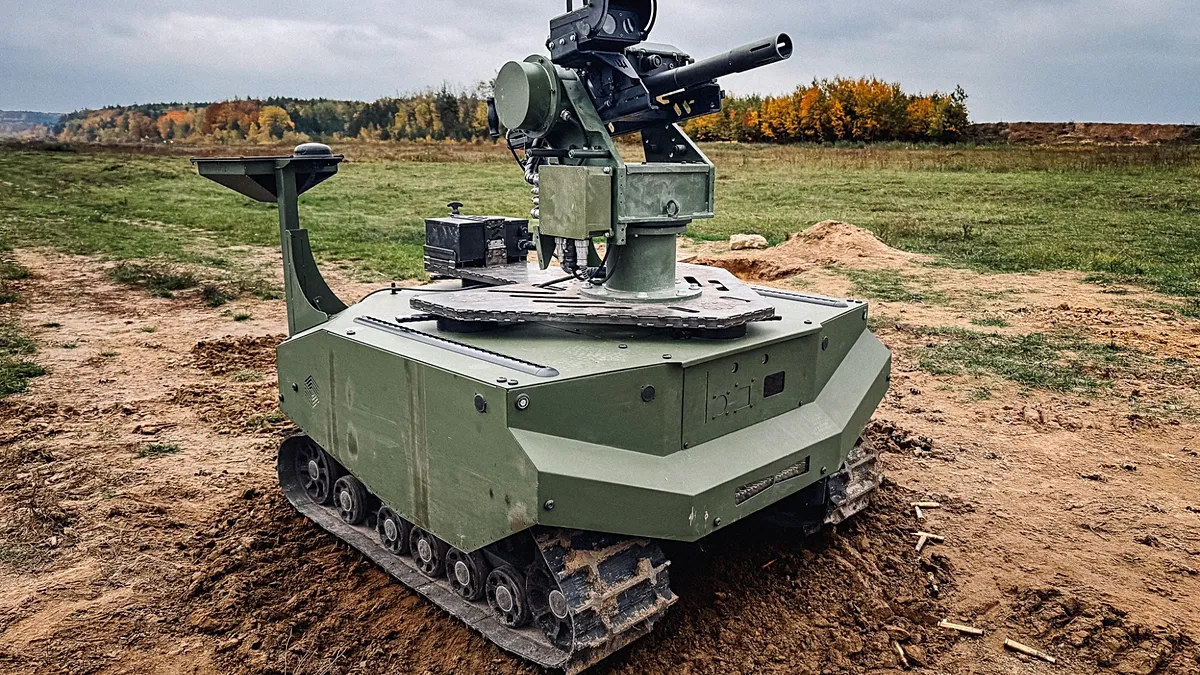
Table of Contents
Germany and Ukraine Move Toward Armed Robotic Vehicles for the Front Line
Poinews.com – Ukraine’s armed forces are expected to receive the first armed versions of a German-built ground robot before the end of 2026, following a joint development effort between ARX Robotics of Germany and Ukrainian defence technology company ROBONEERS.
The project combines the GEREON unmanned ground vehicle with ROBONEERS’ SABER remotely operated weapons module. The companies intend to integrate the systems and deliver initial vehicles in a configuration suited to the operational requirements of Ukraine’s military.
The cooperation agreement was signed in early October during German Chancellor Friedrich Merz’s state visit to Kyiv. Ukrainian President Volodymyr Zelenskyy was present for the signing, placing the programme within the wider defence partnership between Germany and Ukraine.
A mobile platform with remote fire support
GEREON, developed by ARX Robotics, is an unmanned vehicle designed to provide mobility, electrical power and a base for different mission equipment. Cameras and sensors allow it to undertake reconnaissance work, while its modular design enables it to carry a range of payloads.
For the armed configuration, the vehicle carries the SABER module on its upper structure. Built by ROBONEERS, SABER is intended to give troops remotely controlled fire support for both offensive and defensive missions. Operating the vehicle and its equipment from a greater distance could reduce the need for soldiers to expose themselves directly at forward positions.
The design is built around adaptability rather than a single fixed battlefield role. SABER can be equipped with different weapons depending on the assignment, with options ranging from rifles to grenade launchers. This allows the same robotic platform to be altered as frontline needs change.
“Modern land forces need combat platforms that can be quickly adapted to different missions, integrate new technologies and work seamlessly with existing systems.”
Maximilian Wied, ARX Robotics’ chief financial officer and co-founder, said the ability to incorporate new technology and connect with existing military systems is central to the future of land warfare.
Unarmed systems already in Ukrainian service
Versions of GEREON without weapons are already operating in Ukraine. Their tasks include moving supplies, evacuating wounded personnel, supporting electronic warfare operations, gathering reconnaissance information and helping counter drone threats.
These duties illustrate why unmanned ground vehicles are attracting growing attention in a conflict where logistics routes, medical evacuation teams and observation posts can face persistent danger. A robotic vehicle can be sent into exposed areas for some tasks that would otherwise require personnel or conventional vehicles.
The new effort is intended to build on that experience by creating a single platform that can be rapidly reconfigured for multiple frontline functions. In practice, this means the vehicle may be used for support, sensing or combat-related work depending on the equipment fitted to it and the mission at hand.
ARX says GEREON represents the largest fleet of Western-manufactured unmanned ground vehicles currently operating in Ukraine. The company’s partnership with ROBONEERS is part of a broader industrial relationship between German and Ukrainian defence firms as demand grows for systems that can be produced, modified and deployed quickly.
Production partnership extends beyond GEREON
ARX Robotics and ROBONEERS are also collaborating on the Rys Pro, another unmanned ground vehicle. The companies have created a joint venture to increase production in both Germany and Ukraine, with a target of producing more than 1,000 units during its first year.
ROBONEERS says its robotic systems have taken part in more than 15,000 frontline missions since 2014. That operational history is significant for a programme focused on equipment intended for demanding battlefield conditions, where systems must function alongside troops and adapt to changing requirements.
The German-Ukrainian cooperation reflects an emphasis on scalable technology: platforms that can be fitted with new sensors, communications equipment or mission modules without requiring an entirely new vehicle for every task. Such flexibility may be particularly valuable when operational needs evolve faster than traditional procurement cycles.
Artificial intelligence remains a major German defence priority
The development comes as artificial intelligence continues to feature prominently in Germany’s defence technology agenda. German Defence Minister Boris Pistorius is visiting Helsing at the company’s Munich headquarters to review its latest products and AI capabilities, as well as meet management, employees and the works council.
Founded in 2021, Helsing has rapidly become one of Europe’s most visible defence technology companies. It develops AI and software for military applications, including systems intended to bring artificial intelligence capabilities to existing platforms such as tanks, submarines and fighter jets.
Robotic ground vehicles and AI-enabled military software address different parts of the defence technology landscape, but both are linked by the effort to make established forces more responsive to rapidly changing conditions. For Ukraine, the planned delivery of armed GEREON vehicles by the end of 2026 would mark another step in the expanding use of remotely operated systems at the front line.
Related Reading
Frequently Asked Questions
What is Germany and Ukraine test armed ground?
Germany and Ukraine test armed ground is the main topic of this guide. The article explains the context, practical details, and next steps readers should understand.
Why does Germany and Ukraine test armed ground matter?
Germany and Ukraine test armed ground matters because readers are looking for a useful answer, not just a short summary. Good content should match search intent and help them decide what to do next.