Drought exposes remains of ancient Roman bridge in the Tiber river in Rome
Visitors to the Italian capital this summer have been treated to a rare and dramatic spectacle: the submerged piers of an ancient crossing rising above the

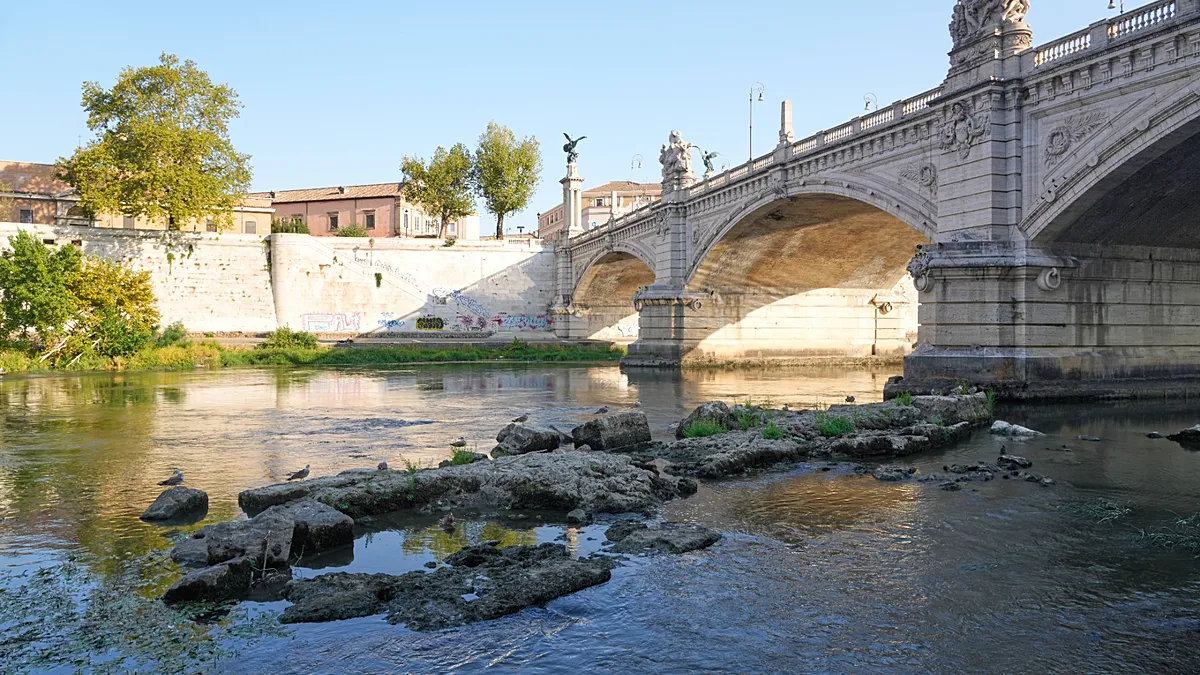
Table of Contents
Drought Reveals Two-Thousand-Year-Old Roman Bridge Remains in Rome’s Tiber
Poinews.com – Visitors to the Italian capital this summer have been treated to a rare and dramatic spectacle: the submerged piers of an ancient crossing rising above the surface of the Tiber. The exposed stonework sits close to Castel Sant’Angelo, just downstream from the modern Vittorio Emanuele II bridge, and marks the location where, for centuries, Romans crossed the river toward what is now the Vatican district.
The Bridge of Nero
The structure, known as the Pons Neronianus, was constructed during the reign of Emperor Nero, between AD 54 and 68. It connected the Campus Martius on the eastern bank with the Ager Vaticanus to the west, carrying the ancient Via Trionfale across the river in the direction of Veii, according to Italian news agency Ansa.
“The bridge linked the Campus Martius with the Ager Vaticanus, allowing the ancient Via Trionfale to cross the river Tiber in the direction of Veii.”
The western bank, where the Holy See now occupies its seat, once held the private estates of Emperor Nero — including the villa belonging to his mother Agrippina — alongside Caligula’s circus and the Via Cornelia, which ran past the walls of Castel Sant’Angelo.
“there were the properties of Emperor Nero (including the villa of his mother Agrippina), Caligula’s circus and the Via Cornelia, which passed in front of Castel Sant’Angelo.”
A Crossing That Endured — and Ended
The Neronian bridge remained in service for several centuries before being destroyed, most likely during the Gothic War of the sixth century. Long after its collapse, the surviving piers continued to serve a practical purpose: they were used to moor floating mills harnessed to the Tiber’s current. Those water-powered installations were finally dismantled at the close of the nineteenth century.
Low Water, High Visibility
The current drought gripping Western Europe has driven Italian rivers, the Tiber among them, to unusually low levels. This is not the first summer in which the receding waters have laid bare the bridge’s foundations, but the sight remains striking for the thousands of tourists now passing through Rome. Each year’s brief reappearance offers a tangible link to a crossing that once shaped the movement of people and goods across one of antiquity’s most consequential rivers.
Related Reading
Frequently Asked Questions
What is Drought exposes remains of ancient Roman?
Drought exposes remains of ancient Roman is the main topic of this guide. The article explains the context, practical details, and next steps readers should understand.
Why does Drought exposes remains of ancient Roman matter?
Drought exposes remains of ancient Roman matters because readers are looking for a useful answer, not just a short summary. Good content should match search intent and help them decide what to do next.