Bodies of two Belgian climbers found in Swiss Alps 34 years after disappearance
The bodies of two Belgian climbers who vanished in the Swiss Alps in 1992 have been recovered from the melting Trift Glacier, ending a 34-year mystery that

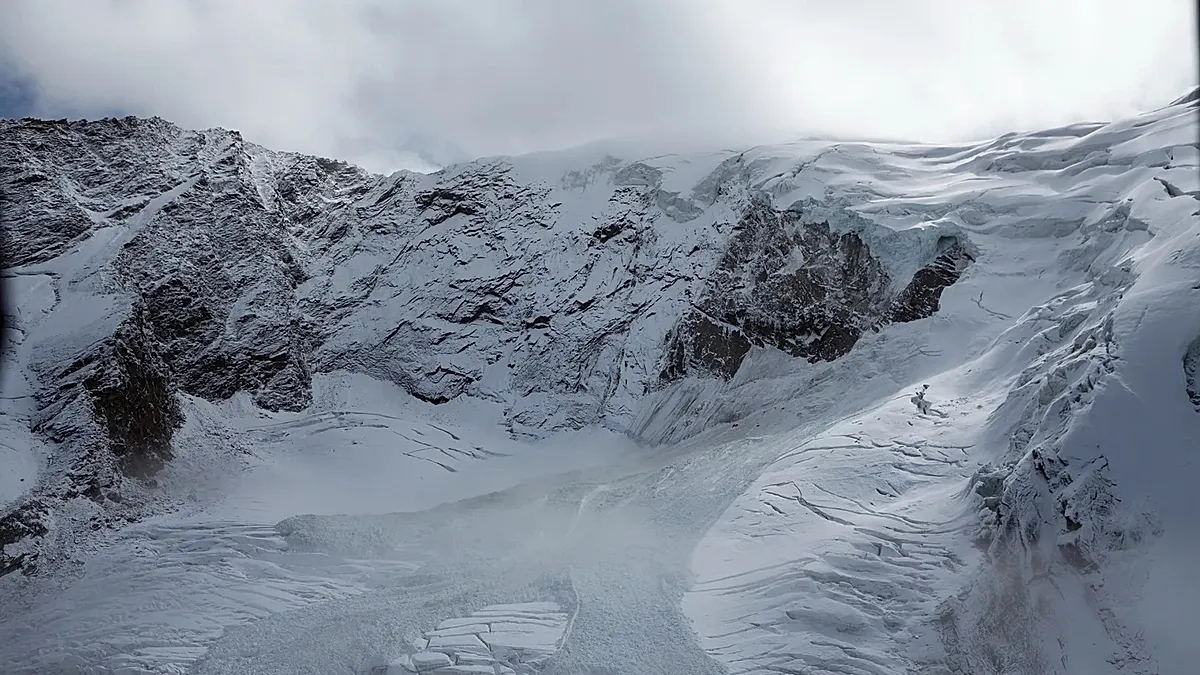
Table of Contents
Bodies of Two Belgian Climbers Found After 34 Years
Poinews.com – The bodies of two Belgian climbers who vanished in the Swiss Alps in 1992 have been recovered from the melting Trift Glacier, ending a 34-year mystery that had haunted families, rescue services, and the broader alpine-mountaineering community. Police in the canton of Valais confirmed the identification on Wednesday after a DNA comparison formally linked the remains to two mountaineers who disappeared near the Weissmies peak. The discovery marks one of the longest-running missing-person cases in Swiss mountain history to be resolved.
Discovery and Identification
A hiker walking the glacier in southern Switzerland, close to the Italian border, spotted the remains on 26 July. The find was reported to Wallis police, who coordinated the recovery and arranged for the bodies to be transported to the Institute of Forensic Medicine at Wallis Hospital in Sion. Laboratory staff there carried out a direct comparison of DNA profiles against records supplied by Belgian authorities. The result was unambiguous: the two men were the climbers who had set out from the Weissmies hut on 4 September 1992 with the intention of reaching the summit of the Weissmies, a peak standing at 4,017 metres.
According to police records, the pair made it as far as the Almagell hut before being overtaken by appalling weather. They never reached their intended destination and were never seen again. In the months that followed their disappearance, several search operations were mounted across the surrounding terrain. Those efforts turned up a rucksack belonging to one of the climbers but yielded no trace of the men themselves. The case was eventually closed, though Wallis police maintain detailed records of every person reported missing in the region dating back to 1925, mostly in mountainous areas and along rivers.
“A direct comparison of DNA profiles has formally established that these are two mountaineers who went missing in the Weissmies region in 1992.” — Valais police statement
Climate Change and Retreating Ice
The recovery of the bodies of two Belgian climbers underscores a growing and sobering pattern across the Alps. As climate change accelerates glacier melt, retreating ice is increasingly exposing the remains of climbers who disappeared years or even decades ago. The Trift Glacier, where the remains were found, has been shrinking at an increasing rate, revealing objects and bodies that had been sealed beneath the ice since the early 1990s. Mountain rescue organisations now factor glacier retreat into their long-term search planning, recognising that a body lost to ice may resurface in a very different location from where it was lost.
The phenomenon is not isolated to this single case. Last year, the remains of a Swiss mountaineer who vanished in 1994 were discovered on a glacier on the Ober Gabelhorn mountain, also in the canton of Wallis. Each such discovery reopens practical questions about search protocols, glacier-safety briefings for huts and guides, and the long administrative tail of unresolved mountain accidents. For families still waiting, the pattern offers a mixture of closure and grief: answers arrive, but only after decades.
Frequently Asked Questions
Where were the bodies found? On the Trift Glacier in the canton of Valais, southern Switzerland, near the Italian border. A hiker spotted the remains on 26 July.
When did the climbers disappear? On 4 September 1992, while attempting to summit the Weissmies (4,017 m) from the Weissmies hut. They reached the Almagell hut before being caught by severe weather.
How were the remains identified? Through a direct DNA comparison carried out at the Institute of Forensic Medicine at Wallis Hospital in Sion, matching profiles held by Belgian authorities.
What role did climate change play in the discovery? Accelerated glacier melt over roughly 34 years exposed the remains, which had been buried beneath the Trift Glacier ice since 1992.
Are there other recent examples of climbers found after long absences? Yes. In 2025, the remains of a Swiss mountaineer who vanished in 1994 were recovered from a glacier on the Ober Gabelhorn mountain, also in Wallis.