How Taiwan’s AI stock boom has ordinary people borrowing to invest
A quiet revolution is unfolding in Taiwan's financial landscape, one that has little to do with mortgages or auto loans. Across the island, everyday workers

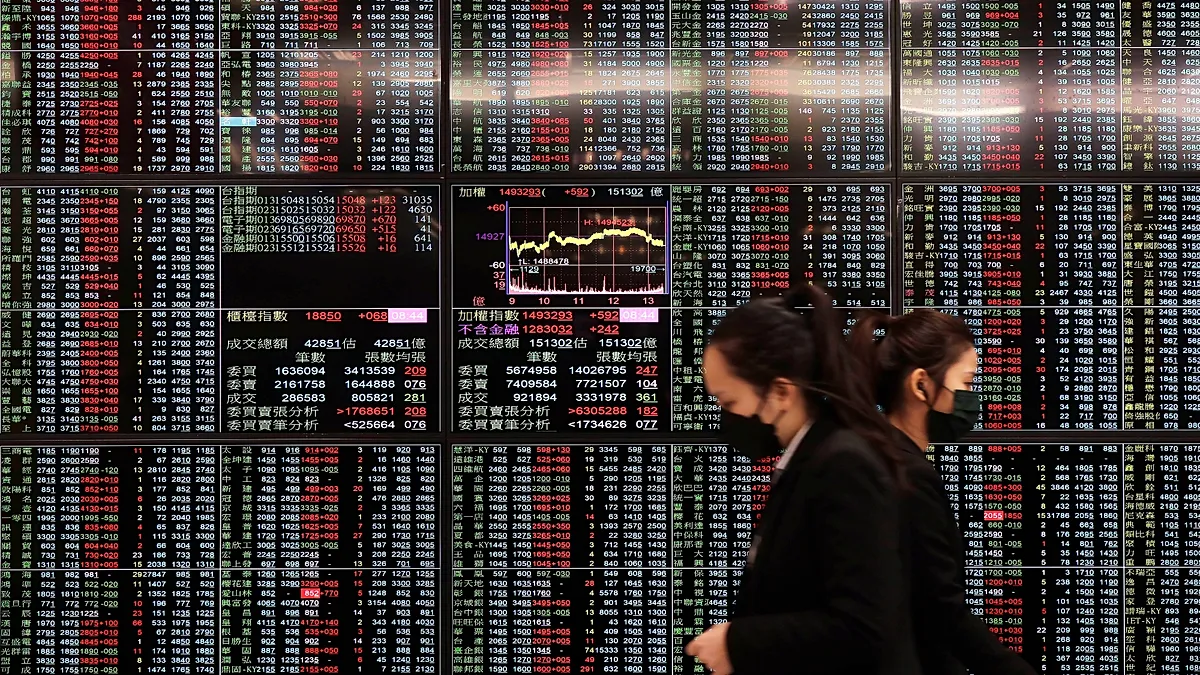
Table of Contents
Debt-Fueled Speculation: How Taiwan’s Ordinary Citizens Are Leveraging Their Way Into the AI Trade
Poinews.com – A quiet revolution is unfolding in Taiwan’s financial landscape, one that has little to do with mortgages or auto loans. Across the island, everyday workers, fresh graduates, and small-business owners are turning to bank credit lines and margin accounts to fund aggressive positions in technology equities. The catalyst is straightforward: the island’s stock market posted a 59% gain in the first half of the year, propelled by surging global demand for AI hardware manufactured by chipmaker Taiwan Semiconductor Manufacturing Co (TSMC) and its supply-chain partners. For many retail investors, the arithmetic seemed irresistible — and the borrowing followed.
One Man’s Windfall
Lucas Chen, a 34-year-old real-estate professional earning a base salary of up to NT$50,000 (roughly €1,360) per month, illustrates both the upside and the audacity of this trend. Chen had been trading equities for a decade, quietly accumulating bonuses to buy shares in TSMC, which represented approximately 45% of the Taiwan Stock Exchange’s total market capitalisation at the close of 2025. At the start of the current year, he judged the setup favourable enough to take out three separate bank loans totalling NT$5 million (about €136,000), pledging his newly purchased Tesla as collateral on two of the facilities.
Within six months, his tech portfolio — roughly half allocated to TSMC — had climbed nearly 70%, inflating his holdings by approximately NT$20 million (€544,000) by late June. In effect, he quadrupled the borrowed capital.
“The first half of the year was really crazy. It was absolutely wild,” Chen recalled.
He acknowledged the generational friction around leveraging personal debt for speculation.
“The older generation would say borrowing money isn’t a good thing,” he noted, adding that if you did the maths carefully, the risks were “controllable.”
The Downside Nobody Posts About
Not every leveraged bet has resolved in the investor’s favour. Financial commentator Yeh Yu-shuo, who runs a Facebook group with hundreds of thousands of members exchanging trading ideas, has witnessed the psychological toll firsthand.
“I’ve reviewed posts saying they want to jump off a building,” Yeh said.
In early August, one anonymous member described pouring NT$10 million (approximately €272,000) into equities over recent months, including a NT$6 million (about €163,000) mortgage drawn down to fund the position. Nearly half of that capital had evaporated.
“Since last month I’ve been waking up in the middle of the night in a panic,” the poster wrote. “I’ve already sought treatment from a psychiatrist, and I even went to Zinan Temple, but none of it has helped at all. Right now, all I want is to get my money back as quickly as possible.”
Scammers have also exploited the frenzy, luring inexperienced traders into fraudulent schemes. Regulators have stepped in with public advisories urging caution.
Macro Backdrop and the July Stumble
The global equity rally that powered Taiwan’s gains was underpinned by tech companies accelerating capital expenditure on AI data centres, accelerators, and software platforms. Yet the advance hit a pronounced wall in July, as investors grew anxious about the timeline for returns on those massive outlays and as analysts warned that valuations had stretched beyond fundamentals. Simultaneously, market anticipation of a US interest-rate hike weighed on sentiment, threatening to compress demand for growth stocks that depend heavily on cheap borrowing to finance their own investment cycles.
Why Banks Are Happy to Lend
Norman Yin, a professor of money and banking at National Chengchi University, described the behaviour of younger Taiwanese investors as “buying stocks like crazy.” He pointed to structural factors: Taiwanese banks are sitting on what he characterised as “unprecedented” deposit levels, partly because stagnant property prices have left household savings parked in bank accounts rather than deployed into real estate. Lending appetite is therefore high.
“If I borrow money from a bank to buy stocks, I could make more in one day than I earn from my salary in a month,” Yin observed, noting that fresh graduates typically earn around NT$40,000 (approximately €1,090) per month. “It’s faster and easier than sitting in an office and working hard.”
Margin Trading and Regulatory Watch
Taiwan Stock Exchange data show that margin trading — the practice of borrowing funds from a broker to purchase securities — expanded nearly 20% in the first half of the year compared with the preceding six-month period. The Financial Supervisory Commission told AFP that overall “credit risk remains under control,” while the exchange itself has begun distributing short-form videos on social media platforms warning young investors about the consequences of defaulting on leveraged positions.
The Social-Media Distortion
Group chats and short-video feeds across Taiwan are saturated with posts celebrating outsized gains and announcing career exits to full-time trading. Marketing specialist Jerry Lee, 30, who describes himself as a conservative investor, said he watches friends broadcast their windfalls with a mixture of admiration and discomfort.
“When you see someone make two or three months’ salary in two days, oof, that’s really painful,” Lee said. Social media gives the impression that “everyone is making money,” he added. “When it’s dropping they won’t tell you about it.”
That asymmetry — gains broadcast, losses silenced — amplifies the herd impulse and makes the next correction feel less like a market event and more like a personal catastrophe for those who arrived late, leveraged, and without a cushion.
What Comes Next
The episode underscores a broader tension in Taiwan’s financial system: a population with historically high savings rates, now confronting an asset class that can outpace a month’s salary in a single session. If the AI hardware cycle sustains its momentum, the borrowing wave may normalise into a durable retail-investor behaviour pattern. If valuations correct sharply, the same leverage that produced Chen’s windfall will produce a wave of margin calls, loan defaults, and regulatory intervention. Either way, the island’s household balance sheets are being rewired in real time, and the question is no longer whether ordinary Taiwanese will trade equities, but how much of their financial lives they will stake on the next candlestick.
Related Reading
Frequently Asked Questions
What is How Taiwan s AI stock boom?
How Taiwan s AI stock boom is the main topic of this guide. The article explains the context, practical details, and next steps readers should understand.
Why does How Taiwan s AI stock boom matter?
How Taiwan s AI stock boom matters because readers are looking for a useful answer, not just a short summary. Good content should match search intent and help them decide what to do next.