What’s behind France’s plan to survey school children on sexual violence?
As French classrooms reopened on Tuesday for the 2026–27 academic year, students walked back into schools carrying not just backpacks but a quiet expectation:

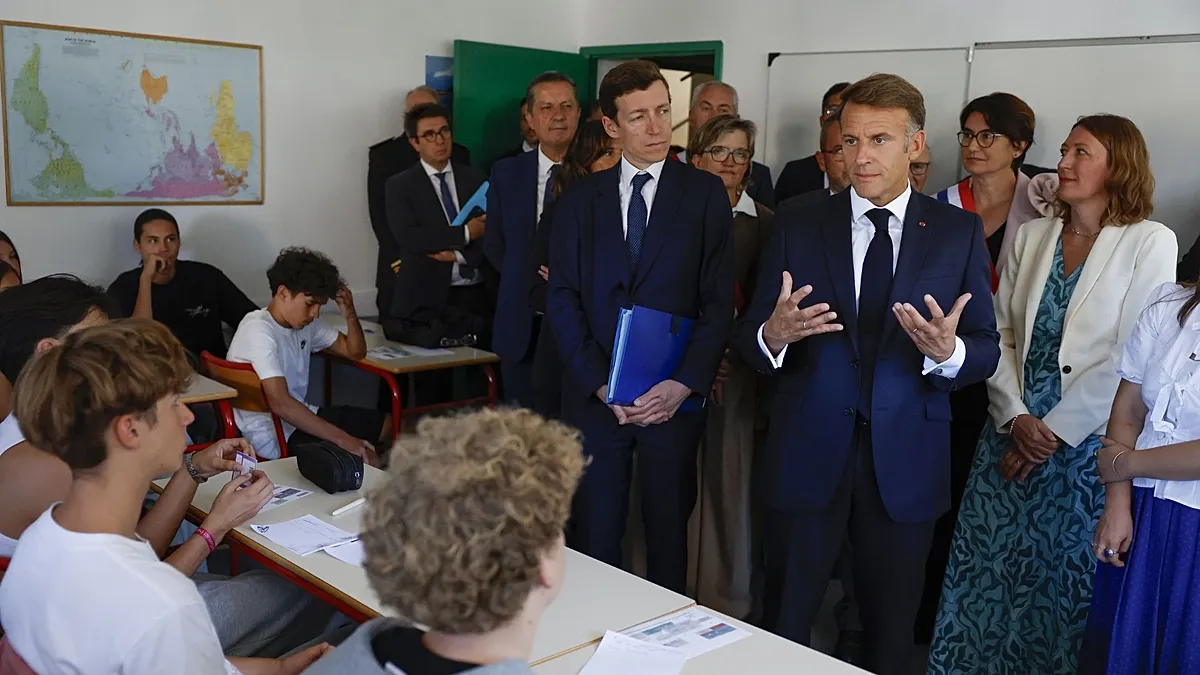
Table of Contents
France’s New School Year Brings a Landmark Survey on Child Sexual Violence
Poinews.com – As French classrooms reopened on Tuesday for the 2026–27 academic year, students walked back into schools carrying not just backpacks but a quiet expectation: that the state would finally look harder at what happens to them in silence. Alongside a sweeping ban on mobile phones across primary and secondary institutions, the government has embedded sexual-violence questions into the annual anti-bullying questionnaire that has been administered to pupils since 2023. The expanded survey, set to reach classrooms in November, marks the first time the instrument will probe specifically for signs of sexual abuse.
Scale of the Problem
The urgency behind the move is difficult to overstate. Estimates published in 2023 by CIIVISE — the Independent Commission on Incest and Sexual Violence against Children — placed the annual number of child victims of sexual violence in France at roughly 160,000. Seventy-seven percent of that abuse, the commission found, occurs within a family setting. Translated into time, the figure means a child is raped or sexually assaulted approximately every three minutes on French soil.
Despite the domestic concentration of harm, schools remain the primary venue where formal reports of child sexual abuse are lodged. France’s education minister has cited an average of 80,000 such reports filed annually through school channels. In Paris alone, official figures dated 26 August recorded 203 active criminal investigations into alleged acts of violence — sexual and otherwise — in schools and after-school care settings.
How the Questionnaire Works
Education minister Édouard Geffray outlined the mechanics to broadcaster BFMTV on 25 August. Approximately 10 million pupils, spanning primary through secondary levels, will complete the form. Questions on sexual violence will be calibrated to each age group. Crucially, children will be given the option to remain anonymous when responding.
Geffray described the instrument as having been co-designed with school staff, parents’ associations, and a committee of experts that includes child psychiatrists. He warned the findings could prove “seismic.” Once collected by teachers, any response raising concern will trigger a protocol: school leaders must either notify the relevant regional education authority or, in more serious cases, refer the matter directly to the justice system.
“The results could be seismic.” — Édouard Geffray, French education minister, BFMTV, 25 August
Parental Reactions Split
Households across France have responded with a mixture of cautious optimism and scepticism. Samuel Bougnat, father of a three-year-old, framed the initiative as long overdue.
“I think school has a role to play in providing support and in reporting possible violence, because school should be a sanctuary, a place where children can feel confident enough to talk about things that may be happening at home.”
A second father of two young children, who asked not to be named, echoed the sentiment while stressing the universality of school attendance as a detection point.
“Personally, I think it is pragmatic given that all children are supposed to go through school at some point; so if there is one place where we can spot things that are problematic and dangerous for children, it is there.”
He added that he would monitor the rollout closely, particularly to confirm the language and framing suit younger children.
Not all parents share that confidence. Caroline Varas, mother of a four-and-a-half-year-old son, questioned whether schools should bear sole responsibility for surfacing abuse.
“I am not entirely sure that school should be responsible for this. I think it should be collaborative work: with independent parents’ associations, the local council and the school. If it is only the school dealing with it, they will cover themselves, protect themselves.”
Varas recounted discovering, after the fact, that non-sexual violence had occurred at her child’s school, underscoring what she sees as a missing intermediary between institutions and families.
Expert Caution on Implementation
Laura Morin-Baudet, director of L’Enfant Bleu, a Paris-based non-profit dedicated to combating child abuse, welcomed the ministry’s decision to bring sexual violence into the questionnaire’s scope. Yet she raised pointed doubts about the conditions under which children will actually answer honestly.
“It all depends on the conditions children answer these questions in. If the child feels comfortable, has the feeling that their friend sitting next to them cannot necessarily see their answers, then perhaps, indeed, they will end up saying something. But on the other hand, if they have the slightest doubt, if they are afraid, if they are unsure where these documents will go, we unfortunately know that they will not necessarily confide.”
For Morin-Baudet, questionnaires are necessary but insufficient. She stressed that prevention programmes and sustained awareness-raising within schools must run in parallel, noting that many teachers remain inadequately trained to recognise, respond to, and escalate signs of sexual abuse in young children.
Broader Implications
The survey arrives amid a broader political push to reshape the French school environment. The concurrent phone ban, aimed at reducing distraction and social-media pressure among minors, signals a government intent to reclaim the classroom as a space of supervised, structured interaction. Whether the sexual-violence questionnaire achieves its stated aim — surfacing hidden abuse before it escalates — will depend on factors well beyond the printed page: teacher training, classroom privacy, parental trust, and the speed with which regional authorities and prosecutors act on flagged responses. With 203 open investigations in Paris alone and an estimated 160,000 victims nationwide each year, the stakes of getting the rollout right are measured not in policy points but in children’s lives.
Related Reading
Frequently Asked Questions
What is What s behind France s plan?
What s behind France s plan is the main topic of this guide. The article explains the context, practical details, and next steps readers should understand.
Why does What s behind France s plan matter?
What s behind France s plan matters because readers are looking for a useful answer, not just a short summary. Good content should match search intent and help them decide what to do next.