EU planned to scrap clock changes. Why are they still happening?
Millions of people across Europe will once again adjust their clocks this autumn, even though the European Union previously moved toward ending the

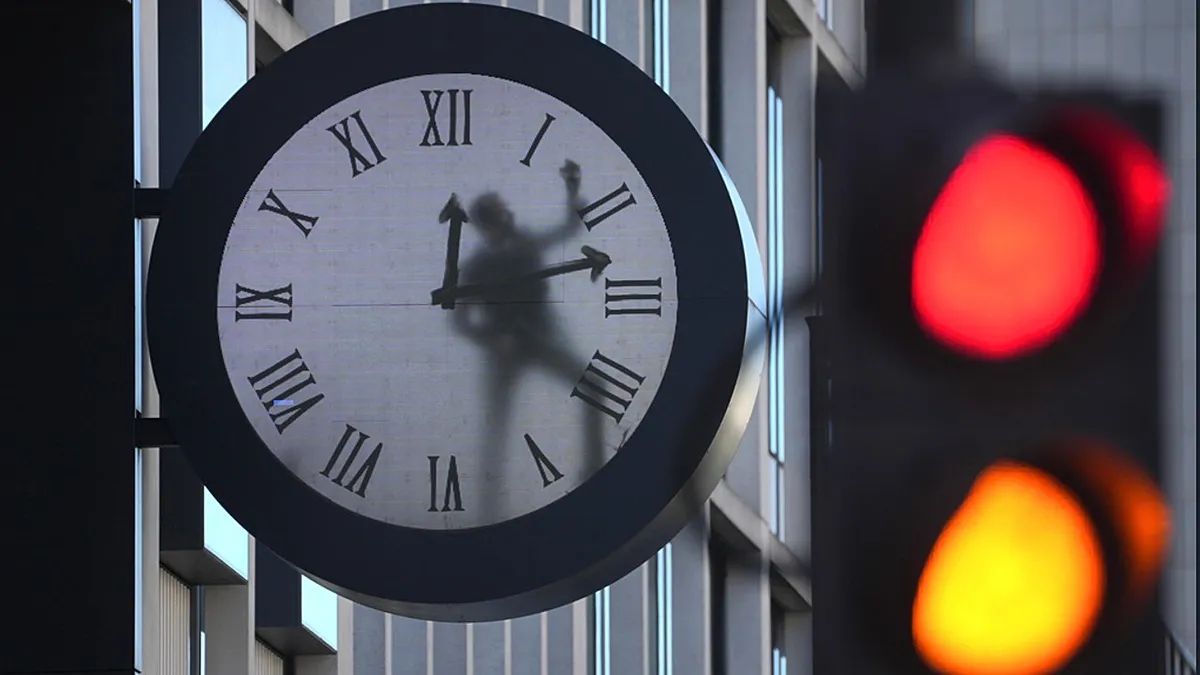
Table of Contents
Europe’s clock changes remain in place despite a long-running push to end them
Poinews.com – Millions of people across Europe will once again adjust their clocks this autumn, even though the European Union previously moved toward ending the twice-yearly practice. The political agreement needed to make that happen has never been reached, leaving the familiar spring and autumn shifts unchanged for now.
On the night of 24 to 25 October 2026, clocks in much of Europe will move back one hour at 3 a.m., returning to 2 a.m. For many people, the change brings an extra hour of sleep. It also marks the point when mornings become brighter earlier while daylight fades sooner in the evening.
The October adjustment ends Central European Summer Time and restores Central European Time, often called winter time. Portugal and the United Kingdom also change their clocks, although the switch occurs an hour earlier there than in most continental European countries. The United States follows a separate timetable, with daylight saving time ending on 1 November.
A proposal that never reached the finish line
The debate over seasonal clock changes has been building for years. In a 2018 consultation conducted across the EU, 84% of respondents favoured stopping the biannual adjustment. The result reflected a widespread view that repeatedly changing the time causes unnecessary disruption.
The following year, the European Parliament backed a European Commission proposal to abolish the practice. In 2019, members voted 410 to 192 in favour of ending the clock change, with the reform originally intended to begin in 2021.
However, parliamentary support alone was not enough. EU member states still had to approve the final legislation, and they have been unable to settle on a shared approach. The central question is whether countries should permanently remain on summer time or switch permanently to winter time.
That choice has consequences beyond personal preference. Countries that share close economic ties, transport connections and cross-border work patterns would need to avoid introducing conflicting time arrangements. A patchwork of permanent time zones across neighbouring states could make travel schedules, business hours and daily coordination more complicated.
Why the issue slipped down the agenda
Other major crises also reduced the urgency of the debate. The COVID-19 pandemic demanded the attention of governments across Europe, while Russia’s full-scale invasion of Ukraine brought new political, economic and security priorities. With no common position among member states, the clock-change proposal remained stalled.
As a result, the current system continues. Clocks still advance by one hour in spring and return by one hour in autumn across much of the continent. Unless governments reach a joint solution, there is little reason to expect the arrangement to disappear soon.
The practice has its roots in energy policy. France introduced summer time in 1976 during the oil crisis, hoping to reduce energy use. West Germany and other EU countries followed France’s example in 1980 as part of an effort to align time arrangements across Europe.
That original energy-saving argument is now widely regarded as outdated. Modern energy consumption patterns are more complex than they were during the oil crisis, and the political discussion has shifted toward how the changes affect daily routines and the practical challenge of coordinating time across national borders.
What the October change means in practice
For people working standard daytime hours, the autumn switch is often easier to manage than the spring move because the clock moves back rather than forward. Even so, the transition can affect schedules for overnight workers, transport operators, digital calendars and services that rely on exact timing.
People travelling around the changeover weekend should check departure and arrival times carefully, particularly for overnight journeys. The repeated hour between 2 a.m. and 3 a.m. can require special handling for timetables and shift schedules.
Not every country follows the same seasonal pattern. Morocco, Thailand, Japan, Argentina and South Africa do not change their clocks in the way many European countries do. Different national approaches are one reason a permanent EU-wide solution requires careful coordination rather than a simple vote to stop changing the time.
For now, Europe’s seasonal clock routine remains intact: one hour gained in late October, one hour lost again in spring. The EU’s earlier ambition to end the practice has not disappeared, but it remains dependent on member states resolving a decision they have so far been unable to make together.
Related Reading
Frequently Asked Questions
What is EU planned to scrap clock changes?
EU planned to scrap clock changes is the main topic of this guide. The article explains the context, practical details, and next steps readers should understand.
Why does EU planned to scrap clock changes matter?
EU planned to scrap clock changes matters because readers are looking for a useful answer, not just a short summary. Good content should match search intent and help them decide what to do next.