Disappointed after meeting, French unions call for 5 November action
French trade unions are preparing to intensify their campaign on 5 November after leaders emerged dissatisfied from lengthy talks with Prime Minister

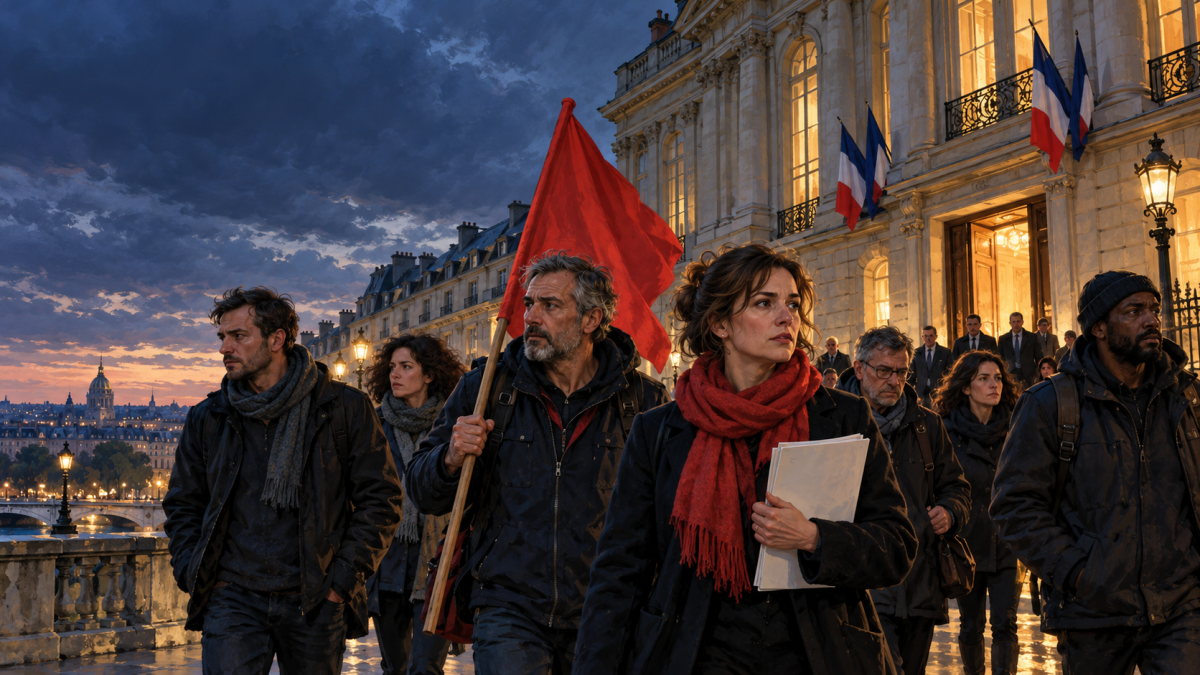
Table of Contents
French unions set 5 November as next major test after talks with prime minister end without agreement
Poinews.com – French trade unions are preparing to intensify their campaign on 5 November after leaders emerged dissatisfied from lengthy talks with Prime Minister Sébastien Lecornu at Matignon on Wednesday.
The meeting lasted almost two and a half hours, but union representatives said it produced little that addressed the concerns raised during recent demonstrations. Sophie Binet, leader of the General Confederation of Labour, or CGT, said the government had offered no meaningful response to the movement’s demands.
“Any measures”
She said no measures had been announced to answer the protesters’ concerns and criticised what she described as a lack of attention to union demands. For the CGT and other labour organisations, the focus is now shifting towards a broad mobilisation of private- and public-sector workers planned for 5 November.
“The time has come to move the mobilisation up a gear; from that date strike action must take over.”
The unions are seeking stronger responses on household finances, wages and public services at a time when anger over the cost of living has fuelled demonstrations across the country. Marylise Léon, secretary-general of the French Democratic Confederation of Labour, or CFDT, said workers expect concrete social measures before the November action.
Minimum wage discussion offers limited opening
One area where union leaders detected a possible opening was the minimum wage. Cyril Chabanier, president of the French Confederation of Christian Workers, or CFTC, said the government had made room for a discussion on raising it. Lecornu has urged rapid progress on that question.
Even so, the prospect of talks on pay did not ease wider frustration among labour groups. Their agenda extends beyond the minimum wage, encompassing purchasing power, conditions in public services and the pressures faced by employees in both the public and private sectors.
The CGT will also join a further protest on Saturday, described as the second act of a cost-of-living mobilisation organised by a “yellow vest” coordination. The group participated in the 17 October demonstrations, which were followed by riots and looting in several cities during the weekend.
Students press education demands
Union leaders also objected to the absence of secondary-school and student organisations from the Matignon meeting. Those groups are due to meet Education Minister Édouard Geffray again on Monday.
Geffray has promised initial responses to demands submitted through a government platform. Secondary-school pupils, supported by university students, have been protesting for weeks over education funding, the state of school buildings and the need to replace absent teachers. They are also calling for the abolition of Parcoursup, the platform used to manage access to higher education and widely criticised by its opponents.
The student demands have added another dimension to a movement that combines social and economic concerns with frustration over public services. The coming weeks will show whether the government can offer measures that reduce tensions before the unions’ planned escalation in November.
Macron calls for firmness after violence
President Emmanuel Macron, speaking while in Qatar, called for a firm response to those responsible for violence during the unrest. He scheduled a meeting with intelligence services on Thursday to examine failures connected with the events of 17 October.
Macron did not announce new policies on the protesters’ demands, including purchasing power and funding for schools and universities. He later travelled to Saudi Arabia, where he met Crown Prince Mohammed bin Salman. The president said the French public would receive a “fair return” from the Gulf trip, particularly in relation to diesel prices.
Political figures from different parties renewed their criticism of the government on Wednesday. Édouard Philippe, the Horizons candidate for the presidency, challenged Macron’s decision to continue his Gulf visit. Former president François Hollande criticised a government he views as weak, while Marine Le Pen, the National Rally presidential candidate, denounced what she called “waning power”.
Curfews extended in Paris and Lyon
Authorities have tightened restrictions in several cities following violence and property damage. In Paris, the police prefecture imposed a curfew for areas around Place de la République and the Les Halles district from 11pm on Wednesday until 6am on Thursday. The order applied to adults and minors alike.
Lyon’s Rhône prefecture renewed both its curfew and its ban on gatherings, prolonging measures imposed over the previous two nights. The Lyon curfew runs from 11pm until 6am, beginning two hours later than the earlier restrictions, which started at 9pm.
During a visit to Marseille, where violent clashes took place at the weekend and the town hall was vandalised, Justice Minister Gérald Darmanin said 2,500 people had been taken into custody after violence and looting linked to the 17 October mobilisation. Of those detained, 917 had been referred to prosecutors and charged for immediate trial proceedings.
Darmanin said the number of cases had doubled or even tripled, while promising a firm judicial response. In Paris, 557 people were taken into custody after violence and looting, with 300 appearing before a magistrate by midday on Wednesday.
Paris prosecutor Laure Beccuau said on Tuesday evening that none of those involved had claimed a motive “of whatever political nature”. The government has nevertheless blamed ultra-left groups for part of the unrest.
As France approaches the 5 November mobilisation, the government faces a twin challenge: responding to workers’ and students’ demands while preventing another wave of disorder. The outcome of wage discussions and planned education measures may shape whether the next nationwide action develops into a wider strike movement.
Related Reading
Frequently Asked Questions
What is Disappointed after meeting French unions call?
Disappointed after meeting French unions call is the main topic of this guide. The article explains the context, practical details, and next steps readers should understand.
Why does Disappointed after meeting French unions call matter?
Disappointed after meeting French unions call matters because readers are looking for a useful answer, not just a short summary. Good content should match search intent and help them decide what to do next.