China exports accelerate on strong demand for autos and high-tech goods
Beijing's monthly trade ledger widened sharply in August, posting a surplus of $119.1 billion (€102.4 billion) — a step up from the $112.5 billion (€96.8

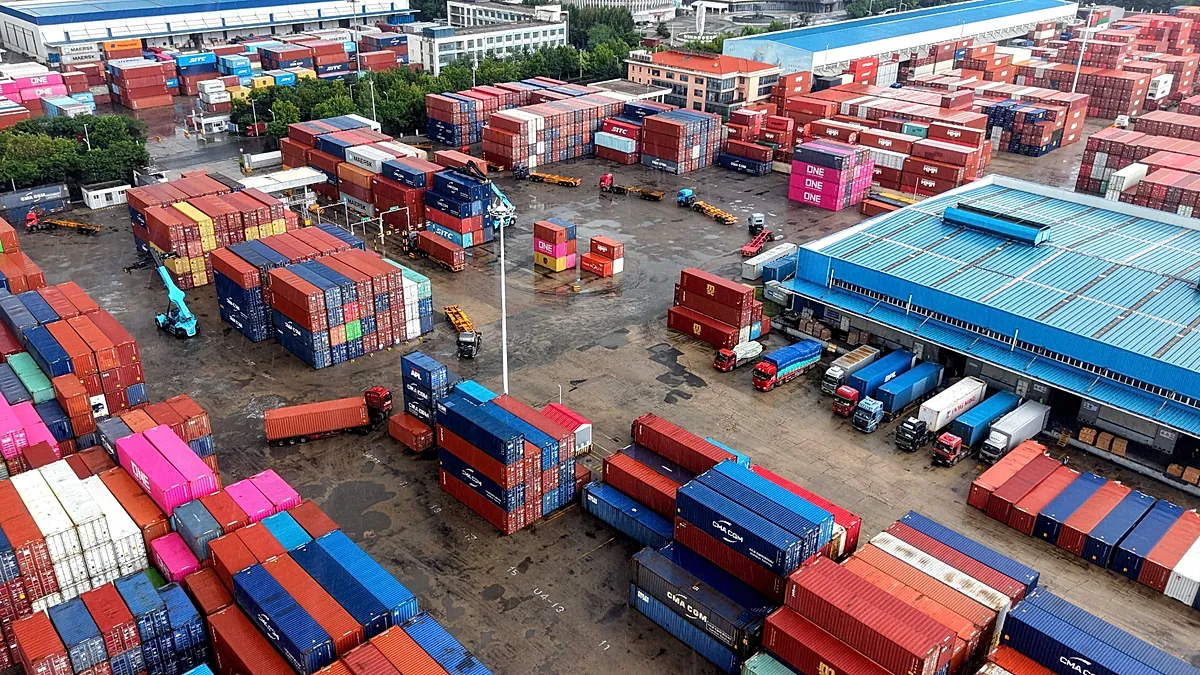
Table of Contents
China’s Trade Surplus Hits New Monthly High as Tech and Auto Shipments Surge
Poinews.com – Beijing’s monthly trade ledger widened sharply in August, posting a surplus of $119.1 billion (€102.4 billion) — a step up from the $112.5 billion (€96.8 billion) gap recorded in July. The figure, released by China’s customs authority on Tuesday, underscores how deeply the country’s export engine has shifted toward high-value manufactured goods even as global trade tensions intensify.
Export Growth Accelerates on Auto and Semiconductor Demand
Shipments abroad jumped 25% year-on-year in August, outpacing the 23.9% annual increase logged in July. The acceleration was driven primarily by sustained overseas appetite for Chinese-made automobiles, industrial machinery, and semiconductor components. On the import side, inbound goods rose 28.2% from a year earlier, slightly above July’s 27.5% annual gain, though the pace of export growth still outstripped import growth by a wide margin.
The composition of what leaves Chinese ports has changed markedly over the past several years. Electric vehicles, precision industrial equipment, and advanced chips now account for a growing share of total export value, replacing the older pattern dominated by low-margin textiles and basic consumer electronics. This structural shift has made Chinese manufacturers far more resilient to price-based trade barriers imposed by Western governments.
“China is very competitive in its tech goods exports,” said Chi Lo, a senior market strategist for Asia Pacific at BNP Paribas Asset Management.
“China has moved aggressively up the value chain and has become a major player in AI infrastructure and industrial automation,” he added.
Geopolitical Backdrop: A Meeting in the Offing
The data landed just weeks before a scheduled summit between US President Donald Trump and Chinese leader Xi Jinping, tentatively slated for late September. Beijing has not yet confirmed the precise date of the encounter, but trade is expected to dominate the agenda. The two economies remain locked in a strategic stalemate over critical inputs and finished goods.
“Both sides hold each other hostage in some strategic products, with the US withholding high-end tech goods from being sold to China and China withholding rare-earth exports to the US,” Lo observed.
That mutual dependency means any breakthrough at the summit would need to address not just tariff rates but the flow of semiconductors, rare-earth minerals, and other inputs that underpin both economies’ advanced manufacturing sectors.
Diverting Trade Flows Away from the US
One reason China’s overall export numbers have held up despite elevated American tariffs is a deliberate geographic reorientation of trade flows. Shipments to Southeast Asia, Latin America, and sub-Saharan Africa have expanded, partially offsetting the drag from reduced US-bound volumes. Analysts note that Beijing has also navigated supply-chain disruptions linked to the Iran conflict more smoothly than many peer economies, owing to diversified energy sourcing and shorter intra-Asian logistics corridors.
The cumulative effect is visible in the annual tally: last year China’s trade surplus reached a record $1.2 trillion (€1.0 trillion), a figure that has drawn sustained criticism from policymakers in Washington and Brussels alike.
EU Prepares for Ministerial Talks
Separately, China and the European Union are set to hold ministerial-level trade negotiations this autumn. The EU’s daily trade deficit with China stands at roughly one billion euros, a gap that has prompted concrete protective steps. In July, Brussels rolled out measures to shield its domestic steel sector and curtailed the tax-exempt treatment previously granted to small parcels arriving via Chinese e-commerce platforms. Those actions are expected to feature prominently in the upcoming talks.
Domestic Headwinds Persist
At home, the picture is less rosy. Consumption and fixed-asset investment have remained subdued in the aftermath of a multi-year downturn in the property sector, which once accounted for a substantial share of urban household wealth and local-government revenue. To counter the slowdown, Beijing announced on Sunday that it would channel approximately $54 billion (€46 billion) into state-owned banks and insurers, aiming to stimulate credit flow and support economic activity through the banking system.
Whether that fiscal impulse can offset the drag from weak consumer confidence and ongoing deleveraging in the property market remains an open question. What is clear from the August trade data, however, is that China’s external sector continues to expand at a pace that will keep trade policy at the center of bilateral and multilateral negotiations for months to come.
Related Reading
Frequently Asked Questions
What is China exports accelerate on strong demand?
China exports accelerate on strong demand is the main topic of this guide. The article explains the context, practical details, and next steps readers should understand.
Why does China exports accelerate on strong demand matter?
China exports accelerate on strong demand matters because readers are looking for a useful answer, not just a short summary. Good content should match search intent and help them decide what to do next.