Spain’s top criminal court launches criminal investigation into Ceuta migrant influx
Spain's top criminal court, the Audiencia Nacional, has formally launched a criminal investigation into the mass border crossing that flooded the Spanish

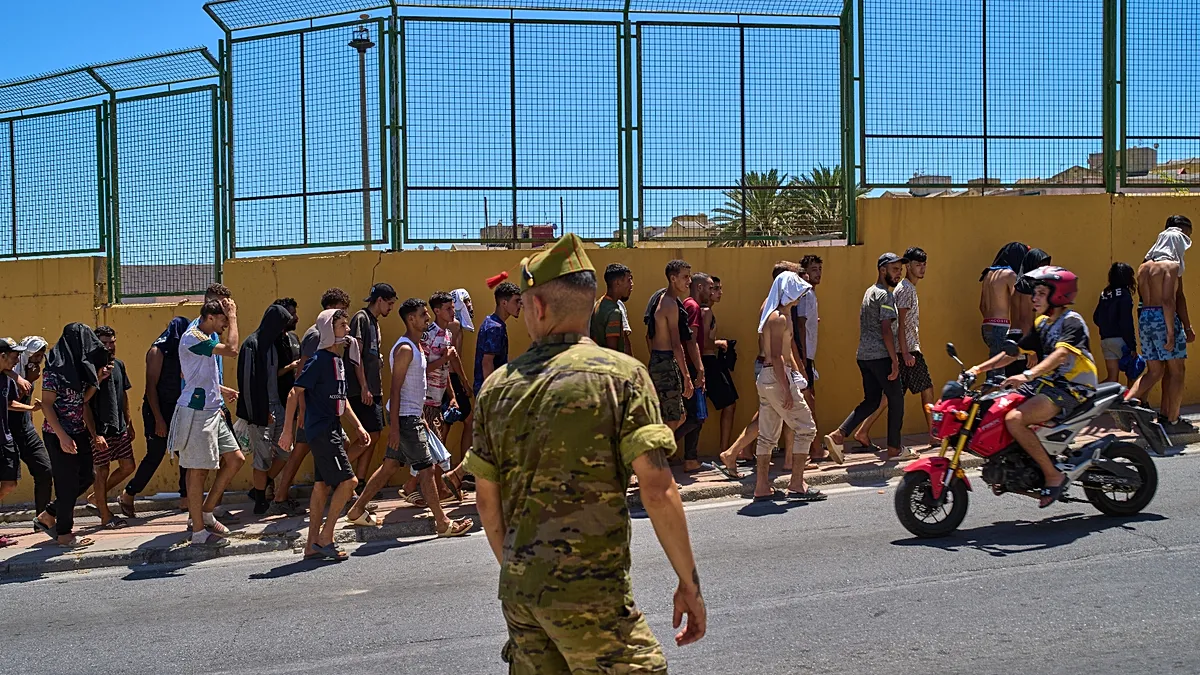
Table of Contents
Spain’s Top Criminal Court Opens Ceuta Migration Probe
Poinews.com – Spain’s top criminal court, the Audiencia Nacional, has formally launched a criminal investigation into the mass border crossing that flooded the Spanish enclave of Ceuta in late July. Investigating judge María Tardón ordered the inquiry after reviewing a dossier from the Public Prosecutor’s Office, which alleged that more than 70,000 people were pushed across the Morocco–Spain land barrier within hours. The decision represents a sharp escalation in an episode that has already strained diplomatic relations between Madrid and Rabat.
Three Charges and the Jurisdictional Ruling
Tardón’s ruling identifies three distinct tracks of alleged wrongdoing: offences against territorial integrity, negligent homicide, and the operation of a criminal organisation. She concluded that the prosecutor’s submission met the threshold for a formal inquiry rather than dismissal, noting that the facts alleged crossed national borders yet struck directly at Spanish sovereign territory.
“Criminal conduct allegedly committed abroad had seriously undermined Spain’s territorial integrity, using the mass entry into the country to do so.”
By framing the event as an externally directed act against a Spanish enclave, the judge effectively removed the episode from the ordinary immigration-management track and placed it within the purview of Spain’s top criminal court proceedings on matters of state-level coercion.
“Hybrid Warfare” Language Enters Domestic Jurisprudence
Going beyond the charges themselves, Tardón characterised the migrant surge as an instrument of what she called “hybrid warfare” or the “grey zone,” aimed at altering the daily life and rights of Spanish citizens. That vocabulary, borrowed from defence and security studies, describes operations that blend conventional force, economic pressure, information campaigns, and demographic manipulation to achieve political ends without a formal declaration of war.
“Constitutes one of the characteristic methods of ‘hybrid warfare’ or the ‘grey zone,’ with the aim of altering the life and rights of Spanish citizens.”
Applying such terminology inside a domestic criminal proceeding is unusual and signals that the court views the late-July episode as one thread in a wider geopolitical contest over Ceuta and Melilla, the two Spanish territories on North Africa’s coast.
Police Report and Alleged Moroccan Facilitation
The judicial decision leans heavily on a report produced by Spanish police. Tardón cited what she described as “total permissiveness” among Moroccan security forces posted along the fence separating the two countries, and spoke of a “clear and undeniable facilitation of the process” carried out through “the verified and visually documented behaviour of Morocco’s security forces.”
According to the judge, uniformed Moroccan personnel made “no serious attempt” to halt the crossing, and some appeared to offer “active guidance” to migrants on how to navigate the barrier. If those findings survive the investigative phase, they would anchor the territorial-integrity and criminal-organisation counts.
Diplomatic Reactions on Both Sides
Madrid has stopped short of publicly accusing Rabat of orchestrating the event. Government officials have stated there is “no conclusive evidence” that Morocco bore direct responsibility for the late-July surge. That measured language mirrors the long-standing diplomatic posture: Ceuta and Melilla remain formally claimed by Morocco, and Spanish authorities have historically preferred quiet negotiation over public confrontation.
Moroccan authorities have not issued an official comment on the Spanish police report. Moroccan media, however, have been vocal, dismissing the document as a “botched” piece of work lacking material evidence. The absence of a formal Rabat response leaves open whether Morocco will engage with the investigation, contest its premises, or simply await the judicial outcome.
Life in Ceuta After the Crossing
In the weeks following the event, most of the migrants who entered the enclave were repatriated to Morocco under bilateral arrangements. Thousands nonetheless remain, straining housing, healthcare, and social services in a city of roughly 85,000 residents. Local politicians across the spectrum have pressed Madrid for a clearer long-term strategy on the border, while residents continue to absorb the social and economic fallout of what has become one of the most politically charged episodes in recent Spanish-Moroccan relations.
Frequently Asked Questions
What exactly did Spain’s top criminal court decide? Judge María Tardón of the Audiencia Nacional opened a formal criminal investigation covering three alleged offences: crimes against territorial integrity, negligent homicide, and operation of a criminal organisation. The decision does not constitute a conviction; it authorises a full evidentiary inquiry.
How many people crossed into Ceuta? More than 70,000 migrants entered the enclave from Morocco within a matter of hours in late July, overwhelming local infrastructure.
What is the “hybrid warfare” reference? The judge used the term to describe operations that blend military, economic, informational, and demographic pressure to achieve political objectives without formal war. It signals that the court views the border event as part of a broader geopolitical contest rather than a routine immigration matter.
Has Morocco responded officially? As of the latest reporting, Moroccan authorities have not issued a formal statement on the Spanish police report. Moroccan media have criticised the document, but no official Rabat reply has been published.
What happens next in the investigation? The judge will now gather testimony, review documentary and video evidence, and determine whether the alleged facts sustain the three charges. Spain’s top criminal court proceedings of this kind can span months or years before any prosecution decision is reached.