Accessibility in video games and board games: the game nobody wants to miss
For Cristian M. Amores, drawing a card in a game of Magic: The Gathering involves a small but meaningful gesture: bringing the card close to his phone. The

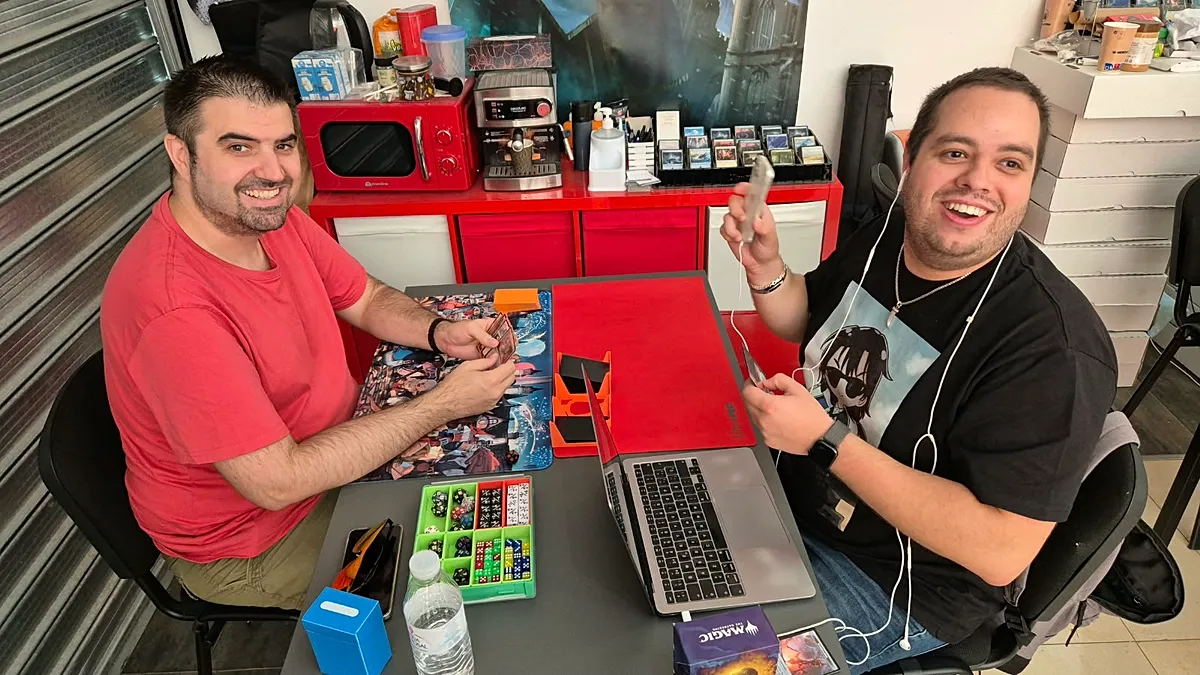
Table of Contents
Making tabletop and digital games more playable for everyone
Poinews.com – For Cristian M. Amores, drawing a card in a game of Magic: The Gathering involves a small but meaningful gesture: bringing the card close to his phone. The device then reads its information aloud through VoiceOver, allowing him to continue playing independently. Amores is blind, and his evolving system has turned a personal obstacle into a practical example of how games can become more inclusive.
Accessibility is becoming a more visible part of both video games and tabletop gaming. Players may use remapped controllers, tactile components, screen readers or specially adapted cards, yet such features are still far from being treated as a basic expectation across the industry. For people excluded by conventional game design, even a modest adjustment can determine whether they can join a match at all.
From Braille labels to NFC tags
Since the end of 2020, Amores has been adapting cards from the collectible game created in 1993 by mathematician and doctor Richard Garfield. He has documented the work on X under the name Magic Accesible, building a system that helps identify cards and access their text without sight.
His earliest method relied on Braille. With a Dymo-style label maker, he attached raised numerical labels to cards, then used a separate database to match each number with the relevant details. The approach presented several difficulties. The labels added bulk, making a deck more difficult to shuffle, and altered cards can create issues in sanctioned competition. In a tournament, markings could be interpreted as revealing information about a card, potentially leading to disqualification.
QR codes offered a later alternative. Amores placed them on card sleeves and used an iPhone camera to scan them, while VoiceOver delivered the card information. But the need to align the camera precisely slowed the game down. It was not always clear whether a code had scanned successfully, making the process frustrating during play.
NFC tags proved more effective. Rather than requiring the camera to focus on a code, the tags can be read when brought near the phone. The screen reader can then speak the card’s full text without the added delay of image scanning.
“Since then I’ve taken a huge leap as a player.”
With card information entered into his database, Amores only needs to add a card number for the remaining fields to populate automatically. The project nevertheless depends on support from others, including people able to read new cards aloud for the database and a print shop that previously produced very small QR codes.
A system tested at the table
The adaptation has allowed Amores to play in game shops and to take part in the National Modern Championship, an MTG format event held in Soria in December 2024. He also had a stand there to demonstrate how the accessibility system works.
His experience raises practical questions for tournament organisers. Amores has so far played in less formal settings rather than events governed by the strictest competition rules. At Soria, several judges approached him to understand the NFC-based method, and one suggested it would likely be acceptable in competitive play.
At another game, a judge checked the rules and confirmed that electronic devices are generally prohibited during play unless their use is strictly necessary. Amores believes this exception could cover his circumstances: without scanning a card through his phone, he cannot know which card he has drawn, and every card in the deck receives the same treatment.
If he enters competitive play, he intends to contact organisers ahead of time. The purpose would be to explain the adaptation and account for the fact that his turns may require slightly more time than those of other players. That advance conversation can be as important as the technology itself, giving event staff an opportunity to understand what an accommodation does and why it is needed.
The case for accessible official tools
Amores’ main request to Wizards of the Coast, the publisher of Magic: The Gathering, is an accessible version of Magic Arena, the official PC client. A fully supported accessible client could make the game available to blind players internationally without requiring each person to build a separate workaround.
A community-made mod already provides an accessibility option for Magic Arena, although unofficial tools remain vulnerable. Their future can depend on whether the company permits them to continue, and whether later updates disrupt their operation. Amores has not used the mod himself, but he has expressed a clear hope for its survival.
“WotC, let the ‘mod’ carry on existing.”
He is less convinced that a large-scale physical-card solution is straightforward. One possible idea would be a factory-printed QR code linking to Gatherer, Wizards of the Coast’s official card database. Yet he doubts whether that would be practical or commercially worthwhile for the publisher. His conclusion reflects the tension between what is technically imaginable and what companies decide to adopt.
“Paper will put up with anything, but reality won’t.”
Accessibility as part of game design
Amores’ work is not an isolated experiment. Other players have also turned to NFC technology to make card games more accessible. On Reddit, a group using the username jerichodarkstar described adapting a Commander deck for a friend born with a degenerative visual impairment. Commander is one of the formats played within Magic: The Gathering.
These efforts show why accessibility cannot be reduced to a single feature. A screen reader may solve one problem, while tactile identification, flexible rules enforcement, accessible software and clearer communication with organisers address others. The best outcome is not merely allowing someone to observe a game, but enabling them to make choices, react to opponents and participate on equal terms.
Through Magic Accesible, Amores has continued the conversation beyond his own deck. After his story drew wider attention in November 2022, he launched a podcast under the same name, speaking with players and developers interested in accessibility. His project illustrates a larger point for the games industry: inclusive design is not a niche extra. It is part of making sure no player has to miss their turn.
Related Reading
Frequently Asked Questions
What is Accessibility in video games and board?
Accessibility in video games and board is the main topic of this guide. The article explains the context, practical details, and next steps readers should understand.
Why does Accessibility in video games and board matter?
Accessibility in video games and board matters because readers are looking for a useful answer, not just a short summary. Good content should match search intent and help them decide what to do next.