Hungarian restaurants struggle: costs match Europe but revenues lag behind
Hungary’s hospitality industry is under growing pressure as operating expenses approach Western European levels while restaurant revenues remain far lower

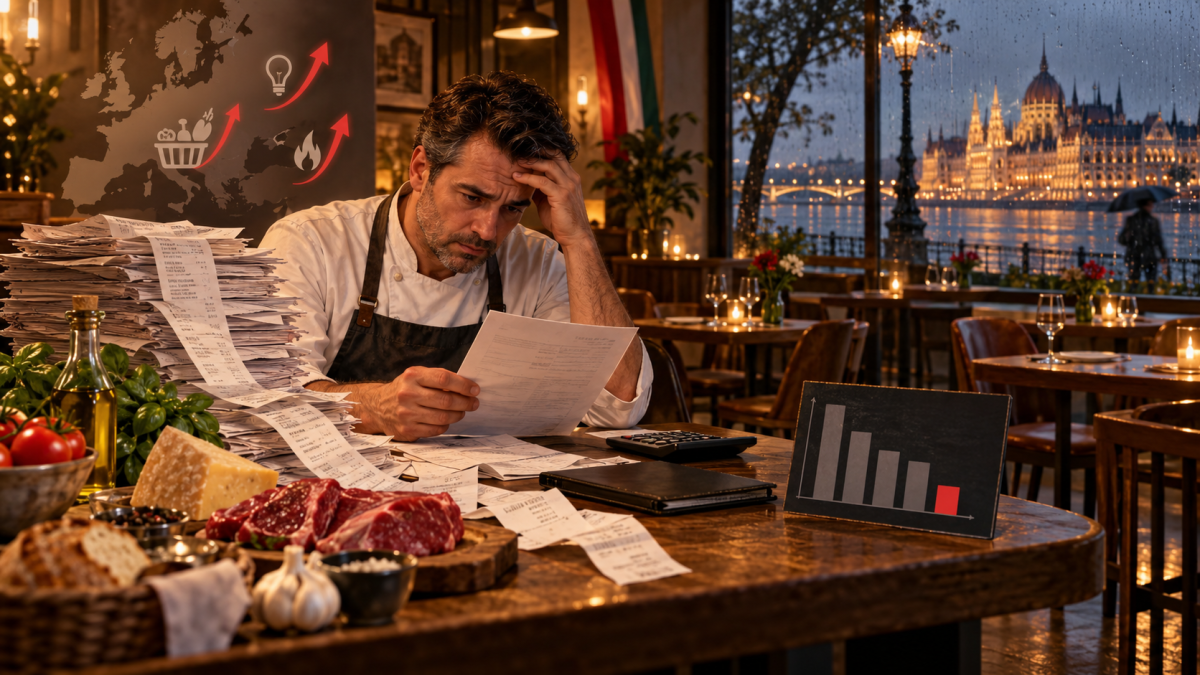
Table of Contents
Hungary’s restaurant sector faces a widening gap between rising costs and limited spending power
Poinews.com – Hungary’s hospitality industry is under growing pressure as operating expenses approach Western European levels while restaurant revenues remain far lower. The strain is visible in the shrinking number of venues across the country, particularly in Budapest, where the total dropped below 8,000 for the first time in the available statistics.
Between 2021 and 2024, Hungary recorded the sharpest fall in hospitality businesses in the European Union. The number of establishments declined by 6%, while 22 EU member states saw expansion over the same period. The longer-term picture is harsher still: over the past decade, 18.5% of Hungarian hospitality businesses have disappeared.
By the end of 2025, the Central Statistical Office counted 7,778 hospitality venues in the capital. The contraction reflects more than a temporary slowdown in tourism or consumer demand. Restaurants must contend with high food, energy and labour costs, while many households have limited room in their budgets for regular meals out.
European-level bills, lower turnover
Zoltán Kőrössy, founder of Eventrend Group, which operates 35 hospitality venues, says Hungarian businesses now pay costs that increasingly resemble those faced by operators in richer parts of Europe.
“We have reached European price levels in almost every cost category. We pay almost the same for energy and wages. Today, it is cheaper to employ hospitality workers in southern Italy or southern Spain than in Hungary. In Austria, it may still be a little more expensive, but overall, there is not much difference. Raw material prices are almost at the same level,” explained Zoltán Kőrössy.
That leaves restaurants in a difficult position. Raising menu prices can protect margins only to a point, especially where local customers cannot afford to visit frequently. Keeping prices lower, meanwhile, can make it impossible to absorb increases in rent, ingredients, salaries and utility bills.
Austria illustrates the imbalance. It has a comparable number of hospitality venues, but its sector generates roughly twice Hungary’s turnover. Tourism contributes to that difference, yet domestic demand is just as important for businesses that need dependable repeat customers throughout the year.
Economist Zoltán Pogátsa has highlighted that two-thirds of Hungarian society live on incomes below those of the EU’s lower middle class. For restaurants relying on neighbourhood diners, family celebrations, office lunches and repeat visitors, the absence of a broad, financially secure middle class limits the market.
Tourism has not delivered the expected relief
Tourism reached a high point in 2025, but that performance did not provide the wider hospitality sector with a lasting boost. This year has brought additional obstacles. Following the election, a stronger forint made Budapest 12% to 14% more expensive for visitors spending euros.
Nation-branding campaigns were also halted, reducing one channel through which Hungary promoted itself to international travellers. In August, the country received 14% fewer foreign tourists than in the same month a year earlier. A fall of that scale can quickly affect businesses in central districts and other areas heavily dependent on overseas guests.
The problem is not simply the number of visitors. It is also the type of tourism being encouraged and the experience offered to travellers. A recent study has linked part of the sector’s decline to low-cost, low-quality outlets selling altered versions of familiar Hungarian foods at high margins to foreign tourists.
Such businesses can attract lower-spending visitors, including stag-party groups, while placing added pressure on restaurants trying to build a reputation around quality cooking, service and authentic local food. The concern extends beyond commercial competition: a tourism offer dominated by poor-value food can shape how visitors perceive Hungary’s culinary identity.
Authenticity and quality in the street-food market
Áron Reményik, the study’s author and a communications expert at Raconteur Agency, argues that simple traditional food is not the issue. The problem emerges when recognisable dishes are distorted and then presented as part of a national gastronomic culture.
“I dare say that we are the only country in the world where you can get lángos with Greek salad, lángos with beef stew, and I could go on. There is nothing wrong with a simple dish being good. That is not a problem at all. The problem is when we try to serve this simple dish in a way that means it is no longer that dish, and on top of that we try to attach a gastronomic culture to it,” said Áron Reményik.
Lángos and goulash are among Hungary’s best-known foods, making them obvious products for visitor-focused outlets. But their popularity also creates an incentive for businesses to prioritise novelty, speed and margin over quality. For established restaurants, the result can be a market where tourists encounter cheaper, highly visible alternatives before they find venues offering a more careful interpretation of Hungarian cuisine.
Reményik has suggested extending certification and inspection systems for Hungarikums and authentic Hungarian cuisine to street-food businesses. Such an approach could give visitors clearer signals about quality and help distinguish genuine local specialities from heavily modified tourist products.
Another possible measure would limit the concentration of outlets aimed solely at tourists in the busiest visitor areas. This would not solve the underlying issue of weak domestic purchasing power. It could, however, reduce competition for central locations and potentially ease rents, offering quality-focused restaurants a little more room to survive.
Hungary’s hospitality challenge is therefore broader than a single bad season. The sector must navigate reduced foreign demand, expensive operations, constrained local spending and a crowded tourist-food market. Unless more venues can build sustainable business around both authentic offerings and customers able to return regularly, the decline in restaurant numbers may remain difficult to reverse.
Related Reading
Frequently Asked Questions
What is Hungarian restaurants struggle?
Hungarian restaurants struggle is the main topic of this guide. The article explains the context, practical details, and next steps readers should understand.
Why does Hungarian restaurants struggle matter?
Hungarian restaurants struggle matters because readers are looking for a useful answer, not just a short summary. Good content should match search intent and help them decide what to do next.