Bad Bunny in Lisbon: ‘While we live, let us love as much as possible’
e, let us love as much as possible' Bad Bunny in Lisbon - The Puerto Rican artist's world tour, DeBÍ TiRAR MáS FOToS , marked his first visit to Portugal, a

Bad Bunny in Lisbon: ‘While we live, let us love as much as possible’
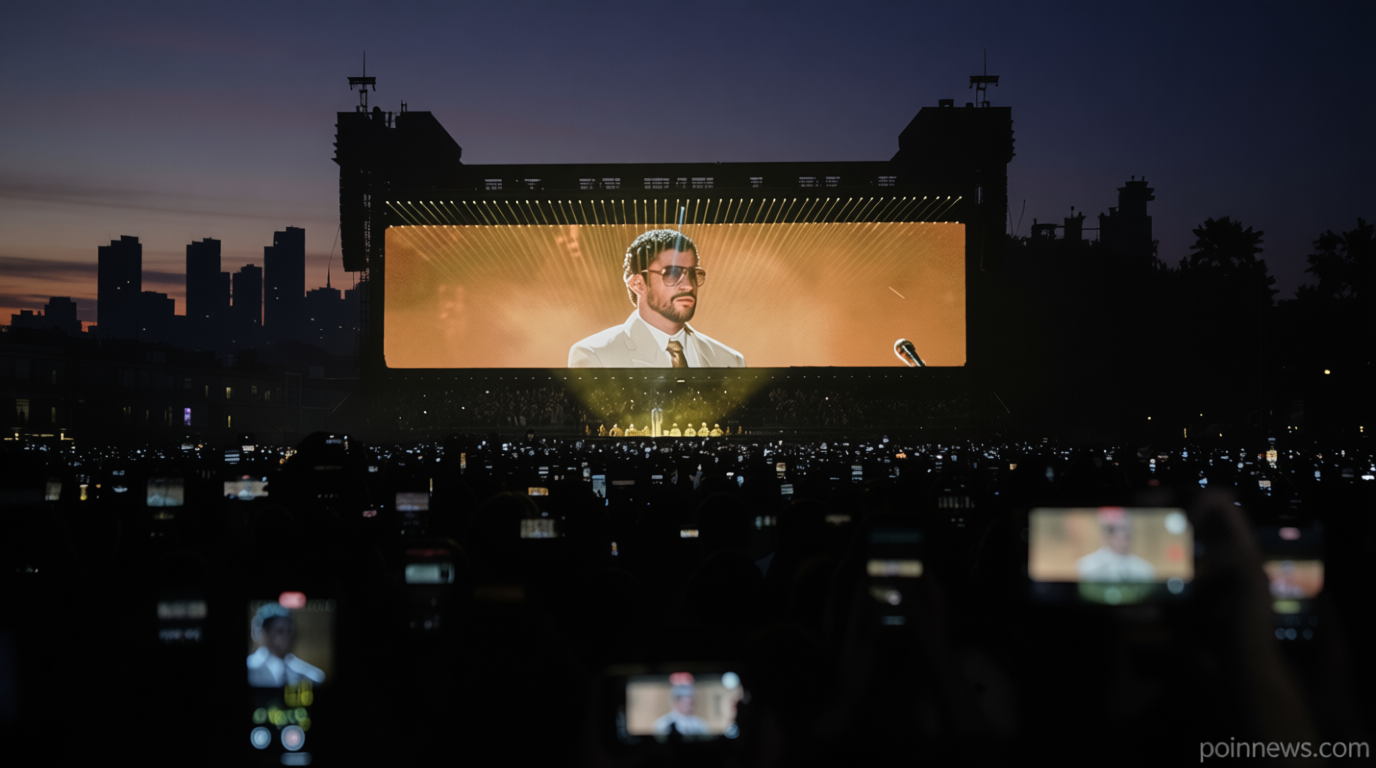
Poinews.com – The Puerto Rican artist’s world tour, DeBÍ TiRAR MáS FOToS, marked his first visit to Portugal, a milestone that drew international attention. Following a successful stop in Barcelona, Bad Bunny took the stage at the iconic Estádio da Luz for two consecutive nights, captivating audiences with a performance that blended his signature reggaeton style with a deep cultural narrative. As a three-time Grammy winner and 11-time Latin Grammy recipient, the artist brought a wealth of musical experience to the event, setting the stage for an unforgettable night of music and emotion.
Over the course of two performances at the stadium, Bad Bunny introduced a carefully curated setlist featuring around 30 tracks, the majority drawn from his sixth studio album, Debí Tirar Más Fotos (DTMF), which debuted in January 2025. This record holds a special place in his discography, as it became the first entirely Spanish-language album to secure the Grammy for Album of the Year. The release of DTMF not only solidified his global appeal but also underscored his commitment to storytelling through his music. Fans were treated to a mix of fan favorites and new material, with the venue alive with a fusion of light, color, and an overwhelming sense of connection.
Bad Bunny’s performance extended beyond mere entertainment, as he engaged the audience with heartfelt messages of love and optimism. Addressing a crowd of over 120,000 fans, many of whom had traveled from distant lands, the artist shared personal reflections and broader themes of resilience and hope. His emotional resonance was evident in the way the audience responded, with chants and cheers echoing throughout the stadium. A notable moment came during the second concert, where the artist took a longer pause at the beginning, allowing the energy of the crowd to build before launching into his set.
“As long as we are alive, let us love as much as possible,” said Benito, his voice carrying the weight of a promise to the crowd.
The sentiment encapsulated the spirit of the event, with fans united in their appreciation for the artist’s work. While the Portuguese audience was familiar with his popular hits, there was an underlying curiosity about the deeper stories behind the music. This curiosity was further amplified by the inclusion of tracks like LA MUDANZA, which opened both shows and told a personal narrative of displacement. The song, a tribute to Benito Antonio Martínez Ocasio’s early life, referenced the challenges his family faced when they had to move to a different city as a child.
Political Echoes in Music
The track also served as a subtle nod to significant historical events in Puerto Rican history, such as the 1970 Vieques uprisings. These protests, which opposed the U.S. military’s presence on the island, were a pivotal moment in the region’s struggle for autonomy. The Gag Law, which criminalized the raising of the Puerto Rican flag, was another key reference embedded in the lyrics. Through the visual storytelling in the video clip, Bad Bunny highlighted the resilience of Puerto Ricans, juxtaposing black-and-white imagery of protests with vibrant scenes of modern life. This duality reflected the ongoing tension between tradition and progress, a theme that resonates deeply with his fanbase.
International Fanbase and Cultural Exchange
While the majority of the setlist was composed of tracks from DTMF, some notable omissions sparked conversation. Songs like LO QUE LE PASÓ A HAWAii were absent, though the artist compensated with a special segment featuring a guest singer and a tribute to the Portuguese band Xutos & Pontapés. This fusion of cultures underscored the universality of his message, as he emphasized unity and shared experiences. The venue transformed into a tropical paradise, with the May temperatures creating an unexpectedly Caribbean atmosphere. Fans from across the globe, including those who traveled from Mozambique, were drawn to the artist’s ability to connect on a personal level.
Behind the Scenes: A Researcher’s Insight
Gustavo Garcia-Lopez, a Puerto Rican researcher at the University of Coimbra, provided a unique perspective on the audience’s experience. In a telephone interview with Euronews, he noted,
“I think Portuguese fans, even though they know the songs, especially the reggaeton ones, are not very familiar with the political history and the events that have been unfolding in Puerto Rico. I believe now is the time to start talking about those issues.”
This insight highlighted the growing interest in the artist’s cultural background, as fans began to explore the deeper meanings of his work. Many expressed a desire to understand the historical context that shaped his music, particularly the struggles of Puerto Rican identity.
A Fan’s Perspective
Euronews spoke with several attendees after the second night, uncovering a mix of admiration and newfound curiosity. Rosa, standing near the venue’s entrance, remarked,
“I know he’s Puerto Rican, I know DTMF, ‘NUEVAYoL,’ and ‘BAILE INoLVIDABLE.’ I know very little about Puerto Rico’s history, but I like his music a lot.”
Patrícia, who had traveled from Mozambique, shared her enthusiasm:
“I came from Mozambique just to see him. He’s very humane, and he does a lot for his country.”
Carolina, a fan who had followed the artist’s journey, noted,
“I know that ten years ago he was working in a supermarket, and now he’s packing out stages on world tours. I really like his latest album, DTMF, and I know he talks a lot about Puerto Rico’s history. In his videos on YouTube, he shows different parts of the country.”
These comments illustrated the growing appreciation for Bad Bunny’s artistic evolution and his role as a cultural ambassador.
Historical Context in Artistic Expression
The Vieques naval base, Roosevelt Roads, played a central role in the artist’s storytelling. Decommissioned and abandoned in 2004, the base had become a symbol of Puerto Rico’s struggle against U.S. military presence. However, it was reactivated in mid-2025 under the Trump administration, with the claim that it was needed to combat drug trafficking. The base’s renewed activity also sparked speculation about its use in capturing Nicolás Maduro, the Venezuelan president. As one of the largest naval bases outside the United States, Vieques remains a focal point for discussions about colonialism and resistance.
Themes of Resilience and Belonging
The tour incorporated thematic elements such as El Apagón, which highlighted energy shortages, and Turista, addressing corruption and the tourism industry’s influence. These songs resonated with audiences, who saw reflections of their own lives in the artist’s narratives. The Puerto Rican rapper’s ability to weave personal and political themes into his music created a powerful connection with fans, who were eager to engage with the stories behind the tracks. For many, the concerts became a celebration of identity and a reminder of the importance of perseverance in the face of adversity.