Video. ‘Timmy’ the humpback whale hauled ashore on Danish island
Timmy, the Humpback Whale, Stranded on Denmark's Anholt Island Timmy the humpback whale hauled ashore - After an extended period of being stranded in shallow

Timmy, the Humpback Whale, Stranded on Denmark’s Anholt Island
Poinews.com – After an extended period of being stranded in shallow waters, the lifeless body of a humpback whale named Timmy was finally brought ashore on the coast of Denmark’s Anholt island. The animal had spent nearly two weeks in the shallows before its remains were discovered by local authorities. This event has sparked widespread interest, with reports detailing the efforts undertaken to save the creature and the emotional response from the public.
A Stranding That Captured Global Attention
Timmy’s journey to becoming a focal point for conservationists began in March when it was spotted in the Baltic Sea, near the German coast. Its appearance in the region drew immediate attention, as the whale’s presence was unusual for that area. Scientists and marine biologists quickly took notice, intrigued by the possibility that Timmy might be a casualty of the environmental conditions in the Baltic. The situation escalated as the animal began to linger in shallow waters, leading to a coordinated rescue effort that spanned several months.
The rescue teams faced a daunting challenge, as humpback whales are typically migratory creatures that travel vast distances. Timmy, however, seemed to have lost its way, possibly due to a combination of factors such as navigational disorientation, illness, or environmental changes. Local fishermen and volunteers joined the efforts, using boats and nets to assist the whale in its struggle to return to deeper waters. Despite these interventions, the whale remained stranded, prompting authorities to consider more ambitious measures.
The Last-Ditch Operation in May
In a decisive move, a final attempt was made to relocate Timmy to the North Sea, where it would have a better chance of survival. This operation involved transporting the massive creature by barge, a method that required meticulous planning and coordination. The barge was equipped with specialized equipment to gently maneuver the whale, ensuring minimal stress during the transfer. This effort was met with both hope and skepticism, as the success of such a rescue is not guaranteed.
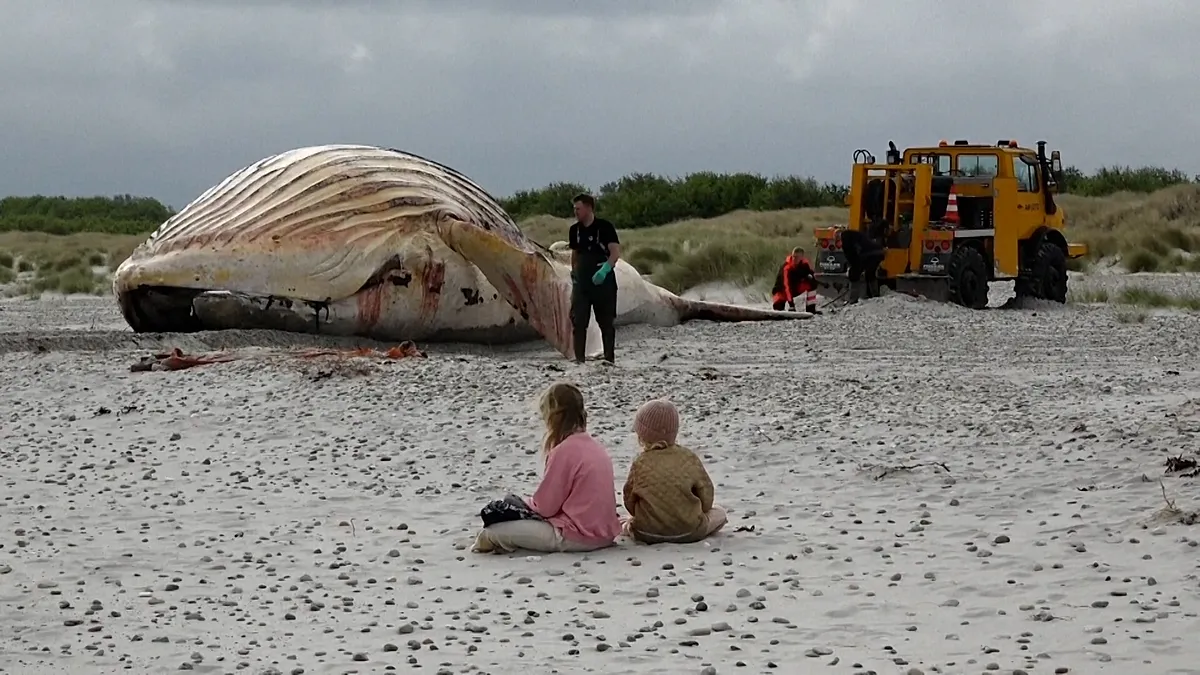
The process of hauling Timmy onto the beach was a spectacle that drew crowds of onlookers. Children, in particular, were captivated by the sight of the massive marine mammal being towed by workers. The scene was described as a mix of determination and sadness, with many people expressing their concern for the whale’s well-being. Video footage captured the moment, highlighting the physical and emotional toll of the rescue. The footage also served as a reminder of the fragility of marine life in the face of human intervention.
Discovery of the Carcass in the Kattegat Strait
Despite the efforts to save Timmy, the whale ultimately succumbed to its circumstances and was found dead near Anholt. The location is part of the Kattegat strait, a body of water that connects the Baltic Sea to the North Sea. This strait is known for its unique ecosystem, which supports a diverse range of marine species. The whale’s death has raised questions about the health of these waters and the challenges faced by large marine animals in such environments.
Authorities have confirmed that the carcass will undergo a thorough examination to determine the exact cause of death. This analysis is crucial for understanding whether the whale’s stranding was due to natural causes, such as disease or injury, or if human factors like pollution or underwater noise played a role. The findings could provide valuable insights into the broader implications of such events for marine conservation efforts.
“The examination of Timmy’s body will help us identify the underlying reasons for its stranding, which is essential for developing strategies to prevent similar incidents in the future,” said a Danish official in a statement. The official emphasized the importance of the whale’s story in highlighting the interconnectedness of marine ecosystems and the need for ongoing monitoring.
The Emotional Toll of the Rescue
The months-long rescue effort for Timmy has left a lasting impression on the local community. Many residents expressed their admiration for the teams that worked tirelessly to save the whale, even as they grappled with the knowledge that the outcome might not be favorable. The emotional investment in the rescue was evident in the public’s reactions, from social media posts to spontaneous gatherings at the beach.
Timmy’s story has also sparked discussions about the role of human activity in marine ecosystems. Experts suggest that climate change, ocean acidification, and increased maritime traffic could all contribute to the stranding of whales. However, some argue that natural phenomena, such as shifts in ocean currents or food availability, might be the primary factors. The debate underscores the complexity of marine conservation and the need for a multifaceted approach to address the challenges faced by these creatures.
Lessons from the Stranding
Timmy’s case is not an isolated incident. In recent years, there have been several reports of humpback whales stranding in the Baltic Sea, often linked to changes in water temperature or salinity. These events have prompted researchers to study the behavior of humpbacks in the region, seeking to uncover patterns that could aid in predicting future strandings. The data collected from Timmy’s examination may contribute to this growing body of knowledge.
For the local community, Timmy’s stranding has become a symbol of both the beauty and vulnerability of marine life. The event has inspired educational initiatives, with schools and environmental groups using the story to teach about the importance of ocean conservation. Children, in particular, have shown a heightened interest in marine biology, with many expressing a desire to learn more about how to protect whales and their habitats.
A Broader Impact on Marine Conservation
Timmy’s journey has also drawn attention to the broader challenges facing marine ecosystems. The stranding of large whales like Timmy is often a sign of environmental stress, which can have cascading effects on the entire food chain. Conservationists are calling for increased funding and resources to support research and rescue operations, especially in regions where such events are becoming more frequent.
The incident has further reinforced the role of technology in marine conservation. The use of GPS tracking, underwater cameras, and acoustic monitoring has become increasingly common in efforts to understand whale behavior and detect early signs of distress. These tools, combined with the dedication of volunteers and professionals, have significantly improved the chances of successful rescues. However, they also highlight the need for continued innovation and investment in marine research.
As the examination of Timmy’s carcass proceeds, the hope is that the insights gained will not only shed light on this specific case but also inform broader strategies for protecting marine life. The story of Timmy serves as a poignant reminder of the delicate balance that exists in the ocean and the importance of collective action in preserving it. While the whale’s fate may be a tragedy, it has become a catalyst for greater awareness and engagement in the fight to protect our seas.
Timmy’s stranding has also prompted a reevaluation of the relationship between humans and the ocean. As more people become aware of the challenges facing marine life, there is a growing movement toward sustainable practices and eco-friendly technologies. This shift in mindset is essential for ensuring that future generations can continue to marvel at the majesty of creatures like Timmy, which have captivated our imagination for centuries.
Ultimately, the event has reinforced the idea that every marine animal plays a vital role in the health of our oceans. Timmy’s story is a testament to the resilience of these creatures and the dedication of those who strive to protect them. As the examination of the carcass continues, the lessons learned from this incident will undoubtedly shape the future of marine conservation efforts in Denmark and beyond.