Scientists uncover how the brain adds new information to an existing memory
A memory is rarely a single, frozen snapshot. Daily life often requires people to retain what came before while absorbing what happens next, without blending

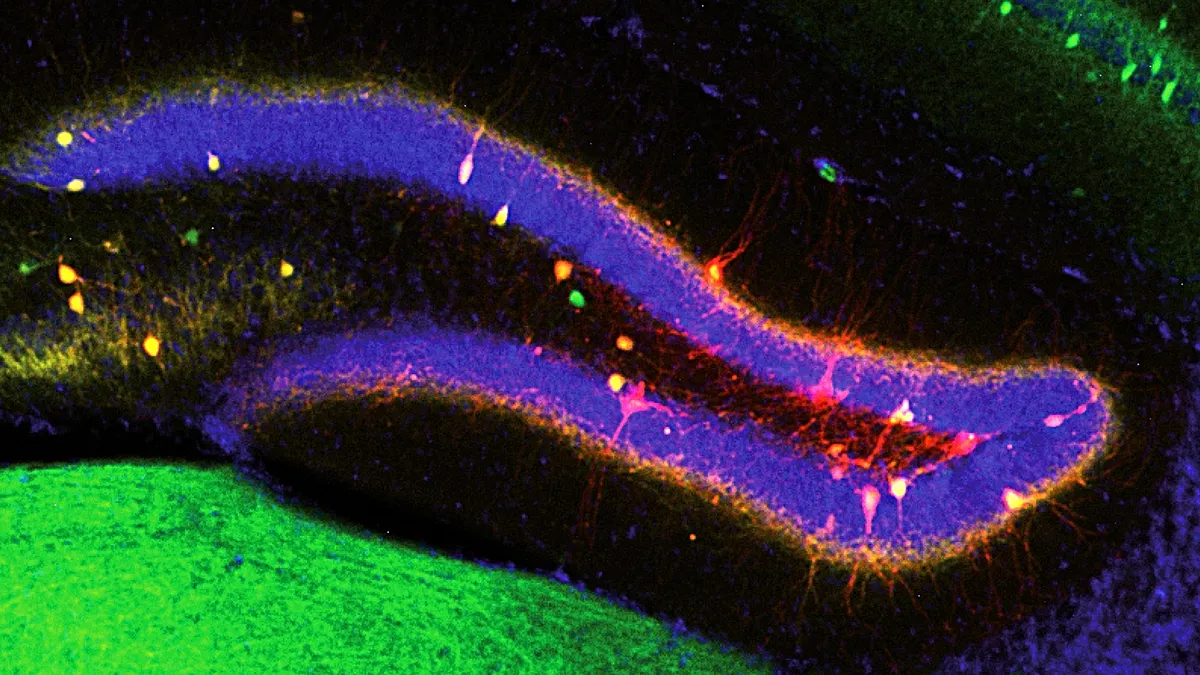
Table of Contents
Researchers identify a possible brain mechanism for updating memories
Poinews.com – A memory is rarely a single, frozen snapshot. Daily life often requires people to retain what came before while absorbing what happens next, without blending separate moments into one confused recollection. A construction project on a familiar street illustrates the challenge: the mind may store the building before work started, the period of renovation and the completed result as distinct stages of the same place.
Scientists at the Institute of Neurosciences, a public centre operated by the Spanish National Research Council (CSIC) and Miguel Hernández University, have examined how the brain may manage that process. Their study, published in PLOS Biology, points to a mechanism in the hippocampus that can help balance the preservation of an existing memory with the addition of new details.
The dentate gyrus and new experiences
The research focuses on the dentate gyrus, a part of the hippocampus associated with the formation of new memories. Within this area, the team studied a particular class of neurons that restrains the activity of other cells. This inhibitory action appears to play a role in deciding whether a fresh experience becomes integrated into a memory already held by the brain.
The central idea is not that the brain always benefits from either stronger or weaker inhibition. Instead, the most useful response may depend on how much information needs to be handled and on the demands of the situation. In some circumstances, retaining a highly detailed version of an earlier memory may be more helpful. In others, a memory may need to remain flexible enough to incorporate later events.
To investigate this, researchers conducted experiments with mice and adjusted the degree of this inhibitory process. The animals’ behaviour changed as inhibition was altered, offering evidence that this neural balance can influence how memories are retrieved and how much detail is retained.
“With lower-than-usual levels, their behaviour was more consistent with better memory retrieval and a more detailed recollection,” explains Encarni Marcos, co-lead of the study and head of this line of research at the IN CSIC-UMH.
Why less inhibition is not always better
At first glance, the findings might suggest that reducing inhibition would simply improve recall. The study does not support such a straightforward conclusion. There is no universally ideal level of inhibition for holding on to the greatest possible amount of information.
A computational model used by the research team showed why. When memory demands were relatively light, lower inhibitory activity could be advantageous. Under those conditions, the brain may be able to retrieve an existing memory with greater richness and precision. But as the amount of information rises substantially, that benefit does not continue in the same way.
This distinction matters because memories are not all equally complex. Some situations involve a limited number of details, while others require the brain to process a large volume of changing information. A mechanism that works well for one kind of task may become less useful when new inputs multiply.
The results suggest that the dentate gyrus can shift between two broad functions. It may support the incorporation of new information into an earlier memory, or it may help stabilise what is already known when new stimuli arrive. The balance between these options appears to be shaped by contextual importance, described by the researchers as task demands.
Keeping the past separate from the present
The ability to distinguish related experiences is a basic part of everyday memory. Returning to a renovated building, for example, can bring back a sense of its former appearance without preventing recognition of the changes made later. The brain must link the events because they concern the same location, yet it must also preserve the differences between each stage.
The hippocampus is especially relevant to this kind of memory work because it is involved in forming and organising memories of experiences. The new findings narrow attention to the dentate gyrus and to the influence of inhibitory neurons within it. Rather than functioning as a simple switch, this circuitry may help the brain adjust the way it processes information as conditions change.
That flexibility could explain how a person can sometimes update a memory with new details, while at other times keeping an earlier version relatively protected from interference. The study does not establish a single rule for all memories. It instead presents evidence for a dynamic system that can respond differently depending on the informational burden of a task.
“What we infer from these results is that there is a mechanism that dynamically adjusts the mode of operation by using inhibition,” Marcos concludes.
A step toward understanding memory flexibility
The work offers a closer look at the cellular processes that may underlie a familiar mental ability: learning something new without losing track of what was already learned. By changing inhibitory activity in mice and combining those experiments with computational modelling, the researchers were able to explore how memory retrieval and memory updating may be connected.
For readers, the findings underline that memory is not merely a storage system. It is an active process that must continually weigh old knowledge against new experience. A useful memory needs enough stability to preserve meaningful details, but also enough adaptability to reflect a changing world.
Further research will be needed to clarify how these mechanisms operate across different types of memories and situations. Even so, the study provides evidence that inhibition in the dentate gyrus may be one of the tools the brain uses to decide when to reinforce the past and when to make room for the present.
Related Reading
Frequently Asked Questions
What is Scientists uncover how the brain adds?
Scientists uncover how the brain adds is the main topic of this guide. The article explains the context, practical details, and next steps readers should understand.
Why does Scientists uncover how the brain adds matter?
Scientists uncover how the brain adds matters because readers are looking for a useful answer, not just a short summary. Good content should match search intent and help them decide what to do next.