From school blockades to violence: what is driving student protests in France?
From school blockades to violence, student protests in France have developed from demands for better learning conditions into a nationwide crisis marked by

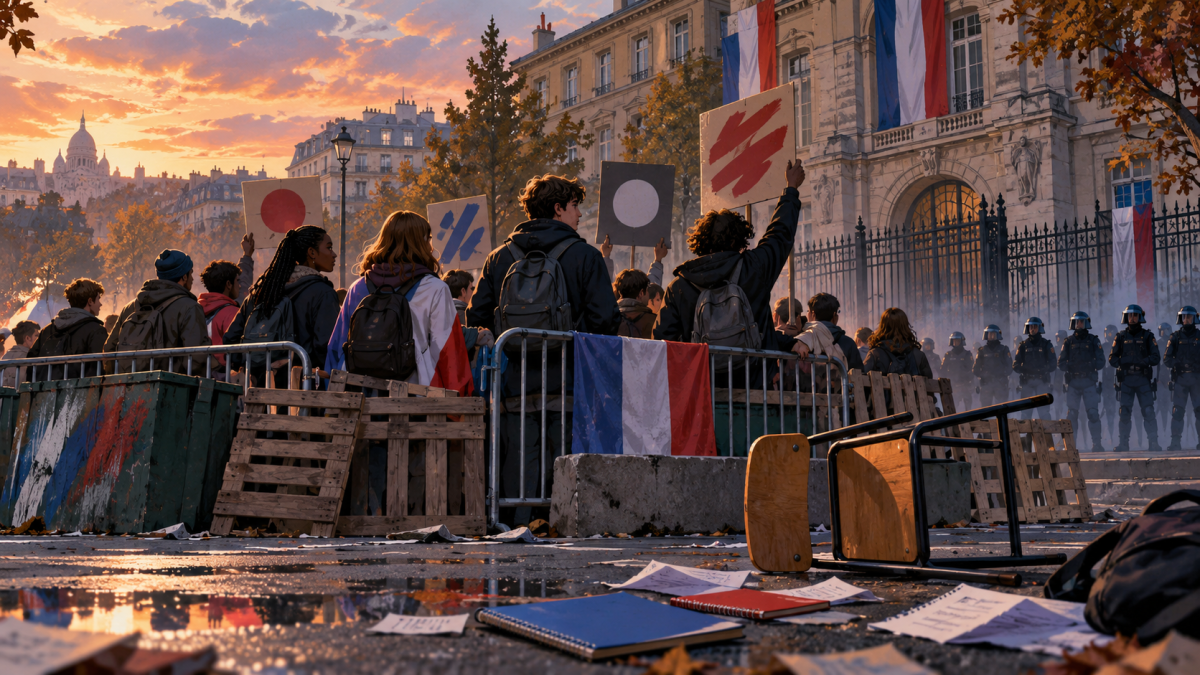
Table of Contents
From school blockades to violence: France’s student protests explained
Poinews.com – From school blockades to violence, student protests in France have developed from demands for better learning conditions into a nationwide crisis marked by school closures, confrontations and political pressure. The movement began in Créteil, southeast of Paris, where pupils joined teachers in calling for more staff and resources.
Images circulated online after the first action on 17 September, helping the protests spread to other towns and cities. Students have raised concerns about overcrowded classrooms, unfilled teacher absences, ageing buildings and the wider conditions in which they learn.
More than two weeks later, student unions called for a nationwide mobilisation. Authorities ordered the full or partial closure of hundreds of schools after concluding that safety conditions could not be guaranteed.
Education demands and public disorder
Many of the demonstrations have remained peaceful, with pupils blocking entrances or gathering outside schools to make their demands visible. But the movement has also seen riots, property damage and clashes with police. Some students say people who are not involved in the education campaign have joined gatherings and contributed to the violence.
France’s interior minister said more than 5,060 people had been arrested during the unrest, and that minors represented 87% of those detained. More than 170 pupils, 78 school employees and over 600 police officers have been injured. Several schools have reportedly been vandalised, ransacked or set alight.
The shift from school blockades to violence has complicated the public debate. Students and education workers fear their concerns about staffing and resources could be eclipsed by attention on security, arrests and damage to property.
Investigations into injuries involving teenagers
Two incidents involving teenagers have increased scrutiny of police conduct. In Lens, northern France, a 15-year-old was injured by a grenade on Monday. Public prosecutor Etienne Thieffry said it had not been conclusively established whether the teenager handled the grenade himself or whether it was thrown towards him.
In Tours, the family of a 16-year-old filed a complaint alleging police violence on 4 October after he lost sight in his right eye. The state prosecutor said the nature of the injury suggested that a police rubber bullet may have struck him. Investigations are continuing in both cases.
France’s Human Rights League, or LDH, criticised what it described as a failure to respect legal limits in police operations involving schoolchildren.
“International law was not only being disregarded, but in fact completely trampled upon.”
Police representatives have rejected the suggestion that officers are targeting student protest itself. Stanislas Gaudon of the Alliance Police Nationale union said police are deployed to protect school perimeters and restore order where violence occurs.
Government promises a response for schools
Education Minister Édouard Geffray met school unions, staff representatives and parent groups on Friday. Justice Minister Gérald Darmanin said 735 of France’s 3,700 schools had been affected in some way by violent protests.
Prime Minister Sébastien Lecornu announced a five-point plan on Sunday. It includes measures intended to reduce class cancellations, improve facilities with regional authorities, reorganise the school day, make the Parcoursup university application platform easier to understand and provide greater support for students.
The success of the plan may depend on whether it addresses the daily problems cited by pupils while preventing further escalation. For now, the protests remain a test of the government’s ability to respond to education concerns and maintain safety around schools.
Frequently asked questions
What are French students protesting about?
Students have cited overcrowded classes, teacher absences that are not replaced, deteriorating school buildings and insufficient resources. The protests began around education conditions before spreading more widely.
Why have some schools closed?
Authorities ordered full or partial closures at hundreds of schools where they said safety could not be assured during the protests.
What support has the French government announced?
The government’s five-point plan includes reducing cancelled classes, improving facilities, reorganising the school day, simplifying Parcoursup and offering greater support to students.