
Zelenskyy calls out monthlong wait for Hegseth to sign off on Patriot missiles
Ukraine is seeking faster approval for critically needed air-defence missiles after President Volodymyr Zelenskyy said Kyiv had spent nearly a month waiting

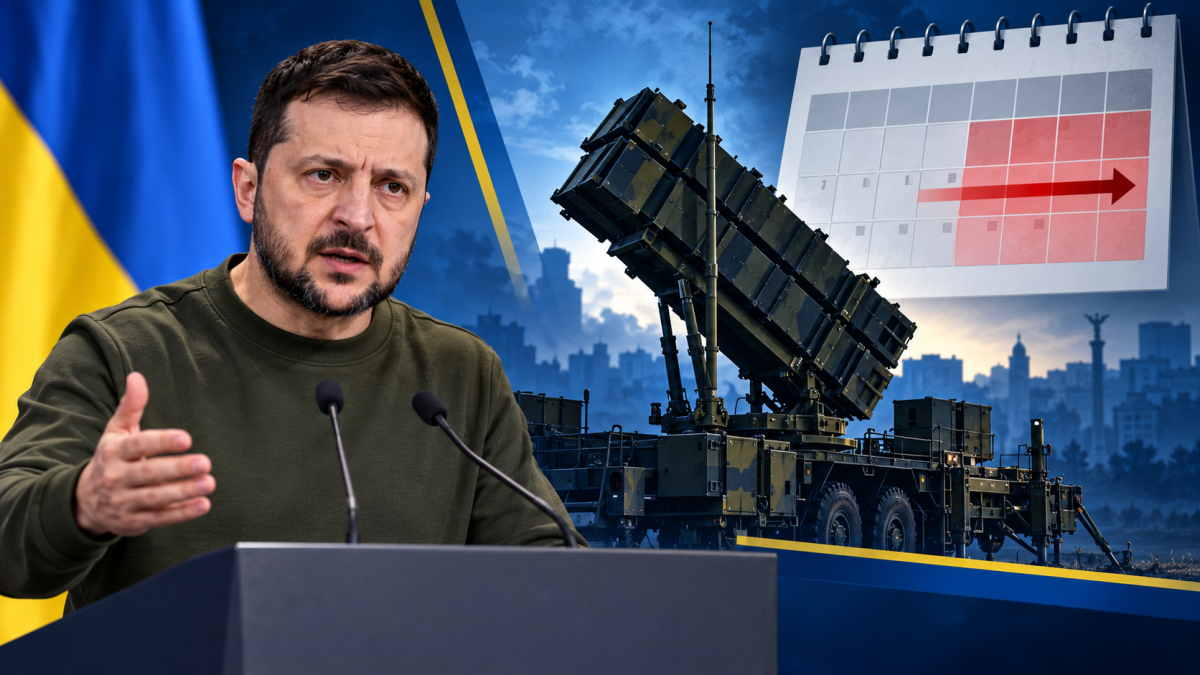
Table of Contents
Ukraine presses Washington over delayed Patriot missile approval
Poinews.com – Ukraine is seeking faster approval for critically needed air-defence missiles after President Volodymyr Zelenskyy said Kyiv had spent nearly a month waiting for US Defence Secretary Pete Hegseth to authorise interceptor deliveries for Patriot and NASAMS systems.
The appeal comes as Ukraine faces continuing Russian missile launches, drone attacks and guided bomb strikes. Air-defence units remain central to protecting cities, energy infrastructure and military positions, but their ability to respond depends heavily on the availability of interceptors.
“We are working on several tracks – with the United States, Europe, and other partners that have stocks of PAC-2 and PAC-3 missiles,” Zelenskyy wrote.
He said the Ukrainian government was pursuing supplies through several partner countries while attempting to resolve the pending US approval. PAC-2 and PAC-3 are Patriot interceptor variants used against different aerial threats, including aircraft and ballistic missiles.
“In particular, we have been waiting for nearly a month for Mr. Hegseth to sign off on missiles for Patriots and NASAMS,” Zelenskyy continued.
The president said he had directed his team to bring the matter to Washington’s attention again. Discussions with other countries that may hold relevant stocks are continuing, he added.
Air-defence pressure grows
Kyiv has repeatedly warned that its forces need additional interceptors to counter Russian attacks that combine several types of weapons. Patriot systems are among the most capable assets available to Ukraine for confronting ballistic missile threats, while NASAMS provides another layer of air defence against aircraft, cruise missiles and drones.
Zelenskyy highlighted the scale of recent Russian operations in a separate message on Sunday. He said Russia had launched 48 missiles at Ukraine in the previous week, including ballistic weapons, alongside about 1,600 guided aerial bombs and nearly 2,300 attack drones.
“Unfortunately, almost every day, these brutal strikes leave people killed and injured,” he wrote on X. “We need to unblock the deliveries of Patriot interceptors already approved by European countries.”
The call points to an important distinction in the supply process: even where European partners have agreed to fund equipment, transfers of US-made munitions can require approval from Washington. That can make administrative decisions as consequential as the availability of the weapons themselves when Ukraine is trying to sustain air-defence coverage during frequent attacks.
Ukraine has not publicly confirmed how many missiles remain pending. Ukrainian media reports indicate that the figure is substantial, but the precise number has not been disclosed.
Patriot systems remain a scarce resource
Patriot is one of the world’s most advanced air-defence platforms. It can be deployed against a broad range of aerial threats, including aircraft and ballistic missiles. Its interceptors are expensive and production capacity is limited, making the system a particularly scarce resource for countries facing sustained attacks.
Much of Ukraine’s Patriot missile supply is arranged through NATO’s Prioritised Ukraine Requirements List, known as PURL. The initiative enables allies and partner countries to purchase US military equipment and ammunition for Ukraine. By June 2026, NATO said allies had committed more than $6 billion in defence equipment funding through the programme.
The arrangement has allowed countries that want to support Ukraine to contribute financially even when they do not hold the required equipment in their own inventories. At the same time, it leaves deliveries dependent on a supply chain involving manufacturers, funding partners, US approvals and the operational needs of several militaries.
Competition for munitions has intensified in recent months because of the US war in Iran. American military stockpiles have faced additional demands from operations in the Middle East, adding pressure to a global market already strained by Russia’s full-scale war against Ukraine.
A September report by the inspector general of the US Department of Defence said American forces fired munitions valued at $22.3 billion between the start of Operation Epic Fury in late February and the end of June. The expenditure illustrates the scale at which modern air and missile warfare can consume weapons inventories.
Why the delay matters for Kyiv
For Ukraine, the issue is not only the arrival of additional launchers or radar systems. A Patriot battery can protect against high-end threats only while it has interceptors available. Each incoming ballistic missile or complex drone-and-missile attack can force commanders to make difficult decisions about where to concentrate limited defensive resources.
Yurii Ihnat, a colonel in the Ukrainian military, argued in an interview published on Monday that Patriot missiles expended in the Middle East could have supported Ukrainian combat operations for several years. His comment reflected Kyiv’s broader concern that Ukraine’s battlefield needs are being affected by competing global demands for the same specialised ammunition.
Zelenskyy’s public intervention places renewed attention on the requested authorisation from Hegseth and on the wider question of whether existing pledges can be converted into deliveries quickly enough. As Russian strikes continue, Ukraine’s leaders are urging partners to treat interceptor supplies as an immediate requirement rather than a longer-term procurement goal.
Related Reading
Frequently Asked Questions
What is Zelenskyy calls out monthlong wait for Hegseth?
Zelenskyy calls out monthlong wait for Hegseth is the main topic of this guide. The article explains the context, practical details, and next steps readers should understand.
Why does Zelenskyy calls out monthlong wait for Hegseth matter?
Zelenskyy calls out monthlong wait for Hegseth matters because readers are looking for a useful answer, not just a short summary. Good content should match search intent and help them decide what to do next.