Songs of praise: An emotional Greek-German musical collaboration at Berlin Cathedral
A shared programme of sacred, classical and contemporary music brought young singers from Greece and Germany together at Berlin Cathedral for German Unity

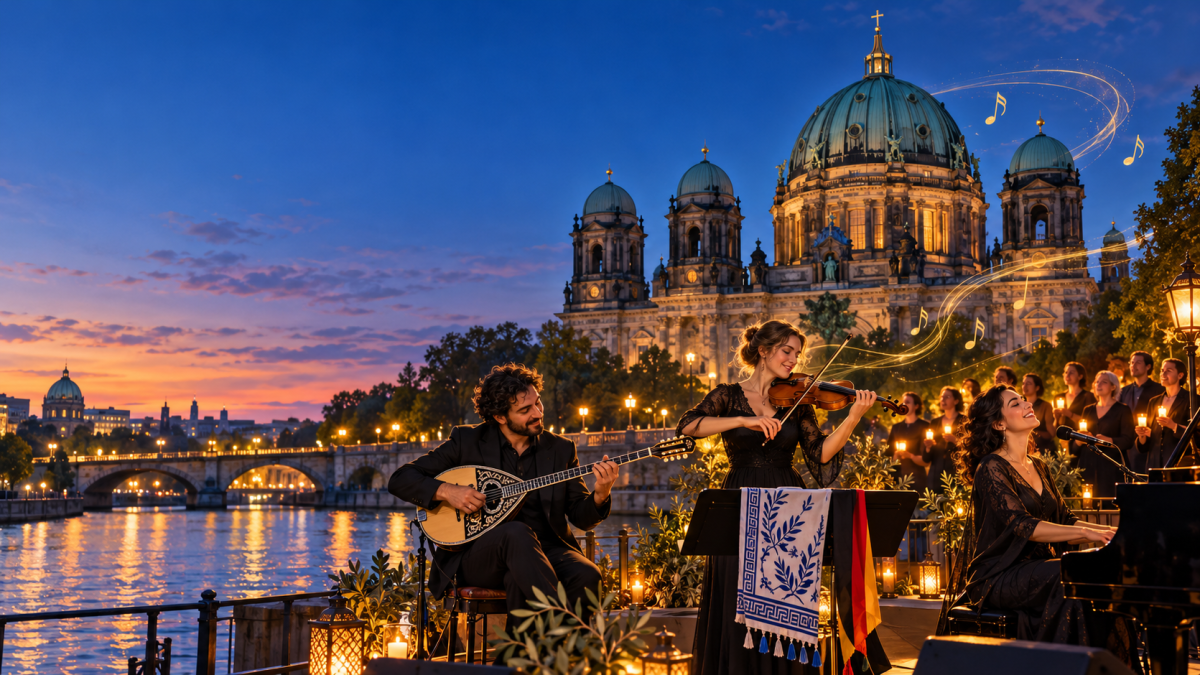
Table of Contents
Music Brings Greek and German Young Voices Together at Berlin Cathedral
Poinews.com – A shared programme of sacred, classical and contemporary music brought young singers from Greece and Germany together at Berlin Cathedral for German Unity Day, turning the annual commemoration into a wider statement of European cultural connection.
On Saturday 3 October, 240 Greek and German performers took part in a festive service at the Berliner Dom. Among them were 38 students from the Chios Music School, who appeared alongside choirs and ensembles of the Sing-Akademie zu Berlin.
The concert combined music from several traditions and periods. The performers sang works by Felix Mendelssohn, Francis Poulenc, Benjamin Britten, Louis Lewandowski and Gustav Holst, while the programme also included Michalis Adamis’s Ora kali and Yannis Christou’s Messa Latina. The encounter offered more than a formal concert: it reflected an exchange that had already connected the young musicians on the Greek island of Chios.
A unity celebration with a European message
Kai-Uwe Jirka, artistic director of the Sing-Akademie zu Berlin, conducted the cathedral performance. He explained that the institution has marked German reunification at the cathedral for the past three years, with the congregation and choirs continuing outdoors after the service to sing together on the church steps.
“Today we celebrate the reunification of the two parts of Germany. For the past three years we have held a ceremony in the cathedral.”
Jirka said the outdoor singing was conceived as a response to an event in the nearby Lustgarten organised by a far-right party three years earlier. For those involved in the cathedral gathering, the aim was to claim public space for a different kind of message: one based on participation and solidarity rather than exclusion.
“We had just come out of the service and we wanted to be together without hatred, without racism.”
That intention has shaped the annual event. Jirka stressed that German unity cannot be considered apart from the continent around it, describing Greece as an essential part of Europe’s shared identity.
“All right, we cannot celebrate only Germany. Because what is Germany without Europe? And what is Europe without Greece?”
For him, the presence of young performers from across Europe gave this year’s event particular force. Singing side by side, he said, allowed the participants to express a powerful vision of Europe through music rather than political slogans.
An exchange built across two cities
The Berlin appearance followed an earlier chapter of the partnership in Chios. During the 10th Chios Music Festival in August, more than 50 young singers from the Sing-Akademie zu Berlin spent a week on the island. They performed at several venues and worked alongside local musicians.
Friederike Stahmer, who founded the Berlin Sing-Akademie Girls’ Choir 20 years ago, described the value of learning music from one another’s cultures. Her choir studied Greek songs during its visit, especially repertoire connected with Chios and the surrounding region. At the same time, students from the Chios Music School prepared German works.
“What really makes this exchange programme special is that we come together and create music.”
Stahmer acknowledged that such collaborations require effort. Differences in language, vocal style and musical traditions can make the early stages demanding. Yet those challenges are also part of the educational value: young singers must listen closely, adapt to unfamiliar material and understand musical expression beyond their own background.
“Of course, at the beginning such musical collaborations are always challenging: the musical style is different, the language is different and you really have to work hard.”
Returning to the same repertoire in Berlin gave the students an opportunity to hear how the project had developed since the summer. Stahmer said music-making together can create a deeper bond than a simple first meeting, and she believes the experience will remain significant for the young people involved.
Creating opportunities for young people from Chios
The cultural exchange was organised by the Chios Music Festival and the Sing-Akademie zu Berlin, with support from the Greek-German Youth Foundation, known as ΕΓΙΝ/DGJW. The Greek delegation spent eight days in the German capital and participated in three concerts altogether.
For the Chios Music Festival’s artistic directors, Olga Holdorff Myriagou and Lefteris Veniadis, the programme is especially important because it expands the horizons available to young musicians from an island located at Europe’s edge. Taking part in a major project in Berlin gives the students access to experiences that may otherwise be difficult to reach.
“For the Chios Music Festival it is very important to offer opportunities to young people, to the new generation.”
The directors also want the exchange to work in both directions. When Berlin singers travel to Chios, the festival seeks to provide high-quality artistic experiences on the island as well. Bringing significant musical activity to Chios and enabling local students to travel abroad are complementary goals, rooted in the idea that cultural opportunity should not depend solely on geography.
With around 100 children appearing on stage at points during the wider collaboration, the project showed the scale that a sustained partnership can achieve. The Berlin Cathedral concert became a visible culmination of that work: a gathering in which Greek and German voices met in a programme spanning different languages, composers and musical histories.
Its broader significance lay in the way the performers made European connection tangible. For the students, the exchange offered concerts, travel and artistic learning. For the audience, it demonstrated how a shared musical space can turn a national day of remembrance into an occasion for openness, friendship and a common cultural future.
Related Reading
Frequently Asked Questions
What is Songs of praise?
Songs of praise is the main topic of this guide. The article explains the context, practical details, and next steps readers should understand.
Why does Songs of praise matter?
Songs of praise matters because readers are looking for a useful answer, not just a short summary. Good content should match search intent and help them decide what to do next.