SpaceX’s stock market debut: Five risks investors need to know
to Know SpaceX s stock market debut - SpaceX's stock market debut marks a pivotal moment in the financial landscape, as Elon Musk’s aerospace company takes

SpaceX’s Stock Market Debut: Five Risks Investors Need to Know
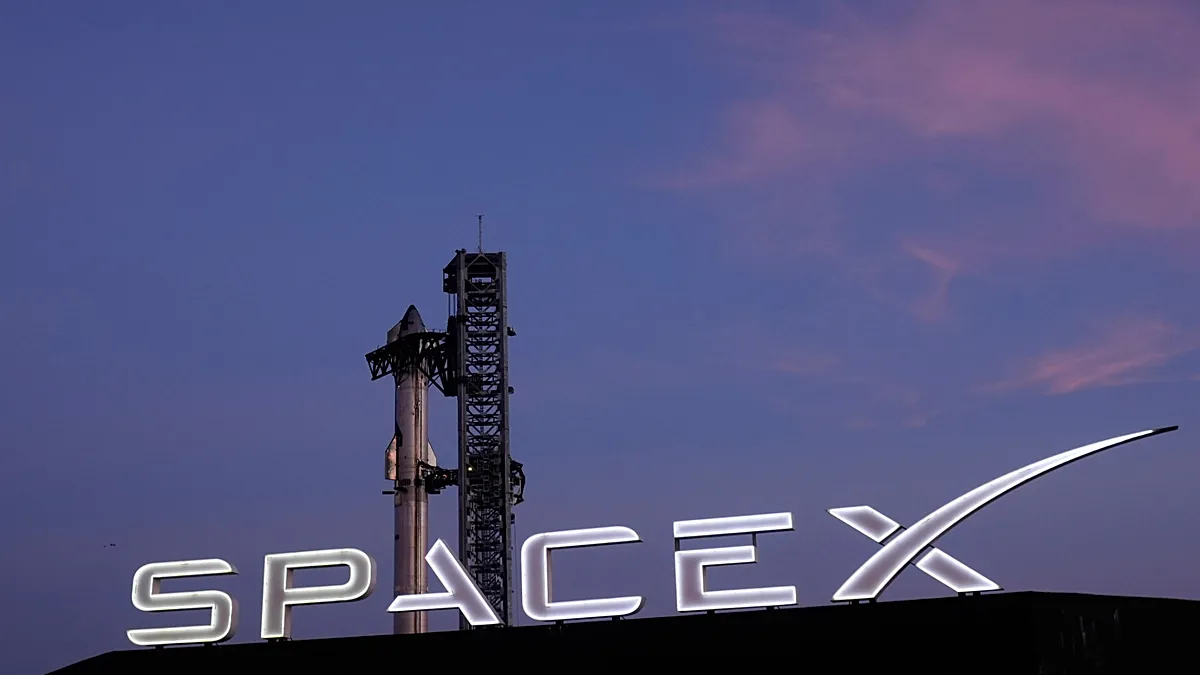
Poinews.com – SpaceX’s stock market debut marks a pivotal moment in the financial landscape, as Elon Musk’s aerospace company takes its first steps as a publicly traded entity. Listed on the Nasdaq under the ticker SPCX, the IPO priced shares at $135 each, raising $75 billion (€64.5bn) and valuing the company at an astonishing $1.75 trillion (€1.5trn). This valuation not only eclipses the previous record set by Saudi Aramco in 2019 but also positions SpaceX as the most valuable publicly traded company in history. While the event promises excitement, it also introduces a range of risks that investors must carefully evaluate before committing to the stock market debut.
Overvaluation and Revenue Projections
The valuation of SpaceX during its stock market debut has drawn significant scrutiny, with some analysts warning that the company’s current worth may be inflated. At 94 times its 2025 annual revenue of $18.7 billion (€16.1bn), the multiple is far higher than that of established tech giants like Nvidia, which trades at less than a quarter of this rate. Morningstar, a leading financial research firm, estimates the company’s value at $780 billion (€675bn), suggesting that the stock market debut may be setting expectations that are difficult to sustain. Goldman Sachs further highlights that for the valuation to hold, SpaceX would need to achieve revenues exceeding $100 billion (€86.6bn) by 2030, a goal that remains uncertain given the current trajectory of its financial performance.
“The current valuation appears to be in line with market expectations for high-growth enterprises, but the sustainability of such gains is uncertain.”
High Demand from Retail Investors
SpaceX’s stock market debut has generated unprecedented enthusiasm, particularly from retail investors who view the company as a symbol of innovation and potential. According to Bloomberg, the initial order book for the IPO exceeded $100 billion (€86.6bn), driven by platforms like Robinhood, Fidelity, and SoFi. This surge in demand underscores the allure of the stock market debut, which has captivated both seasoned and novice investors. However, while the high level of interest is a positive indicator, it also raises concerns about whether the valuation is primarily fueled by speculative fervor rather than solid financial fundamentals.
Index Inclusion and Market Exposure
The anticipated inclusion of SpaceX in major stock indices has sparked debate among financial analysts and regulators. With its stock market debut, the company is on track to join benchmarks like the Nasdaq 100, which could significantly increase its visibility and attract passive investors. Officials from four large U.S. states have questioned recent rule changes that may have accelerated this inclusion, arguing that the current criteria could overexpose investors to a company still in its growth phase. While index providers believe these adjustments reflect the evolving nature of the market, critics warn that the stock market debut might be premature, exposing investors to risks before the company’s long-term viability is fully established.
Restricted Share Supply and Market Dynamics
Despite its massive valuation, SpaceX’s stock market debut comes with a limited share supply, which could influence early market dynamics. Only 3% to 4% of the company’s shares will be available for public trading at launch, creating a concentrated float that may drive demand and support early price gains. However, this limited availability also means that the stock market debut’s success will depend heavily on investor confidence and the company’s ability to meet its financial goals. Over 75% of the $75 billion (€64.5bn) offering has already been allocated to existing investors and insiders, leaving a smaller pool for retail and institutional buyers.
Financial Challenges and Profitability Concerns
SpaceX’s stock market debut is underpinned by its financial performance, which has been a mix of rapid growth and persistent losses. The company’s primary revenue source, Starlink, remains its sole profitable operation, while its ambitious ventures in artificial intelligence and space exploration continue to drain resources. The IPO prospectus reveals that SpaceX has an accumulated deficit of $41.3 billion (€35.76bn) and reported a net loss of $4.27 billion (€3.7bn) in Q1 2026, a sharp increase from $528 million (€457 million) in the same period the prior year. This financial trajectory raises questions about the long-term stability of the stock market debut and whether the company can transition from a high-growth startup to a sustainable business model.
“The AI division’s operating loss of around $6.4 billion in 2025 underscores the financial risks tied to its ambitious expansion.”
Strategic Risks and Market Volatility
As SpaceX navigates its stock market debut, several strategic risks emerge. The company’s reliance on a few key revenue streams, such as Starlink and government contracts, makes it vulnerable to market fluctuations and geopolitical shifts. Additionally, the ongoing development of the Starship program and its potential for large-scale commercial use could either bolster or challenge the stock market debut’s valuation. With the aerospace industry facing its own set of uncertainties, investors must consider how SpaceX’s future success depends on its ability to diversify its revenue base and deliver consistent returns. The debut also highlights the broader trend of high-risk, high-reward investments, where the potential for significant gains coexists with the possibility of substantial losses.