Investors look beyond the ‘Magnificent 7’ as Wall Street embraces the ‘FAB 10’
Evolves Investors look beyond the Magnificent 7 - Wall Street is witnessing a significant shift in investor focus, as the traditional "Magnificent 7" group of

Investors Shift from Magnificent 7 to FAB 10 as AI Market Evolves
Poinews.com – Wall Street is witnessing a significant shift in investor focus, as the traditional “Magnificent 7” group of tech giants begins to lose its dominance. This movement marks a new era in the technology sector, where companies like SpaceX, OpenAI, and Anthropic are gaining traction. The term “Magnificent 7” was coined in late 2023 to highlight the seven leading stocks that drove the AI-driven market surge. However, with the emergence of the “FAB 10” framework, the landscape is broadening to include a more diverse range of innovators, signaling a change in how the market perceives value and growth potential.
The Rise of the FAB 10
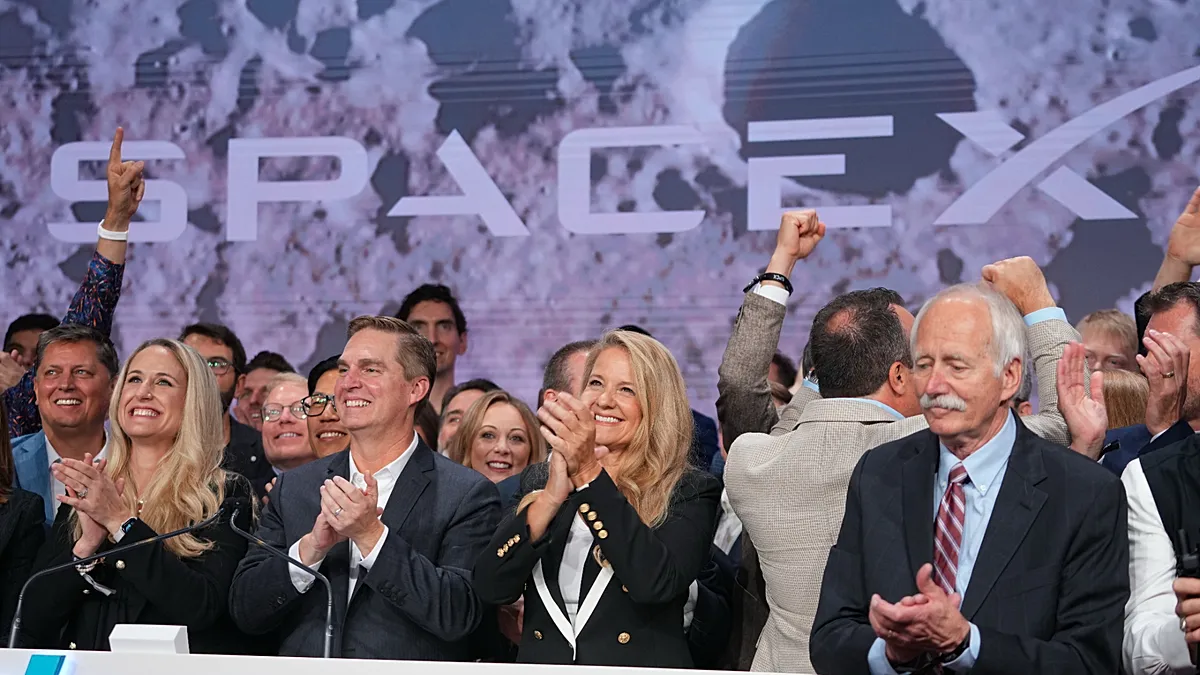
The “FAB 10” acronym, standing for Frontier AI & Big Tech 10, represents a dynamic evolution in market categorization. It expands the original “Magnificent 7” by incorporating three new entrants—SpaceX, OpenAI, and Anthropic—each poised to redefine the future of technology. These additions are not just symbolic; they reflect the increasing influence of companies that are pushing the boundaries of artificial intelligence and space exploration. The recent SpaceX IPO, which closed above $192 per share, underscores the growing confidence in these emerging players. As the tech sector matures, investors are increasingly looking beyond the traditional giants to identify the next wave of disruptors.
The inclusion of OpenAI and Anthropic in the “FAB 10” highlights the sector’s shift toward foundational AI research and development. Both companies, though still private, have filed for public market entry this year, with potential valuations exceeding $1 trillion. This momentum is driven by their groundbreaking innovations in large language models and AI-driven applications, which are expected to revolutionize industries ranging from healthcare to finance. Meanwhile, established players like Nvidia, Apple, and Microsoft remain key players, but their influence is now complemented by the rising prominence of the “FAB 10” as a more inclusive metric for tracking AI progress.
Market Dynamics and Investor Sentiment
The transition from the “Magnificent 7” to the “FAB 10” reflects broader market dynamics that are reshaping investor strategies. While the original group represented the apex of tech innovation, the new framework acknowledges the growing importance of startups and niche players in driving future growth. This shift is also influenced by the sector’s maturation, as the initial hype around AI stocks has given way to more nuanced valuations based on long-term potential rather than short-term momentum. Analysts emphasize that the “FAB 10” serves as a bridge between established giants and the next generation of tech leaders, capturing the essence of a sector that is both stable and rapidly evolving.
As the “FAB 10” gains recognition, other labels are also emerging to describe different aspects of the AI revolution. For instance, Bank of America’s “AI Big 10” includes semiconductor leaders like Broadcom, AMD, and Micron, while the “MANGOS” group highlights Meta, Anthropic, Nvidia, Alphabet, OpenAI, and SpaceX. These alternative classifications underscore the complexity of the market, where multiple factors—such as hardware advancements, software innovation, and infrastructure growth—contribute to the AI ecosystem. However, the “FAB 10” stands out for its emphasis on both the cutting-edge research of private firms and the public market readiness of emerging technologies.
Despite the popularity of the “FAB 10,” the “Magnificent 7” continues to play a pivotal role in shaping market trends. The original group, comprising Nvidia, Apple, Microsoft, Alphabet, Amazon, Meta, and Tesla, still holds a significant portion of the S&P 500 index. Their combined market value surpassed $22.6 trillion, with Nvidia alone commanding over $5 trillion, making it the world’s most valuable company by market cap. This enduring influence highlights the importance of foundational technologies and established ecosystems in driving sustained growth. Yet, as investors look beyond the “Magnificent 7,” they are increasingly diversifying their portfolios to include companies that may lead the next phase of innovation.
Investors are now adopting a more holistic approach to AI investing, recognizing that the sector’s success will depend on a mix of legacy leaders and new entrants. The “FAB 10” framework allows for this balance, integrating both the giants that have already scaled and the startups that are poised for disruption. This dual focus is critical as the AI market evolves from a speculative boom to a more structured investment opportunity. By embracing the “FAB 10,” investors can better anticipate the trajectory of emerging technologies and their impact on global industries. The inclusion of companies like OpenAI and Anthropic in this new classification is a testament to their potential to shape the future of artificial intelligence and related fields.