Ships start to trickle through Strait of Hormuz, but who will run it still in doubt
Ships Begin Moving Through Strait of Hormuz, Management Uncertain Ships start to trickle through Strait - Iran and the United States confirmed that maritime

Ships Begin Moving Through Strait of Hormuz, Management Uncertain
Poinews.com – Iran and the United States confirmed that maritime traffic has resumed in the Strait of Hormuz, with President Donald Trump asserting that the critical oil passage would be “completely open” by Friday. However, the specifics of who will oversee its operations remain unclear, leaving lingering questions about the future of this vital energy route.
Deal Announced, But Reopening Lags
Following a Sunday agreement between Washington and Tehran to end the Iran war, the reopening of the strait has been declared. Yet, Trump initially stated that the waterway’s full reopening depends on the signing of the deal in Switzerland on Friday, later modifying his stance to suggest ships were already moving through the area.
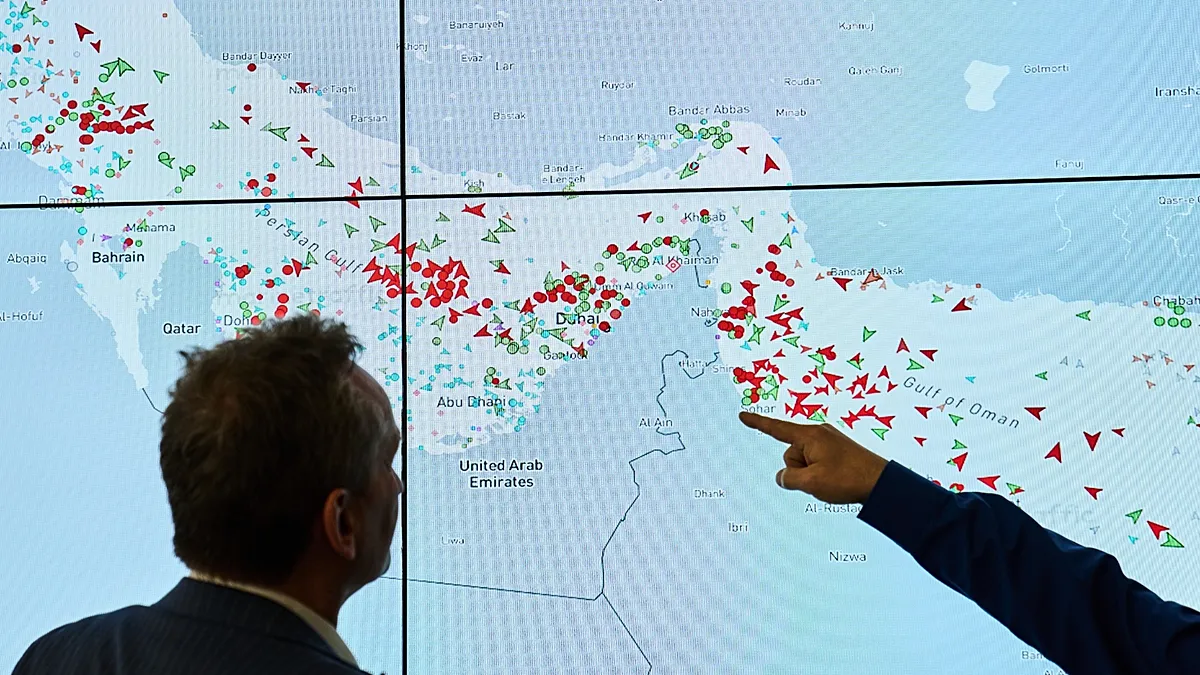
“Ships are starting to move, many loaded up with oil, out of the Strait of Hormuz,” Trump said on Tuesday, adding that the US “will need much help” to maintain its openness.
Joint Control and Disputed Claims
The Strait of Hormuz, spanning 38 kilometers at its narrowest, is already under the jurisdiction of Iran and Oman. However, Iran’s recent map claim extended its regulatory authority into UAE and Oman’s territorial waters, prompting Gulf states to caution shipping companies via the International Maritime Organisation (IMO). This dispute has complicated the clarity of the waterway’s management framework.
Conflicting Interpretations
The Institute for the Study of War (ISW) noted that the US and Iran have presented “diverging interpretations” of the framework agreement, making it difficult to ascertain which side’s version is accurate. The think tank emphasized that Tehran’s vision of an “open” strait aligns with its control, potentially conflicting with US and global commercial interests.
“Iranian statements indicate that the regime defines an ‘open’ strait as one under Iranian management, which contradicts US and global commercial interests,” the ISWAR analysis stated.
Economic Impact and Blockade History
Iran’s blockade of the strait since late February caused oil prices to spike, fueling fears of prolonged inflation. In response, the US imposed restrictions on shipping to and from Iranian ports. The deal’s signing on Friday could resolve these tensions, but uncertainty persists over its implementation.
Signing Progress and Pending Agreement
Despite the official announcement, the framework deal has not yet been signed. A senior US administration official revealed that Trump, Vice President JD Vance, and Iran’s parliamentary speaker, Mohammad Bagher Ghalibaf, had electronically approved the text. “The president wanted to sign it personally to demonstrate his dedication to resolving this,” the official explained.
“It’s a very powerful document, and I want it to be released. So probably pretty soon,” Trump remarked at the G7 summit in France.
Iran’s Stance and Regional Reactions
Iran’s foreign ministry spokesperson, Esmaeil Baghaei, clarified that the country would impose “maritime service fees” instead of tolls for ships passing through Hormuz. Meanwhile, Iranian Deputy Foreign Minister Kazem Gharibabadi called the deal an “immediate end” to the war, with final talks slated for within two months. The military celebrated the agreement as a victory, while President Masoud Pezeshkian praised it as a regional triumph.
Abbas Araghchi, Iran’s foreign minister, adopted a more cautious approach, acknowledging the country’s “history of broken commitments” and the risk of agreements being revoked. As the world watches for the official signing, the future of Hormuz hangs in the balance.