Germany blocks UniCredit bid for Commerzbank but the share price soars
Germany Blocks UniCredit Bid for Commerzbank, Yet Shares Rise Germany blocks UniCredit bid for Commerzbank - The German government has taken a decisive stance

Germany Blocks UniCredit Bid for Commerzbank, Yet Shares Rise
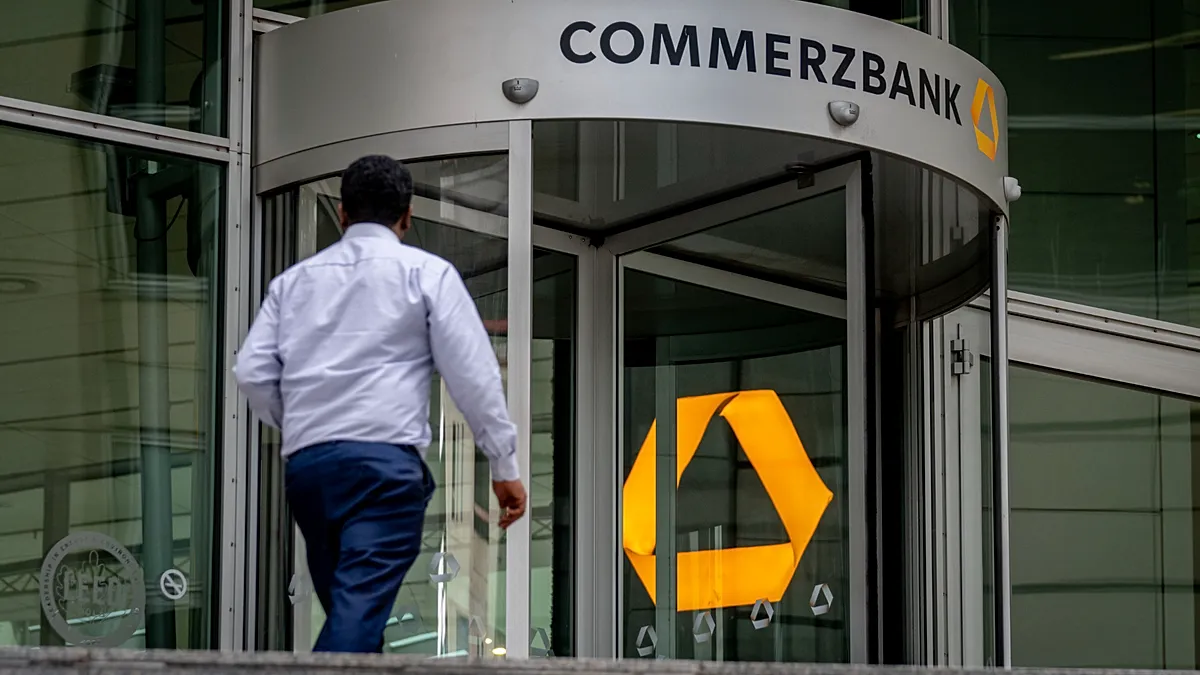
Poinews.com – The German government has taken a decisive stance against UniCredit’s attempt to acquire a controlling stake in Commerzbank, effectively halting the proposed merger. This action, announced by the Finanzagentur, the state’s financial oversight body, highlights the political and economic significance of Commerzbank in Germany’s financial landscape. Despite the rejection, UniCredit’s stock price experienced a notable increase, rising by 3.71% to 77.34 euros on the FTSE Mib, reflecting investor confidence in the bank’s strategic value and future prospects. The focus keyword, “Germany blocks UniCredit bid for Commerzbank,” encapsulates the core of this financial development, underscoring the regulatory hurdles faced by the Italian bank in its pursuit of a major European player.
The Reasons Behind the Rejection
According to the Finanzagentur’s statement, the bid was judged as economically unviable because it failed to offer a substantial premium over Commerzbank’s current share price. The government emphasized that the offer’s terms did not align with the necessary financial criteria to ensure a fair and competitive deal for Commerzbank’s shareholders. Furthermore, the decision reflects the broader political influence the German state holds in the bank, as it remains the second-largest shareholder due to its ownership stake from the 2008 financial crisis. This position grants the government significant sway over Commerzbank’s strategic direction, making the rejection a critical moment in the bank’s history.
The rejection also signals the government’s commitment to maintaining Commerzbank’s independence, particularly in light of its vital role in financing Germany’s economy and supporting the Mittelstand—small and medium-sized enterprises that form the backbone of the country’s industrial and export sectors. The Finanzagentur stressed that the bid’s “aggressive” strategy could threaten the bank’s stability, potentially leading to a shift in focus from its traditional domestic operations to international expansion. This, the agency argued, might compromise the institution’s ability to serve local markets effectively and efficiently.
Market Reactions and Investor Sentiment
While the German government’s decision has paused the merger, the market has responded positively to the uncertainty surrounding the deal. UniCredit’s stock price surged, demonstrating that investors still see potential in the Italian bank’s ability to secure a major acquisition despite the regulatory setback. This reaction is not entirely unexpected, as the bid was perceived as a strategic move to strengthen UniCredit’s position in the European banking sector. However, the upward trend in UniCredit’s shares also raises questions about whether the rejection of the Commerzbank deal will lead to renewed efforts to pursue other targets.
Commerzbank’s share price, on the other hand, showed a more subdued response. The rejection has not dented its market value significantly, suggesting that the German public and investors remain optimistic about the bank’s future. This sentiment is partly driven by the belief that Commerzbank will continue to operate independently, preserving its role as a key player in Germany’s financial system. Analysts have noted that the government’s involvement may deter other potential bidders, giving Commerzbank a chance to restructure its operations and strengthen its market position.
“Commerzbank plays a key role in financing the German economy and the Mittelstand, the backbone of small and medium-sized exporting companies,” the statement from the Finanzagentur reads. This highlights the strategic importance of the bank, which has long been a pillar of Germany’s financial infrastructure. The government’s intervention is seen as a protective measure to ensure that Commerzbank’s integration into the Italian banking group does not jeopardize its core functions or the stability of the broader economy.
The initial offer by UniCredit has already garnered a significant portion of Commerzbank’s shares, with 11.91% of the capital accepted as of yesterday. The total potential exposure, including derivatives, accounts for 55.09% of the capital, while 57.47% of voting rights are at risk. Combining physical shares and acceptances, the stake reaches 38.68%, and with derivative settlements, it rises to 41.9%. These figures illustrate the extent to which UniCredit has already made progress in its bid, even as the government’s decision casts doubt on its ultimate success. The Frankfurt public prosecutor’s office has also initiated preliminary inquiries into “suspected market manipulation” linked to the offer, adding another layer of scrutiny to the process.