Hungarian government to amend constitution to allow removal of president
Hungarian Government to Amend Constitution to Allow Removal of President Hungarian government to amend constitution to allow - On June 1, 2026, Hungarian

Hungarian Government to Amend Constitution to Allow Removal of President
Poinews.com – On June 1, 2026, Hungarian Prime Minister Péter Magyar unveiled plans to revise the country’s constitutional framework, aiming to grant the government the power to remove the president of the republic. This proposal, which could enable direct elections for the presidency, marks a significant shift in Hungary’s political structure and has sparked debate about the balance of power between the executive and the head of state.
Ambitious Move to Reclaim Presidential Authority
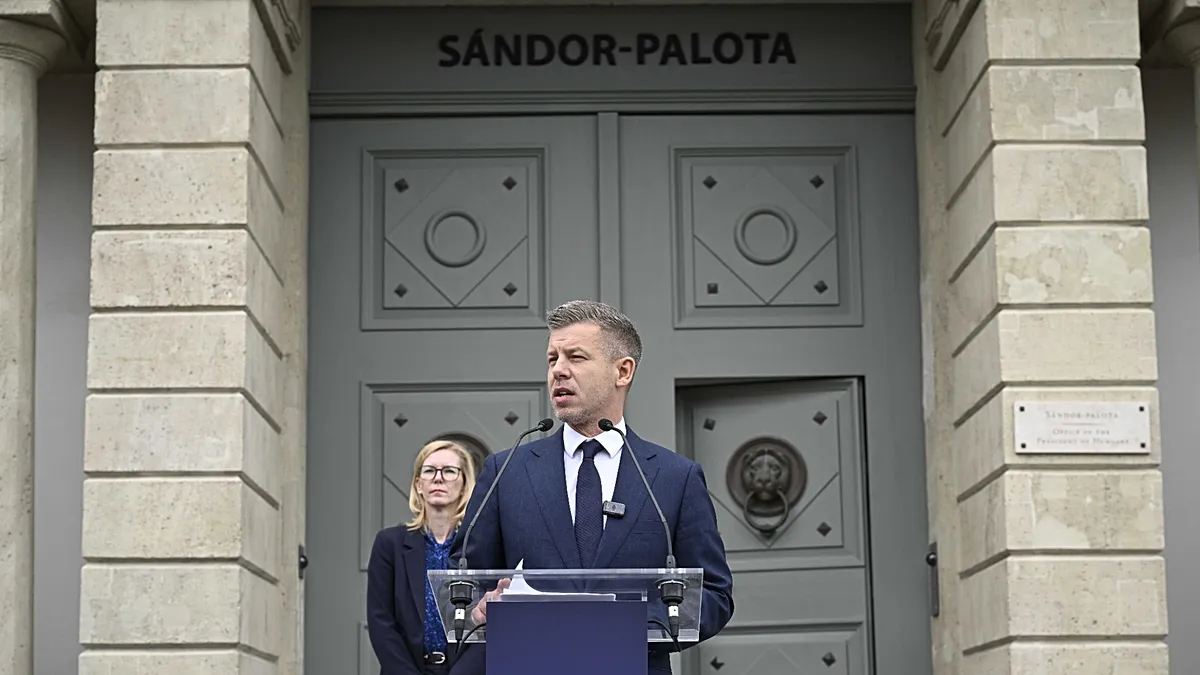
Magyar’s decision to propose the amendment came after a tense meeting with President Tamás Sulyok, whom he has criticized for failing to uphold the role of national unity and democratic governance. During a press conference held at Sándor Palace, the prime minister stated,
“Just as Viktor Orbán has abandoned the Hungarian people, so Tamás Sulyok, whom he appointed, has abandoned the Hungarian republic.”
He argued that the president’s office carries more weight than any individual leader, emphasizing the need to restore its credibility after years of perceived inaction and indecision.
Magyar outlined his strategy, asserting that the proposed changes would not target Sulyok personally but serve as a broader mechanism for holding other state officials accountable. “I have informed the president that if he maintains his position and does not resign of his own accord, then today I will inform the Tisza MPs of his decision and we will immediately launch the necessary procedures,” he declared. This move signals a push for institutional reforms that could reshape Hungary’s governance model.
Presidential Role and Constitutional Framework
The prime minister highlighted the president’s constitutional mandate, stating,
“The Fundamental Law is crystal clear: the president of the republic embodies the unity of the nation and safeguards the democratic functioning of the state.”
He criticized Sulyok for remaining silent during the ousting of previous leaders, including Viktor Orbán, and for not defending the nation’s citizens from political purges. “Sulyok kept silent when the ousted prime minister talked about bugs, a big clean-up and a shadow army; it should have been the president’s job to state that there are no citizens in the Republic of Hungary who need to be ‘cleaned away,'” Magyar said.
Magyar claimed he had sought Sulyok’s clarification on Orbán’s remarks but was told they represented a political opinion, not a threat to the nation. “The Hungarian republic does not belong to Tamás Sulyok, or to Viktor Orbán, or to any one party or political system; it is the shared creation of the Hungarian people,” he added, reinforcing his argument for a more representative presidential selection process.
Deadline for Resignations and Key Officials
Magyar has set a firm deadline of May 31 for the president and several senior public officials to resign. The list includes Péter Polt, the president of the Constitutional Court, along with the court’s 14 other members; Zs. András Varga, head of the Supreme Court; György Barna Senyei, director of the National Office for the Judiciary; László Windisch, president of the State Audit Office; Csaba Balázs Rigó, head of the Competition Authority; and András Koltay, president of the National Media and Infocommunications Authority.
Magyar’s announcement was accompanied by a reminder to the public of the impending deadline. On Sunday afternoon, he used a Facebook post to stress the importance of the date, noting that he and the justice minister would visit the president at 8 a.m. on Monday to discuss the matter further. This public engagement underscores the gravity of the situation and the government’s determination to act swiftly.
Political Tensions and Counter-Protesters
During the press conference, Magyar faced disruptions from counter-protesters who shouted slogans and challenged his authority. He called on the police to remove anyone engaging in disorderly conduct, highlighting the polarized nature of the debate. Meanwhile, Sulyok’s supporters defended his stance, with the president himself vowing to continue cooperating with the government and advocating for legislation to reduce EU funding.
Sulyok, in a Facebook video, stated that he was prepared to wait for the Venice Commission’s opinion before making any final decisions. He emphasized that the new government should proceed through constitutional means, a statement that has drawn mixed reactions from political analysts. Magyar, however, dismissed this as a delaying tactic, labeling Sulyok as “Viktor Orbán’s puppet president” and suggesting his loyalty to the ruling Fidesz party had overshadowed his duty to the nation.
Path to Direct Elections and Future Implications
Magyar has expressed a desire for citizens to have a greater role in selecting the president, though he has not ruled out other methods. “That could mean a direct presidential election, but other solutions are also possible; as Magyar said, the details still have to be worked out with his fellow MPs,” the article notes. This openness to different approaches reflects a strategic effort to ensure the amendment gains broad support.
While the specifics of the proposed changes remain under discussion, the government’s goal is clear: to empower itself to remove leaders who fail to meet constitutional expectations. Magyar’s criticism of Sulyok’s silence during political controversies has fueled speculation about the amendment’s broader implications. If enacted, it could allow for a more dynamic leadership structure, where the president is elected directly by the public rather than chosen by the ruling party.
Historical Context and Leadership Dynamics
Magyar’s remarks suggest a deepening rift between the executive branch and the head of state. He argued that Sulyok’s actions, such as his failure to challenge Orbán’s policies, have undermined the president’s role as a guardian of national unity. “Sulyok has never stood up for the downtrodden, for those under attack or for the rule of law,” Magyar wrote in a Facebook post, adding that even on Children’s Day, Sulyok focused on defending his salary rather than apologizing for his perceived inaction.
This constitutional battle is part of a larger struggle over Hungary’s political direction. Magyar’s proposal to remove the president has been framed as a necessary step to ensure democratic accountability. However, critics argue that the amendment could be used to consolidate power within the ruling party, potentially weakening checks and balances. The debate over the president’s role continues to shape public discourse, with citizens and political factions weighing in on the implications of the proposed changes.