US dollar hits record high in Iran as rial weakens amid renewed regional conflict
llar Hits Record High in Iran Amid Regional Conflict US dollar hits record high in Iran - The US dollar has surged to a record high in Iran, reaching 1.941

US Dollar Hits Record High in Iran Amid Regional Conflict
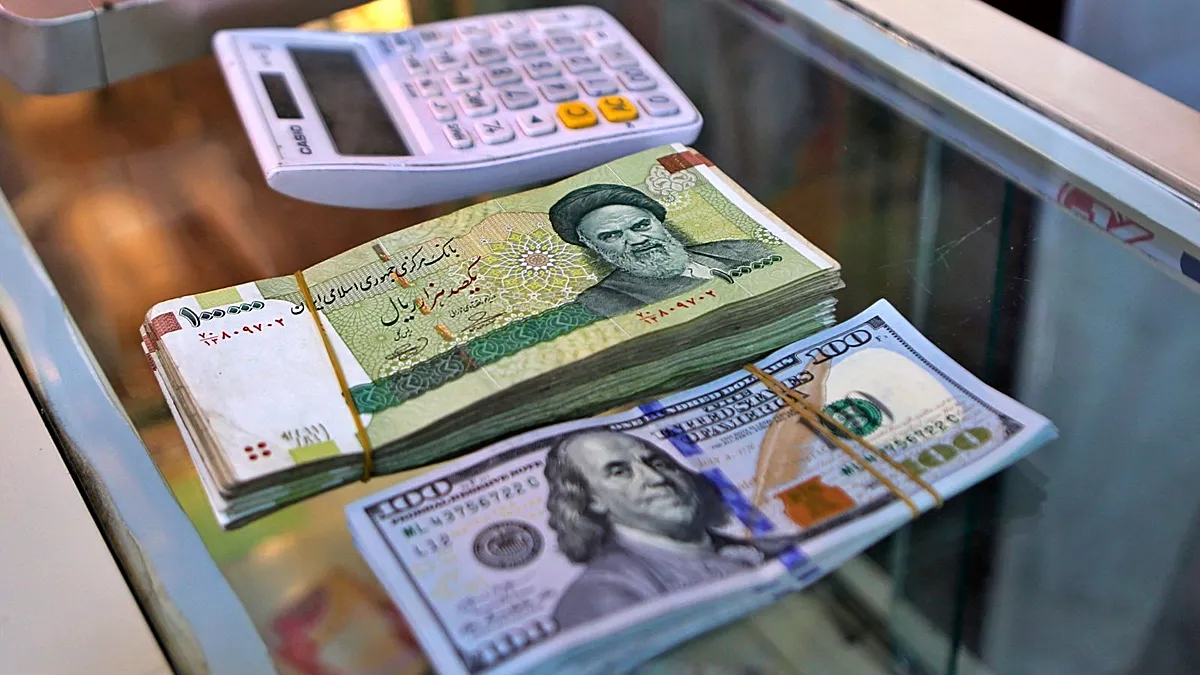
Poinews.com – The US dollar has surged to a record high in Iran, reaching 1.941 million rials in the open market on Saturday. This marks a 1.67% increase from the previous day’s unofficial closing rate of 1.909 million rials. The euro also rose, trading at 2.22 million rials—a 1.64% jump from Friday’s close of 2.184 million rials. The strengthening of the dollar against the Iranian rial reflects deepening economic uncertainty, driven by renewed regional tensions and growing inflationary pressures.
Escalating Currency Volatility
The Iranian rial has weakened significantly, losing nearly 43.7% of its value against the dollar since the start of 2026. At the beginning of the year, the exchange rate was approximately 1.35 million rials per dollar, but it climbed to 1.72 million rials shortly after US and Israeli air strikes targeted Iran’s infrastructure on February 28. The conflict initially disrupted trade, causing a temporary drop in foreign currency demand and a brief retreat of the dollar to 1.46 million rials. However, the resumption of economic activity and concerns over $300 billion in wartime damage have reignited pressure on the foreign exchange market, pushing the dollar back toward 1.9 million rials.
Analysts attribute the current surge in the US dollar to a combination of factors, including geopolitical instability and domestic economic challenges. The ongoing regional conflict has created a climate of risk aversion, with investors favoring the dollar as a stable asset amid fears of further currency depreciation. This shift in market sentiment has accelerated the rial’s decline, which has been exacerbated by high inflation and rapid monetary expansion. The US dollar hits record high in Iran as the Central Bank struggles to maintain control over the exchange rate, with limited tools to counteract the outflow of foreign capital.
Historical Context and Inflationary Pressures
The rial’s depreciation is part of a longer trend that has persisted since the 2018 US sanctions on Iran. These measures, coupled with internal economic mismanagement, have eroded confidence in the currency. Inflation in Iran has reached its highest level since World War II, with annual consumer price inflation accelerating sharply. By December 2025, inflation stood at 52.6%, surging to 68% in February 2026 and hitting 88.6% in July 2026. The US dollar hits record high in Iran as the country grapples with these mounting economic pressures, which threaten to destabilize its economy further.
High inflation and currency depreciation are creating a vicious cycle that strains household incomes and reduces purchasing power. As import costs rise due to the weakened rial, essential goods become more expensive, compounding the challenges faced by the Iranian population. The recent escalation of regional conflict has intensified these effects, with military operations and sanctions driving up fears of economic collapse. Experts warn that without intervention, the US dollar’s dominance in the Iranian market could deepen, potentially leading to a hyperinflation scenario.
Iran’s economic vulnerabilities have been amplified by the conflict, as trade routes and financial transactions are disrupted. The country’s reliance on oil exports has made it particularly sensitive to global market fluctuations and political instability. The US dollar hits record high in Iran, underscoring the growing imbalance between the country’s export revenues and its import costs. This situation has also led to a rise in the value of the dollar relative to other currencies, such as the euro, which has seen a smaller but notable increase in the rial.
Regional tensions, including conflicts with neighboring countries and the US, have kept the Iranian rial under pressure. The government’s efforts to stabilize the currency through measures like price controls and currency interventions have had limited success. Additionally, the Central Bank’s decision to maintain high interest rates to curb inflation has made borrowing more expensive for businesses and consumers, further straining economic activity. These factors, combined with the ongoing conflict, have created an environment where the US dollar continues to rise, while the rial remains vulnerable to further depreciation.
As the conflict continues, the US dollar’s record high in Iran may persist, with implications for both domestic and international markets. The Iranian rial’s decline is not just a local issue but a symptom of broader geopolitical and economic instability. Analysts suggest that the situation could worsen if the conflict escalates, leading to more severe economic consequences. The US dollar hits record high in Iran, reflecting the market’s response to the country’s deteriorating economic conditions and the persistent uncertainty in the region.