‘Red Orbán’ or visionary? Ceuta crisis puts Sánchez’s EU standing under scrutiny
While public criticism of Spain regarding the Ceuta situation has somewhat calmed, a deeper concern persists within European capitals. The question now

Table of Contents
Is Spain’s Leader Becoming Europe’s Left-Wing Outlier?
Poinews.com – While public criticism of Spain regarding the Ceuta situation has somewhat calmed, a deeper concern persists within European capitals. The question now circulating is whether Pedro Sánchez is evolving into what Danish Member of the European Parliament Henrik Dahl described as the continent’s “red Orbán”—a progressive head of government growing increasingly detached from mainstream EU consensus. Even if this characterization remains contested, the recent events in Ceuta highlight Spain’s mounting separation from fellow European nations under Sánchez’s leadership.
A Leader Walking Alone
Dahl, representing the European People’s Party, characterized the Spanish premier as a disruptive force. “Like Orban, he is seen as a spoiler,” the MEP explained. “Sánchez is not on the same page as almost everybody else, and he’s seen as free-riding and really negligent on security issues.”
While Hungary’s Viktor Orbán gained notoriety for blocking EU initiatives—including sanctions and financial aid for Ukraine—Sánchez has not consistently opposed European legislation. However, Dahl identified several policy areas where Madrid diverges significantly from the other 26 EU member states. These include a more accommodating stance toward Beijing, opposition to expanded NATO defense commitments, a compassionate migration framework, and a balanced approach to the Israel-Palestine conflict.
“He is on a totally different page than almost everybody else with China,” Dahl said of Sánchez, using Beijing as an example of one the wedges. “He is seen as someone who simply does not understand that China is weaponising globalisation.”
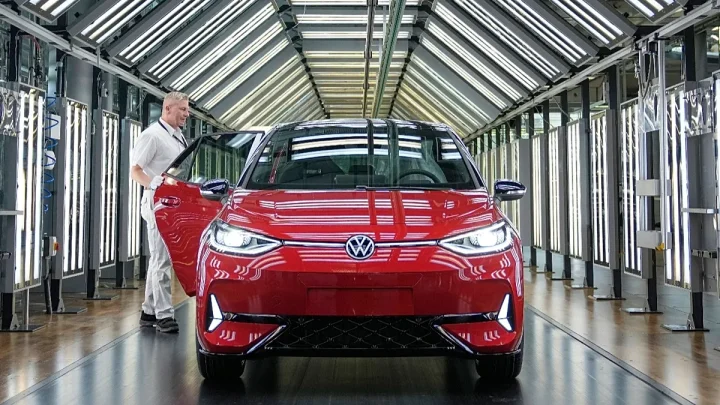
Madrid’s request for the European Commission to review duties on Chinese electric vehicles revealed internal disagreements about how the bloc should handle trade relations with the Asian power. Additionally, King Felipe VI’s November journey to China—the monarch’s first visit to the capital in nearly two decades—generated unease among EU officials seeking to maintain economic competitiveness with the global superpower.
Defense Spending and Migration Concerns
NATO commitments represent another friction point. “NATO is obviously another issue because Spain is the only country that has not agreed to the 5 percent target, and this is being seen as not very constructive,” Dahl noted. According to 2026 defense expenditure projections, Spain plans to allocate approximately 2 percent of its GDP to military spending. Slovenia and Croatia will spend even less, while Italy’s commitment stands at 2.1 percent.
Yet migration remains the most significant source of tension between Spain and its European partners. The Ceuta emergency, involving roughly 72,000 Moroccan nationals crossing into the Spanish territory late last week, intensified worries that Madrid’s approach conflicts with neighboring countries’ interests. Critics argue that Spain’s recent program to regularize migrants contributed to the mass arrivals.
“We recognise that the recent ruling of the Spanish Supreme Court has been used to trigger this attack and abuse our migration and asylum system,” the joint letter stated. “We have a duty to effectively deter and relentlessly combat illegal migration, by coordinating our action, strengthening our external borders and addressing all policies that can serve as pull factors, such as the regularisation of (a) very large number of irregular migrants.”
On Saturday, twenty-two national leaders addressed European Commission President Ursula von der Leyen and European Council President António Costa with their concerns. Dahl emphasized that such widespread agreement indicated a majority sentiment rather than a minority complaint. One EU diplomat suggested much of the criticism stemmed from leaders needing to satisfy their domestic voters, noting that at least six signatories face national elections in 2027.
Isolation or Independence?
“The fact that he is isolated is a reality,” observed Alicia García-Herrero, a Spanish economist who counsels the Madrid government. “I believe that Sánchez has felt isolated for a long time.”
García-Herrero pointed out that the rapid drafting and signing of the letter by twenty-two leaders revealed accumulated frustrations regarding multiple policy areas. “This just hit him on the face, this letter,” she remarked. The economist warned that further disunity and potential isolation for Spain could become evident at the forthcoming European Council summit.
Related Reading
Frequently Asked Questions
What is Red Orbán or visionary Ceuta crisis?
Red Orbán or visionary Ceuta crisis is the main topic of this guide. The article explains the context, practical details, and next steps readers should understand.
Why does Red Orbán or visionary Ceuta crisis matter?
Red Orbán or visionary Ceuta crisis matters because readers are looking for a useful answer, not just a short summary. Good content should match search intent and help them decide what to do next.