First tiger released into the wild in Kazakhstan 70 years after Turan tiger extinction
Kazakhstan has achieved a remarkable conservation milestone with the first tiger released into the wild in the country since the Turan tiger became extinct

First Tiger Released Into the Wild in Kazakhstan After 70 Years
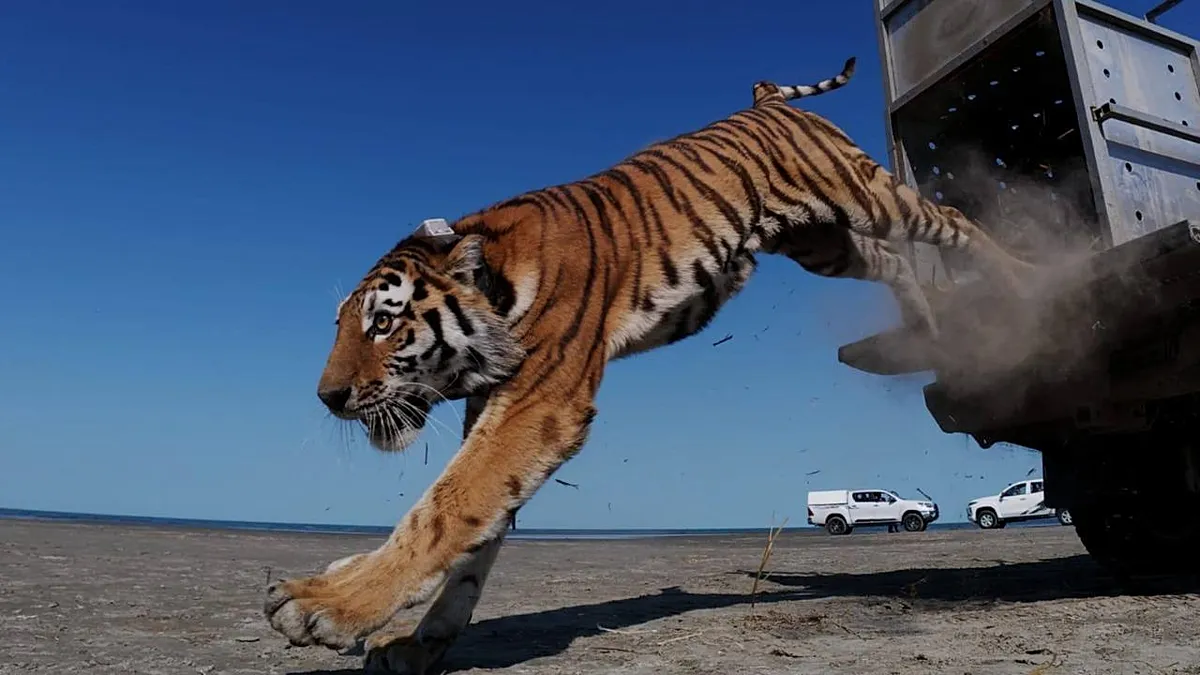
Poinews.com – Kazakhstan has achieved a remarkable conservation milestone with the first tiger released into the wild in the country since the Turan tiger became extinct seven decades ago. Umit, a female Amur tiger whose name means “hope” in Kazakh, became the pioneer of this historic reintroduction program. Her release marks a new chapter for Central Asian wildlife, as experts work to restore a species that once roamed freely across the region before disappearing from the landscape in the mid-20th century.
Umit’s Path to Reintroduction
Umit was one of four Amur tigers transported from Russia in May, but she was the first to enter the wild. Before her release, she spent two months in a monitoring period where wildlife specialists carefully evaluated her physical health, behavioral patterns, and hunting abilities. These thorough assessments ensured she possessed the essential skills needed to thrive independently outside of captivity.
The reintroduction program follows a two-phase approach designed to maximize survival rates. Initially, the tigers live within a spacious enclosed habitat where they can adjust to local climate conditions and terrain. Once they demonstrate confidence and adaptability, they transition into the unfenced Ile-Balkhash Nature Reserve, where they can roam across their ancestral territory without restrictions.
A Growing Tiger Population
Umit is part of a larger effort to rebuild Kazakhstan’s tiger population. The reserve currently houses six Amur tigers in total. In addition to the Russian arrivals, Kuma and Bohdana arrived from the Netherlands in 2024 after living their entire lives at the Stichting Leeuw big cat sanctuary. Because these Dutch-born tigers have no wilderness experience, they will remain in the enclosed habitat to support the breeding program and help establish future generations.
The adult male tiger from the Russian group continues under close observation as experts assess his readiness for release. Two cubs that arrived at just six months of age will remain with wildlife specialists until they reach 18 months old, ensuring they develop proper hunting and survival skills before joining their mother in the wild.
Tracking and Community Protection
After Umit’s release, conservationists fitted her with a GPS/GSM satellite tracking collar to monitor her movements in real time. Authorities have also established clear protocols to alert nearby residents whenever a tiger approaches within five kilometers of a village. This proactive approach helps prevent human-wildlife conflicts while allowing tigers to roam naturally.
“The safety of people living near the reserve is our top priority,” officials from Kazakhstan’s Ministry of Ecology said. “We’ve put measures in place to prevent conflicts between people and tigers, including a dedicated team that will respond if an animal approaches a populated area.”
Restoring the Food Chain
Ensuring adequate food sources required years of dedicated effort. Since 2018, wildlife experts have been restoring the reserve’s prey base through the reintroduction of Bukhara deer from both Kazakhstan and Russia, alongside the relocation of kulans from Altyn-Emel National Park. According to Kazakhstan’s Forestry and Wildlife Committee, each adult tiger requires approximately 50 to 70 large animals annually to survive and maintain good health.
Looking Toward the Future
Genetic research has revealed that the Amur tiger represents the closest living relative to the extinct Turan tiger. For conservationists, Umit’s release marks merely the beginning of a decades-long restoration journey. The program will only achieve full success when tigers breed naturally in the wild and maintain a self-sustaining population without human intervention.
If Kuma and Bohdana produce offspring and experts verify that these young animals can survive independently, their descendants may eventually join Umit in Kazakhstan’s vast wilderness, completing one of the most ambitious wildlife conservation efforts in history.
Frequently Asked Questions
Which tiger species was released in Kazakhstan?
Umit is an Amur tiger, also known as a Siberian tiger. Genetic studies show that the Amur tiger is the closest living relative to the extinct Turan tiger that once inhabited Central Asia.
Where was Umit released?
Umit was released into the Ile-Balkhash Nature Reserve, a vast protected area in Kazakhstan that serves as the ancestral home of the Turan tiger. The reserve provides approximately 1,000 square kilometers of habitat for the reintroduced tigers.
How many tigers are part of the reintroduction program?
The program includes six Amur tigers in total: four from Russia and two from the Netherlands. Umit was the first to be released, while the others remain in various stages of preparation.
What measures protect local communities?
Authorities have established a rapid response team and monitoring system that alerts residents when tigers approach within five kilometers of villages. This ensures both human safety and minimal disruption to tiger behavior.
When will the program be considered fully successful?
The program will achieve full success when tigers breed naturally in the wild and maintain a self-sustaining population without human intervention, ideally within the next 20 to 30 years.