‘Distressing’ imagery: From ‘Ali G’ to ‘The Mummy’ – Which movie posters have been banned since 2000?
Certain promotional images capture audiences' attention and set trends, while others ignite debate and fail to pass muster. The most recent casualty belongs

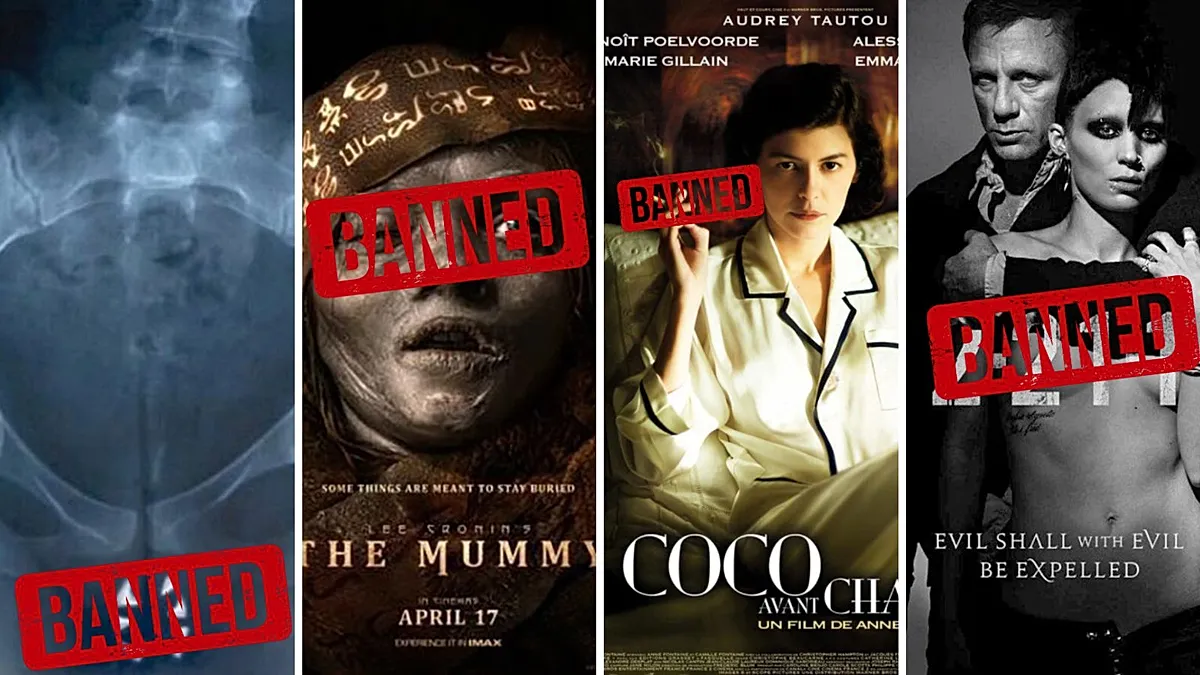
Table of Contents
Movie Posters That Sparked Controversy and Faced Censorship
Poinews.com – Certain promotional images capture audiences’ attention and set trends, while others ignite debate and fail to pass muster. The most recent casualty belongs to Lee Cronin’s The Mummy, which has been barred from London Underground displays. According to the UK’s Advertising Standards Authority, numerous complaints prompted the decision regarding a campaign showcasing a mummified child in close-up detail.
The organisation ruled that the figure’s “sunken and lifeless” features gave “a realistic impression of a dead child”.
Consequently, the authority decreed that these particular posters could not reappear publicly in identical form. While some welcomed the prohibition, others felt the decision missed the mark for a supernatural horror picture where the young girl ultimately survives her exhumation. Nevertheless, this isn’t cinema’s first encounter with promotional censorship.
Post-9/11 Adjustments
Before Sony Pictures launched Sam Raimi’s Spider-Man in 2002, they released teaser trailers and posters depicting New York City’s iconic Twin Towers. Following the devastating September 11 attacks, the studio requested that all promotional materials be destroyed and substituted with alternative New York buildings.
Comedy and Satire Face Scrutiny
Long before becoming Borat, Sacha Baron Cohen performed as the Staines-based rapper Ali G. The 2002 film’s promotional poster attracted substantial criticism, with many viewers considering it sexist. The UK’s ASA determined that both the image and Cohen’s hand positioning were offensive and pornographic in nature.
Meanwhile, the marketing team behind the satirical black comedy adaptation of Bret Easton Ellis’s 1987 novel took a creative approach. They arranged stuffed animals in what could only be described as suggestive positions. While some found this juvenile, others considered it brilliant. The MPAA prohibited the poster in the United States, though Canada, the UK, and various European markets embraced the humor and retained the original design.
Horror and Documentary Censorship
A bloodied hand attempting to break free from a metro carriage naturally raised concerns for Transport For London. The second Saw installment faced rejection from the US MPAA due to its depiction of severed fingers. An updated version subsequently made the amputation less obvious.
Ironically, the poster for Kirby Dick’s documentary examining cinema censorship was rejected by multiple American newspapers. Similarly, the MPAA vetoed Michael Winterbottom and Mat Whitecross’s documentary about the “Tipton Three” British men detained at Guantanamo Bay. The authority believed the burlap bag covering the detainee’s head implied torture. Critics viewed this as hypocritical given the facility’s longstanding role in civil liberties discussions.
Unconventional Imagery Banned
Mitchell Lichtenstein’s comedy horror gained notoriety for its central concept: vagina dentata. For marketing purposes, the team utilized an X-ray of the protagonist Dawn’s body, revealing her unusual set of teeth. While clever in conveying the premise, authorities in both the US and UK deemed the image too unsettling and banned it.
South Korea’s anthology film exploring love, passion, and lust made history as the nation’s first movie poster to receive a complete ban. This marked the inaugural instance where promotional material displayed naked buttocks. Additionally, Park Chan-wook’s horror adaptation of Emile Zola’s Thérèse Raquin faced prohibition from South Korea’s Media Rating Board. Rather than the priest’s strangulation, the naked legs were considered overly sexually suggestive. A revised version eventually removed the problematic legs.
Advertising Regulations Impact Cinema
Gabrielle ‘Coco’ Chanel, portrayed by Audrey Tautou, appears smoking a Gauloise on the poster for Anne Fontaine’s biographical drama. Paris transport authorities prohibited the image from metro stations because France prohibits all forms of direct and indirect tobacco advertising.
Finally, the UK’s ASA banned the poster for Daniel Stamm’s The Last Exorcism, produced by Eli Roth. The authority cited concerns about the image of a young woman wearing a blood-splattered garment.
These examples demonstrate how promotional materials have faced various forms of censorship over the past two decades, whether due to cultural sensitivities, advertising regulations, or public complaints.
Related Reading
Frequently Asked Questions
What is Distressing imagery?
Distressing imagery is the main topic of this guide. The article explains the context, practical details, and next steps readers should understand.
Why does Distressing imagery matter?
Distressing imagery matters because readers are looking for a useful answer, not just a short summary. Good content should match search intent and help them decide what to do next.