Video. Record-low Danube exposes sandbanks, strands boats in Serbia
Aerial footage has captured dramatic scenes as the Record low Danube exposes sandbanks across northern Serbia, revealing a river landscape transformed by

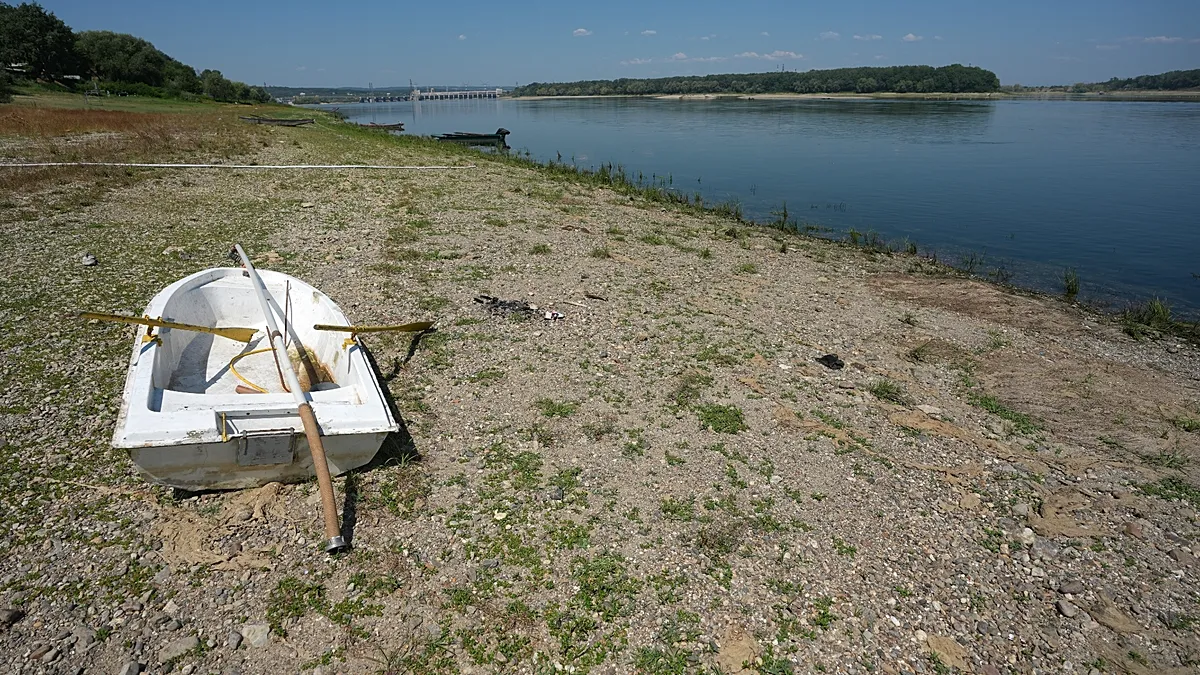
Table of Contents
Record Low Danube Exposes Sandbanks: Serbia Faces Unprecedented River Conditions
Poinews.com – Aerial footage has captured dramatic scenes as the Record low Danube exposes sandbanks across northern Serbia, revealing a river landscape transformed by historically low water levels. The phenomenon is particularly visible near the towns of Apatin and Bezdan, where vast stretches of the riverbed that are normally submerged have emerged into view. Large sandbanks that were once hidden beneath the water’s surface now stand prominently, creating an unusual sight for locals and visitors alike.
The impact of this Record low Danube exposes sandbanks situation extends far beyond visual changes. Boats of various sizes now sit stranded on exposed portions of the river, unable to navigate freely as they normally would. A small marina has been completely left dry, with vessels resting on what was once the river bottom. Cargo vessels, which form the backbone of commercial transport along this vital waterway, remain stranded for extended periods, disrupting supply chains and commercial operations.
Multi-Sector Impact of the Drought Crisis
The drought has pushed sections of the Danube to historically low levels, creating cascading effects across multiple sectors. Shipping operations face significant challenges, with some cargo vessels unable to move for days at a time. The reduced water depth limits the amount of cargo these vessels can carry, forcing operators to make multiple trips or reduce their loads substantially.
Perhaps equally concerning is the effect on Serbia’s hydropower production capacity. Falling water levels directly impact the efficiency of hydroelectric plants that rely on consistent river flow. This creates potential energy shortages during a period when demand may already be elevated due to hot weather conditions associated with the drought.
On a more positive note, some newly exposed sandbanks have become temporary beaches, with people walking across the dry riverbed and using the shallow water for recreation. This unexpected benefit provides local communities with new spaces for outdoor activities during the summer months.
Authorities continue to monitor the situation closely as the drought puts pressure on transport, energy production and communities living along the Danube. The full extent of the impact will become clearer as water levels continue to fluctuate.
What Residents and Visitors Should Know
The current situation represents one of the most significant hydrological events in recent memory for the region. While the Record low Danube exposes sandbanks creates challenges for commercial and industrial activities, it also offers unique opportunities for tourism and local recreation.
Local authorities have implemented monitoring systems to track water levels and provide timely updates to stakeholders. Navigation warnings have been issued for vessels, and energy companies are adjusting their operations to maximize production despite reduced water availability.
As the situation develops, the community remains resilient, adapting to the new reality while hoping for rainfall that could restore more normal river conditions. The Danube, one of Europe’s main waterways, continues to play a central role in regional life, even under these extraordinary circumstances.
Frequently Asked Questions
How low are the Danube water levels currently?
Sections of the Danube have reached historically low levels, though exact measurements vary by location. The Record low Danube exposes sandbanks phenomenon is most pronounced near Apatin and Bezdan in northern Serbia.
What is the impact on boat traffic?
Many boats are stranded on exposed riverbed sections. Cargo vessels face particular difficulties, with some unable to move for days. A small marina has been left completely dry.
How does this affect energy production?
Falling water levels are directly affecting Serbia’s hydropower production capacity, potentially leading to reduced energy output during the drought period.
Are there any benefits to the low water levels?
Yes, some newly exposed sandbanks have become temporary beaches, providing new recreational spaces for local communities and visitors.