
From playing games to building rockets: Portugal’s Ubbu brings coding to primary school
this transformation is happening daily in Portuguese primary classrooms. Children who once simply swiped through mobile games now create their own digital

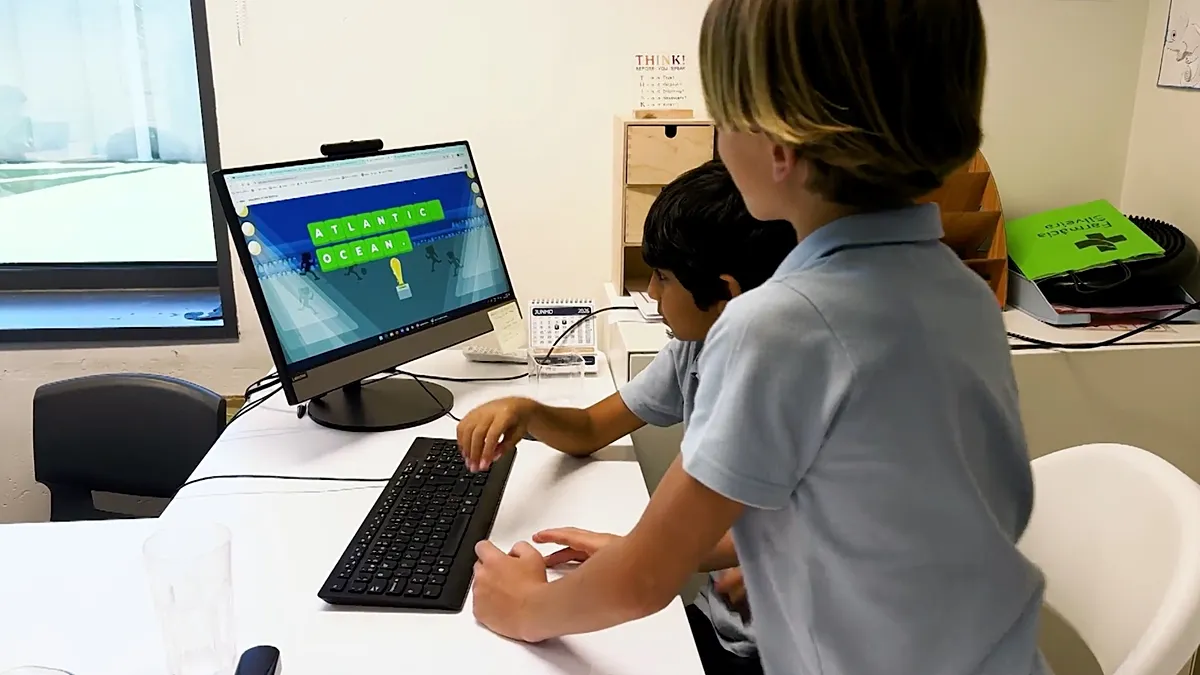
Table of Contents
From Playing Games to Building: Ubbu’s Coding Revolution in Portuguese Schools
Poinews.com – this transformation is happening daily in Portuguese primary classrooms. Children who once simply swiped through mobile games now create their own digital experiences using Ubbu, a pioneering Portuguese programming platform. Designed for students aged six to fourteen, Ubbu has fundamentally changed how young learners approach technology. Rather than passive consumption, children actively develop computational thinking through interactive challenges. Teacher Teresa Cary explains: “It looks like they’re playing games, but they’re actually working on lots of different things.” She emphasizes that students learn logic, mathematics, and problem-solving while appearing to have fun.
The Vision Behind Ubbu’s Educational Mission
Code for All established Ubbu in 2015, founded by João Magalhães and a team of dedicated educators and technologists. The founders identified a critical gap in how Portuguese schools prepared children for technological advancement. “We believed no one was prepared for the speed at which technology was entering our lives,” Magalhães recalls. This insight drove the creation of a comprehensive solution addressing digital literacy, computational thinking, creativity, artificial intelligence, and cybersecurity education.
The platform’s growth has been remarkable. Today, Ubbu operates in four languages and serves approximately half a million children through more than 8,000 educators across twenty countries worldwide. Students engage with visual coding blocks rather than traditional text-based programming. Pedagogical content creator André Ribeiro explains their methodology: “All the narratives are linked to the UN Sustainable Development Goals.” This approach ensures children create ethical content while learning to use technology responsibly for positive impact.
Building Inclusive STEM Education
Project manager Joana Miranda highlights how Ubbu addresses representation gaps in science, technology, engineering, and mathematics. Student projects demonstrate real-world applications, including robots that collaborate to prevent forest fires. “Knowing how to use technology safely, responsibly and ethically is incredibly important,” Miranda emphasizes. The platform has achieved remarkable gender balance, with a 50-50 audience in participating schools. Girls see female role models and realize that women actively contribute to science, technology, and engineering fields.
Accessibility remains central to Ubbu’s mission. Through partnerships with corporations and educational foundations, the organization provides complimentary access to public schools in underserved Portuguese communities. At Amadora Oeste Agrupamento de Escolas’ primary school near Lisbon, educator Isabel Cunha observed transformative results. “It captured my pupils’ attention, and from there we explored many different topics,” she reports. “After only a year, they know how to use computers and tablets safely, how to navigate the web, I can already see great progress.”
Preparing the Next Generation of Innovators
For nine-year-old Arwa, coding represents pure enjoyment and creative expression. Her father recognizes the long-term significance of these early experiences. “In 10 or 20 years, you won’t be able to do anything without coding, programming or robotics,” he states confidently. “The people who know these things will be the future leaders.”
Ubbu’s approach to From playing games to building extends beyond technical skills. Students develop critical thinking, collaboration, and communication abilities through project-based learning. The platform’s curriculum adapts to different age groups and learning styles, ensuring every child can progress at their own pace. Schools report increased student engagement and improved performance across multiple subjects.
Frequently Asked Questions About Ubbu
What age group does Ubbu serve? Ubbu is designed for children between six and fourteen years old, with content adapted for different developmental stages.
How does Ubbu make coding accessible to young children? Students use visual coding blocks instead of typing traditional code, making programming concepts intuitive and engaging.
Is Ubbu available in Portuguese public schools? Yes, through partnerships with companies and foundations, Ubbu provides complimentary access to public schools in underserved Portuguese communities.
What global goals does Ubbu incorporate into its curriculum? All Ubbu narratives are linked to the UN Sustainable Development Goals, ensuring students learn to create ethical content.
How has Ubbu impacted gender representation in STEM? The platform has achieved a 50-50 gender balance in participating schools, helping girls see women as role models in science, technology, and engineering.