Video. Rare eclipse plunges parts of Europe into darkness
Skywatchers across the European continent witnessed a celestial phenomenon as a rare eclipse plunges parts of Europe into temporary darkness on Wednesday

Rare Eclipse Plunges Parts of Europe Into Spectacular Darkness
Poinews.com – Skywatchers across the European continent witnessed a celestial phenomenon as a rare eclipse plunges parts of Europe into temporary darkness on Wednesday. This extraordinary astronomical event drew millions of observers who gathered in major cities and remote locations alike to witness the Moon’s passage across the Sun’s brilliant disc. The eclipse created a dramatic spectacle that captivated both amateur astronomers and casual observers throughout the region.
The celestial event followed a precise trajectory across the continent, with the path of totality cutting through northern Spain, parts of Portugal, and Iceland. While these regions experienced complete darkness as the Moon fully covered the Sun, much of western and central Europe enjoyed a partial eclipse that still provided a stunning visual display. Russia also hosted enthusiastic observers who watched the lunar shadow sweep across the landscape.
How to Safely Watch the Eclipse
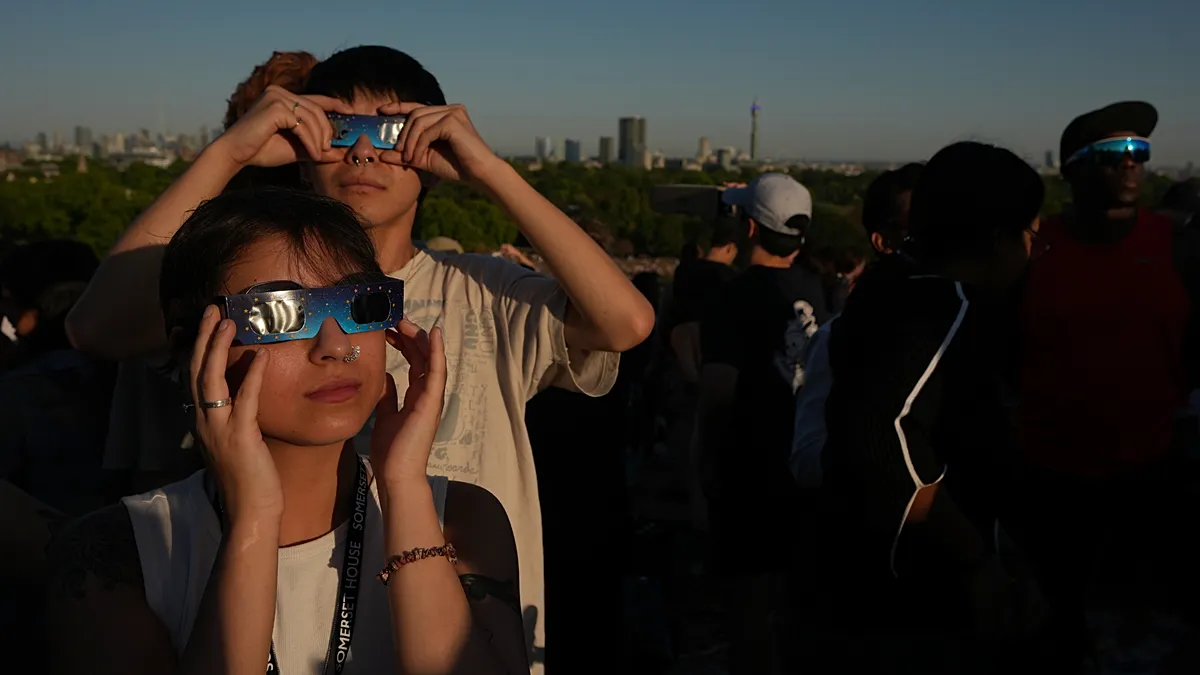
Viewers were advised to use special eclipse glasses and other protective equipment to safely observe the event without damaging their eyes. The intense solar radiation can cause permanent eye damage if proper precautions are not taken. Many locations set up viewing stations with professional-grade telescopes and filters, allowing people to experience the eclipse through magnified lenses while remaining protected.
“This is one of the most significant astronomical events of the decade,” said one local astronomer. “The combination of timing and geographic coverage makes this eclipse truly special for European observers.”
The duration of totality varied depending on location, with some areas experiencing up to several minutes of complete darkness. During this brief period, temperatures dropped noticeably, and the sky took on an eerie twilight quality. Birds often ceased their singing, and some animals behaved as though evening had arrived prematurely.
Astronomers noted that this eclipse represents a rare alignment that will not occur again for many years. The precise path and timing make it a valuable opportunity for scientific observation and public engagement with astronomy. Educational institutions and observatories across Europe reported record attendance as people sought to understand this celestial wonder.
Frequently Asked Questions
When did the eclipse occur? The eclipse took place on Wednesday, with the exact timing varying by location across Europe.
Which areas experienced totality? Northern Spain, parts of Portugal, and Iceland were within the path of totality where observers saw complete darkness.
What equipment do I need to watch? Special eclipse glasses are essential for safe viewing. Telescopes with proper solar filters provide enhanced viewing experiences.
Will this eclipse happen again soon? This particular alignment is rare and will not be visible from the same regions for many years to come.
How long did totality last? The duration varied by location, with some areas experiencing several minutes of complete darkness during the peak of the eclipse.