US imposes new tariffs on dozens of countries over ‘forced labour’ claims
President Donald Trump has unveiled additional import charges affecting sixty nations, citing failures to adequately address forced labour within their

America Enacts Fresh Import Duties Targeting Forced Labour Allegations
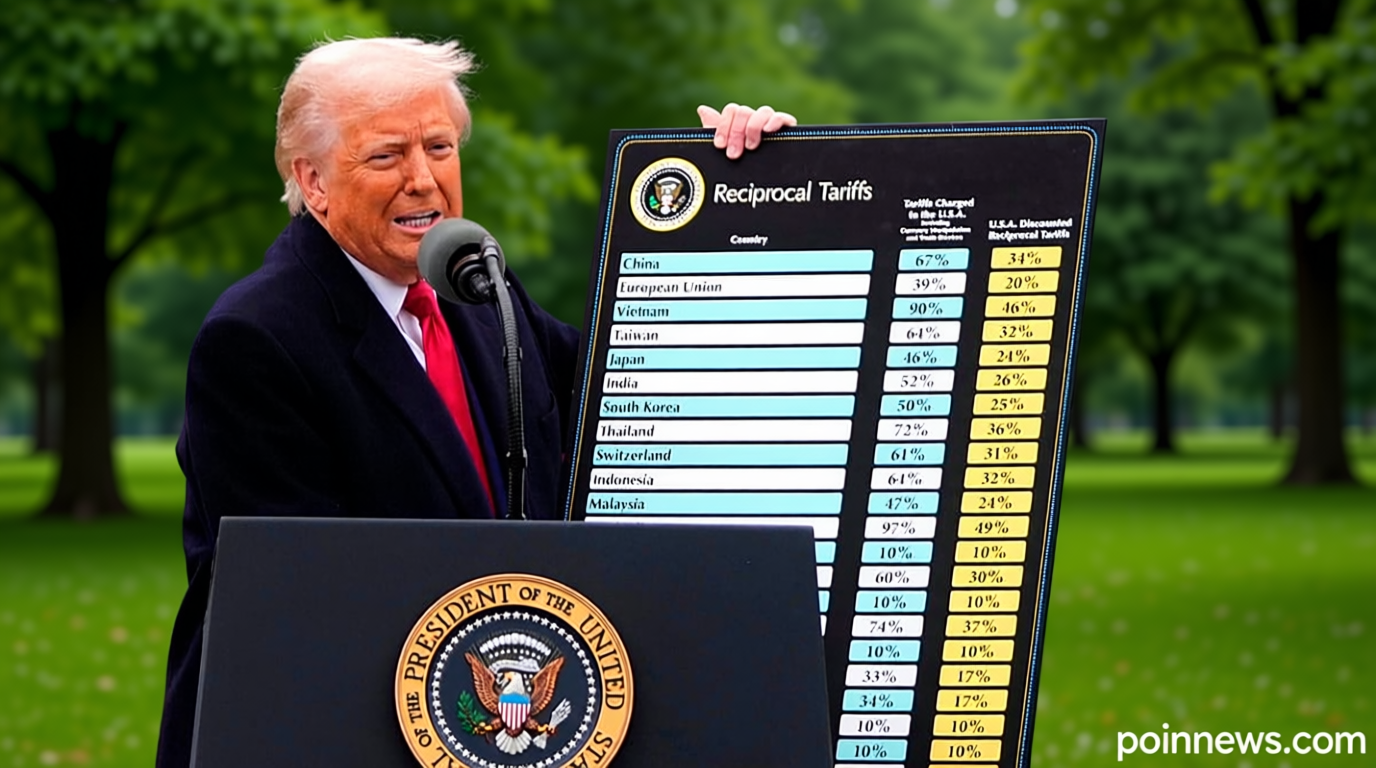
Poinews.com – President Donald Trump has unveiled additional import charges affecting sixty nations, citing failures to adequately address forced labour within their borders. These fresh duties, spanning between 10 and 12.5 percent, become active this coming Friday. They will supersede the universal 10 percent charges Trump introduced earlier in the year, which are scheduled to lapse precisely at 12.01AM on the same day.
The Thursday announcement impacts numerous American commercial allies, encompassing significant economic powers such as China, India, and the European Union. Together, these nations represent 99 percent of United States imports. Jamieson Greer, the US Trade Representative, emphasized the longstanding nature of American policy: “The United States has had a forced labour import ban for nearly a century, and rigorously enforces it; it’s well past time for our trading partners to do the same.”
Legal Framework and Historical Context
Last year, Trump levied double-digit import charges on nearly every nation globally, contending that persistent American trade deficits constituted a national emergency. However, the Supreme Court delivered a February ruling determining that Trump lacked sufficient legal power to implement such charges under the 1977 International Emergency Economic Powers Act (IEEPA). Consequently, the administration was compelled to issue refunds to importers who had already paid the disputed tariffs.
Following that decision, Trump introduced 10 percent worldwide charges utilizing Section 122 of the Trade Act of 1974. These particular levies carry a 150-day limitation and are consequently set to expire this Friday. The incoming tariffs, established under Section 301 of the same 1974 Trade Act, are viewed as more legally resilient than their predecessors. Section 301 empowers the president to implement import taxes and additional sanctions against nations exhibiting “unjustifiable,” “unreasonable,” or “discriminatory” commercial behaviour.
Tariff Rates and Exemptions
Nations that have either enacted their own forced labour import prohibitions or pledged to do so—including Canada, the European Union, India, and the United Kingdom—will face a 10 percent rate. Meanwhile, countries such as China, Japan, and South Korea will encounter a higher 12.5 percent charge.
Certain commodities remain exempt from these new levies. Oil, gas, and fertiliser products are excluded, alongside items protected under the North American free trade agreement connecting the US, Mexico, and Canada.
International Reactions
The announcement triggered substantial criticism from affected nations. Brazil, confronting a 12.5 percent tariff, characterized the move as “arbitrary and unjustified” and announced intentions to impose counter-tariffs on American goods. The Brazilian government stated that Washington “chose to manipulate an issue of great importance to human rights and the struggles of workers worldwide in order to accuse 59 countries and the European Union of unfair practices.”
Chile similarly faces a 12.5 percent rate. Paula Estévez, Chile’s Undersecretary for International Economic Relations, defended her nation’s record, noting that Chile possesses “solid labor institutions, a robust regulatory framework and a firm commitment to the prevention and eradication of forced labour.”
The International Labour Organisation’s 1930 Forced Labour Convention defines the practice as “all work or service which is exacted from any person under the menace of any penalty and for which the said person has not offered himself (or herself) voluntarily.” According to the UN agency, approximately 27.6 million individuals worldwide experienced forced labour on any given day in 2021.