Hungary submits revised EU recovery plan as MEPs demand transparency over €16.4bn in frozen funds
very Plan Amid MEPs' Transparency Demands Hungary submits revised EU recovery plan - Hungary has resubmitted its revised EU recovery plan, aiming to secure

Hungary Submits Revised EU Recovery Plan Amid MEPs’ Transparency Demands
Poinews.com – Hungary has resubmitted its revised EU recovery plan, aiming to secure the release of €16.4 billion in frozen funds. The focus keyword “Hungary submits revised EU recovery” highlights the nation’s latest effort to meet the European Commission’s stringent conditions. This move comes after months of pressure from European Parliament members (MEPs) who have called for greater transparency in the process, emphasizing the need to address concerns over corruption and rule-of-law reforms. The revised plan, part of Hungary’s broader Recovery and Resilience Plan (RRP), seeks to align with EU requirements and demonstrate progress in key areas, including governance and financial accountability.
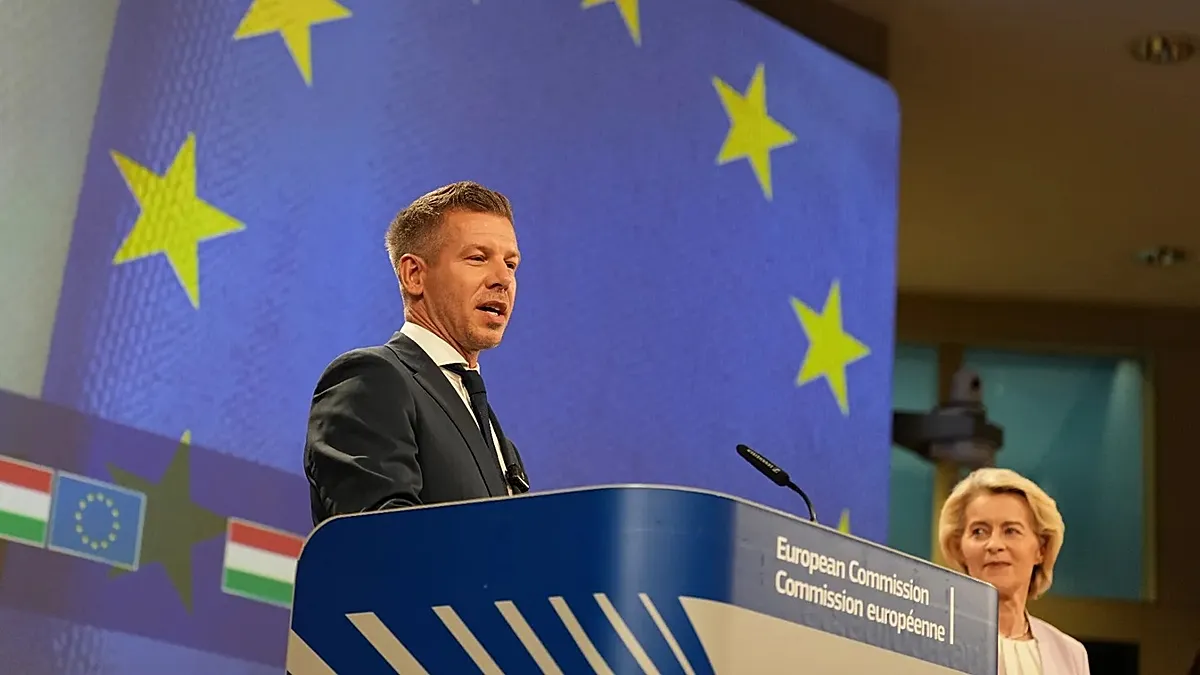
The frozen funds, totaling €16.4 billion, were held back due to skepticism surrounding Hungary’s compliance with EU rules during Viktor Orbán’s 16-year tenure. Now, under Prime Minister Péter Magyar, who assumed office after a pivotal April election, the government has taken steps to revise its strategy. Magyar’s alignment with European Commission President Ursula von der Leyen has been a central factor in this effort, though the details of the updated plan remain under scrutiny. The revised RRP includes projects such as energy infrastructure modernization, railway network upgrades, and housing developments, which are seen as potential catalysts for economic growth.
Economic Impact and Political Implications
The €16.4 billion in frozen funds is critical for Hungary’s economic recovery, particularly in the wake of the post-pandemic crisis. The European Union’s Recovery and Resilience Facility (RRF) has been a cornerstone of the bloc’s strategy to stimulate growth, and Hungary’s revised plan is a direct response to the need to access these resources. The funds would support initiatives in transportation, digital transformation, and energy, which are vital for reducing the country’s dependency on external debt and fostering long-term resilience. However, MEPs argue that without transparent criteria, the allocation of these funds could still be seen as politically motivated, raising questions about their effectiveness and fairness.
Magyar’s government faces the challenge of meeting 27 “supermilestones” to qualify for the EU funds, as outlined in the revised RRP. These milestones span reforms in rule-of-law, anti-corruption measures, and public sector efficiency. The European Commission spokesperson, Balázs Ujvári, confirmed the submission, noting that the plan includes “reforms across multiple sectors, including addressing corruption and strengthening legal frameworks.” While the government has outlined broad objectives, the lack of detailed documentation has left lawmakers without full clarity, prompting calls for a more thorough examination of the proposed measures.
MEPs Press for Transparency and Accountability
The European Parliament’s Budgetary Control Committee has scheduled a hearing on July 14 to scrutinize the revised plan and the conditions for fund release. Several MEPs have emphasized the need for transparency, questioning the political deal between Hungary and the Commission. German Green MEP Daniel Freund criticized the joint press conference between Magyar and von der Leyen as a “public relations exercise,” arguing that the agreement lacks substantive detail. “After years of systemic corruption and economic challenges, Hungary needs these funds. Magyar clearly wants an early victory,” Freund stated in a recent statement. “But following the press event, we still lack concrete details. This isn’t just about money—it’s €16 billion from taxpayers’ pockets,” he added.
“The revised plan must address not only financial reforms but also the public’s trust in how these funds will be managed,” said MEP Anna Csernus, a key voice in the transparency debate. “Hungary submits revised EU recovery as a step forward, but we need to ensure it’s not just a symbolic gesture.”
The Commission has yet to provide written documentation outlining the exact terms of its agreement with Hungary, leaving room for criticism. While the plan is set for adoption by the Council in July, the European Parliament is expected to fast-track its approval. This accelerated timeline adds pressure on Hungary to demonstrate tangible progress, with MEPs urging the nation to provide clear evidence of its commitment to reforms. The upcoming hearings will be pivotal in determining whether the frozen funds can be unlocked without further delays.
Public sentiment in Hungary remains divided. While some citizens support the government’s efforts to secure EU funds, others question the political motivations behind the revisions. Critics argue that the focus on “Hungary submits revised EU recovery” may overshadow deeper structural issues in the country’s governance. Meanwhile, the Hungarian government continues to present draft laws and amendments to parliament, including changes to public-interest foundations and an expanded mandate for the Integrity Authority, which oversees anti-corruption efforts.
The revised plan also includes provisions for stricter asset declaration rules for public servants, with potential prison terms for violations. These measures are part of Hungary’s strategy to meet EU demands and improve its standing in the bloc’s eyes. However, the effectiveness of these reforms will depend on their implementation and oversight. As the deadline for accessing the RRF funds approaches, the debate over Hungary’s revised EU recovery plan is likely to intensify, with MEPs and the Commission closely monitoring every detail.