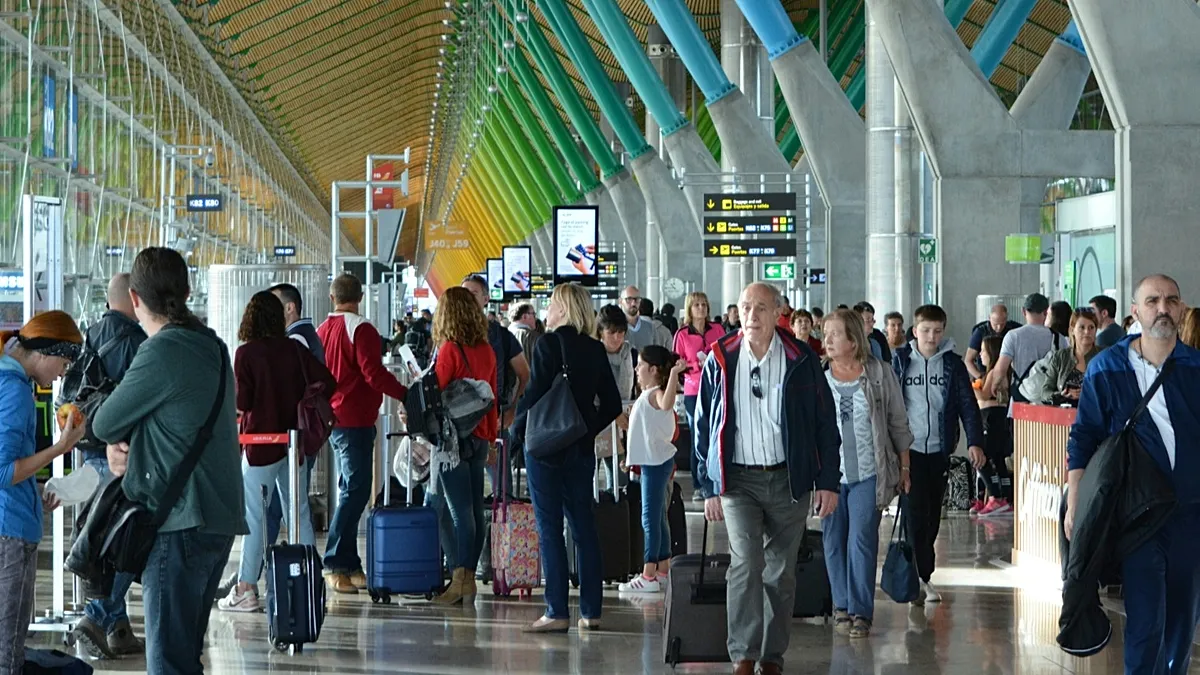
35,959 flights a day: Europe saw record summer air traffic despite Middle East war
European air travel reached an unprecedented level during the July and August 2026 holiday period, even as the war involving the United States and Iran

Table of Contents
Europe’s summer flight season reaches a new high despite regional disruption
Poinews.com – European air travel reached an unprecedented level during the July and August 2026 holiday period, even as the war involving the United States and Iran disrupted parts of the wider aviation market. Eurocontrol recorded an average of 35,959 flights each day across the continent, exceeding the 2025 figure by 2.4 per cent.
The busiest individual day came on Friday 10 July, when 37,640 flights operated. The total illustrates the continued strength of summer travel demand across Europe, with airports, airlines and air traffic control networks managing exceptionally heavy flows of arrivals and departures during the peak holiday weeks.
More flights, with a modest improvement in punctuality
Higher traffic did not prevent a small improvement in overall arrival performance. Some 72.6 per cent of flights reached their destination on time, an increase of 1.2 percentage points from the previous summer. That result still leaves a substantial share of passengers facing late arrivals, particularly where congestion and air traffic management constraints intensified.
France remained the largest contributor to delays linked to air traffic control management issues. The country was responsible for 32 per cent of such delays across Europe, underlining the outsized effect that disruption in one major aviation market can have on wider regional schedules. Because European air routes and aircraft rotations are closely interconnected, delays can spread beyond the country where they begin.
For travellers, the figures offer a mixed picture. Record traffic confirms that European holiday destinations remained highly accessible and popular, while the improved punctuality rate suggests the network handled additional demand somewhat better than in 2025. At the same time, the scale of daily operations means that pressure points in busy airspace and at major airports can still affect journeys.
War reshapes where Europeans chose to travel
The US-Iran war influenced the 2026 tourist season, but it also appeared to shift part of the market towards holidays within Europe. Many European travellers viewed destinations on the continent as a safer choice, helping support demand in a range of countries.
The conflict “influenced” this year’s tourist season.
Traffic fell in Bulgaria, Hungary and Türkiye. Elsewhere, however, Eurocontrol identified a strong rise in air travel to Albania, Croatia, Cyprus, Greece, Montenegro, North Macedonia, Serbia and Slovenia. Southwest Europe also continued to see growth.
The pattern shows that the effect of major geopolitical events is not always simply a reduction in travel. In this case, demand was redistributed across destinations. Countries offering coastal holidays, city breaks, family travel and regional connections benefited from travellers choosing to remain closer to home or changing their preferred routes.
Greece was among the clearest examples of this pressure. Record passenger volumes at the country’s airports placed its air traffic control system under intense strain, particularly during the busiest weeks of the season. The experience highlights how rapidly growing visitor numbers can test infrastructure even when airports and airlines continue operating normally.
Fourteen countries set new daily traffic marks
A total of 14 countries achieved their highest-ever daily totals for arrivals and departures during the summer. The group included Albania, Armenia, Georgia, Greece, Ireland, Italy, Moldova, North Macedonia, Montenegro, Portugal, Serbia, Slovakia, Spain and Türkiye.
The inclusion of both established aviation centres and smaller or fast-growing markets points to the breadth of Europe’s summer air travel expansion. Spain, Italy, Greece and Portugal are long-standing holiday hubs, while countries such as Albania, Montenegro, North Macedonia and Serbia have seen especially strong interest in regional travel connections.
Türkiye also reached a new daily traffic record despite experiencing lower traffic over the wider summer period. That contrast reflects how seasonal aviation data can vary: a country may still set a single-day high while overall traffic is affected by changing travel patterns, route choices or disruption at other points in the season.
Airlines also posted their busiest summer traffic
Several carriers and airline groups recorded record traffic during the period. They included Aegean, Air Serbia, easyJet, Jet2.com, Pegasus, Royal Air Maroc, Ryanair, Sky Express, SunExpress, Turkish Airlines and Wizzair.
The list spans low-cost operators, leisure-focused airlines and major network carriers, indicating that demand was not confined to one type of passenger. Holidaymakers, people visiting friends and relatives, and travellers using European hubs all contributed to the elevated traffic levels.
For airlines, record operations bring opportunities as well as operational challenges. More flights can expand choice and connectivity, but busy schedules also leave less room to recover when airspace restrictions, staffing constraints or weather-related disruption occur. The summer’s improved arrival punctuality therefore stands out against the exceptionally high volume of flights.
A record-setting season for Europe’s aviation network
Europe’s 2026 summer aviation season was defined by two simultaneous trends: an all-time high in daily flight activity and a reshaping of passenger demand amid geopolitical uncertainty. The continent’s network carried more flights than ever, while many travellers favoured destinations within Europe.
With 35,959 flights a day on average and a peak of 37,640 on 10 July, the summer demonstrated the scale of modern European air travel. It also showed that the system’s resilience will remain closely tied to effective air traffic management, particularly in countries where delays have a disproportionate impact on travellers across the region.
Related Reading
Frequently Asked Questions
What is 35 959 flights a day?
35 959 flights a day is the main topic of this guide. The article explains the context, practical details, and next steps readers should understand.
Why does 35 959 flights a day matter?
35 959 flights a day matters because readers are looking for a useful answer, not just a short summary. Good content should match search intent and help them decide what to do next.