How successful is Europe at closing the gender gap between men and women?
Europe has moved back into first place globally in the effort to narrow the gap in opportunities between women and men. Yet the region’s progress does not

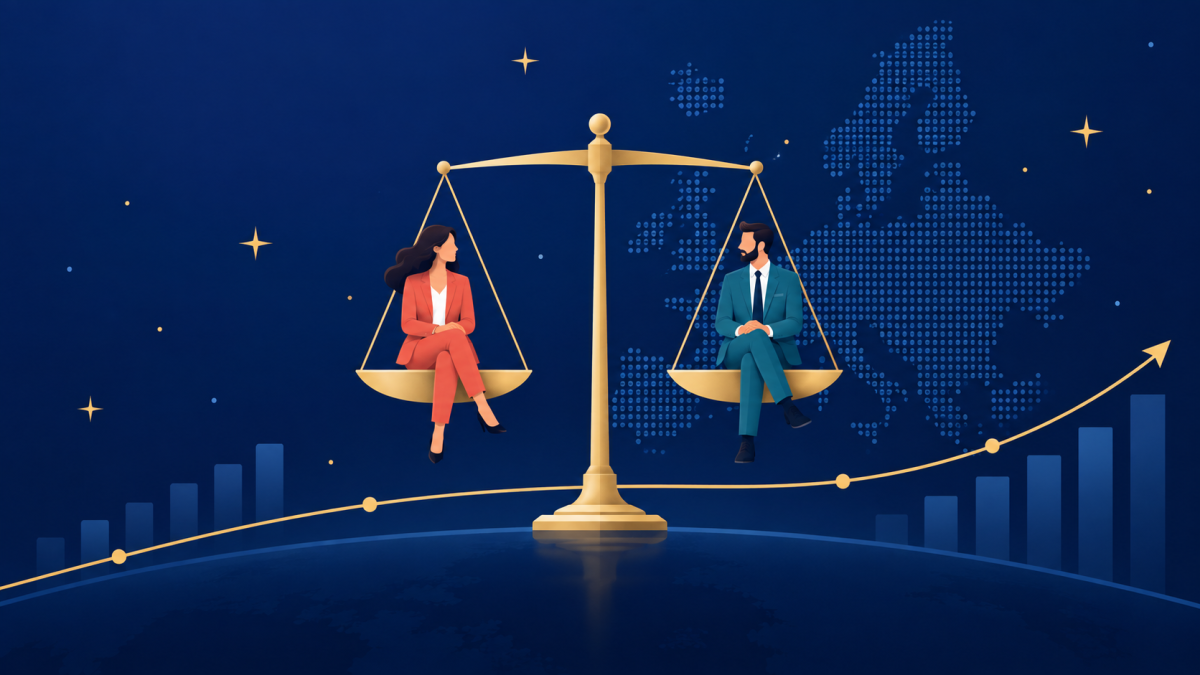
Table of Contents
Europe Regains the Lead on Gender Equality, but Full Parity Remains Decades Away
Poinews.com – Europe has moved back into first place globally in the effort to narrow the gap in opportunities between women and men. Yet the region’s progress does not mean equality has been achieved: 24.3% of the overall gender gap still remains, and the current pace suggests full parity is still about 70 years away.
The World Economic Forum’s latest assessment gives Europe an overall gender-parity score of 75.7%. The index measures how closely women and men are represented across four areas: education, health, economic participation and political power. A score of 100% would indicate that women and men have equal opportunities and outcomes across those measures.
Europe narrowly moved ahead of North America, which held the top regional position a year earlier. Since the index began in 2006, Europe’s overall result has improved by seven percentage points. The longer-term trend is positive, but it also illustrates how persistent structural differences remain in work, leadership and public life.
Political representation gives Europe its strongest advantage
Political Empowerment is Europe’s best-performing category, where it reaches 37%. Latin America and the Caribbean follows closely at 34.2%, while other world regions are at least ten percentage points further behind.
This result reflects the importance of representation in government and senior political roles. The index considers factors including women’s presence in parliament, ministerial positions and top national leadership. Political progress can influence wider debates around pay, care responsibilities, workplace protections and access to opportunity, although representation alone does not remove inequality in everyday life.
Europe’s record is also strong in education and health. It has closed 99.5% of the gap in Educational Attainment and 96.9% in Health and Survival. Those figures are close to parity, though Europe ranks only third and fourth among global regions in the respective categories.
The more difficult area is the economy. Europe places fifth for Economic Participation and Opportunity, with a score of 69.5%. That is nearly eight percentage points lower than North America’s leading score of 77.1%. The category captures differences linked to employment, income, senior positions and participation in the labour market, making it central to whether educational gains translate into equal economic independence.
Northern European countries continue to set the pace
European countries make up the largest share of the world’s leading performers. The World Economic Forum noted that Europe has held 69% of all top-ten places since the index was introduced in 2006. Seven European economies appear among this year’s global top ten: Iceland, Finland, Norway, Sweden, the United Kingdom, Germany and Ireland.
Iceland remains the standout performer. It is the only country to have closed more than 90% of its gender gap, reaching 93%. Finland, Norway and Sweden have appeared in every global top ten over the past two decades, underlining the sustained strength of the Nordic countries in the rankings.
Iceland has demonstrated a consistently positive trajectory towards gender parity over the past two decades, remaining in the global top 10 throughout the period and holding the top position since the 2009 edition.
Iceland’s Political Empowerment score is particularly high at 95.4%. Its result is linked to deliberate public policies intended to improve gender balance, as well as a long history of women holding senior positions. In 1980, Iceland became the first country to democratically elect a woman as president when Vigdís Finnbogadóttir won office.
The country’s performance shows that progress is not limited to a single measure. Strong representation at the top of government sits alongside broader efforts to support women’s participation in public and economic life. Still, even Iceland’s 93% score demonstrates that the final part of the gap can be difficult to close.
A major east-west divide persists within Europe
Europe’s regional leadership masks significant disparities between individual countries. The strongest results are concentrated largely in Northern Europe, while several countries nearer the bottom of the regional table are in Eastern Europe.
Türkiye, Romania and Hungary are the three lowest-ranked European performers, with overall scores of 0.649%, 0.698% and 0.707% respectively. Each is more than 20 percentage points behind Iceland.
Political Empowerment is a major reason for Romania’s lower result. Its score in that category stands at 0.145%, placing the country 104th worldwide for political representation. The absence of mandatory quotas and closed internal party structures contribute to the weak outcome.
Hungary faces a similar challenge. It records 0.132% in Political Empowerment and has no women in ministerial roles, resulting in a zero score for that specific part of the subindex. These figures highlight how a country can make gains in areas such as health or schooling while still falling behind overall when women remain underrepresented in political decision-making.
Pay transparency and care policies remain central to closing the gap
The European Union is pursuing a range of measures intended to reduce the broader divide. Its Pay Transparency Rules require companies to provide salary information, an approach designed to make pay differences more visible and help narrow the gender pay gap.
Other policies focus on the balance between paid work and unpaid care. Rules covering parental leave and flexible working arrangements aim to make it easier for parents and carers to share responsibilities while remaining connected to the labour market.
For workers and families, the figures are a reminder that gender equality is not only a question of equal salaries. It also concerns who can access jobs, advance into leadership, take time for care, receive education and participate in political life. Europe’s return to the top of the regional ranking is a meaningful milestone, but its remaining gap shows that progress must continue across all of those areas.
Related Reading
Frequently Asked Questions
What is How successful is Europe at closing?
How successful is Europe at closing is the main topic of this guide. The article explains the context, practical details, and next steps readers should understand.
Why does How successful is Europe at closing matter?
How successful is Europe at closing matters because readers are looking for a useful answer, not just a short summary. Good content should match search intent and help them decide what to do next.