‘Speckles of hope’: What we learned from cycling the length of the drought-hit Danube
Anna Wentsch and Callum Armstrong set out to cycle the full length of Europe's longest river — a 3,000-kilometre traverse spanning ten nations — to document

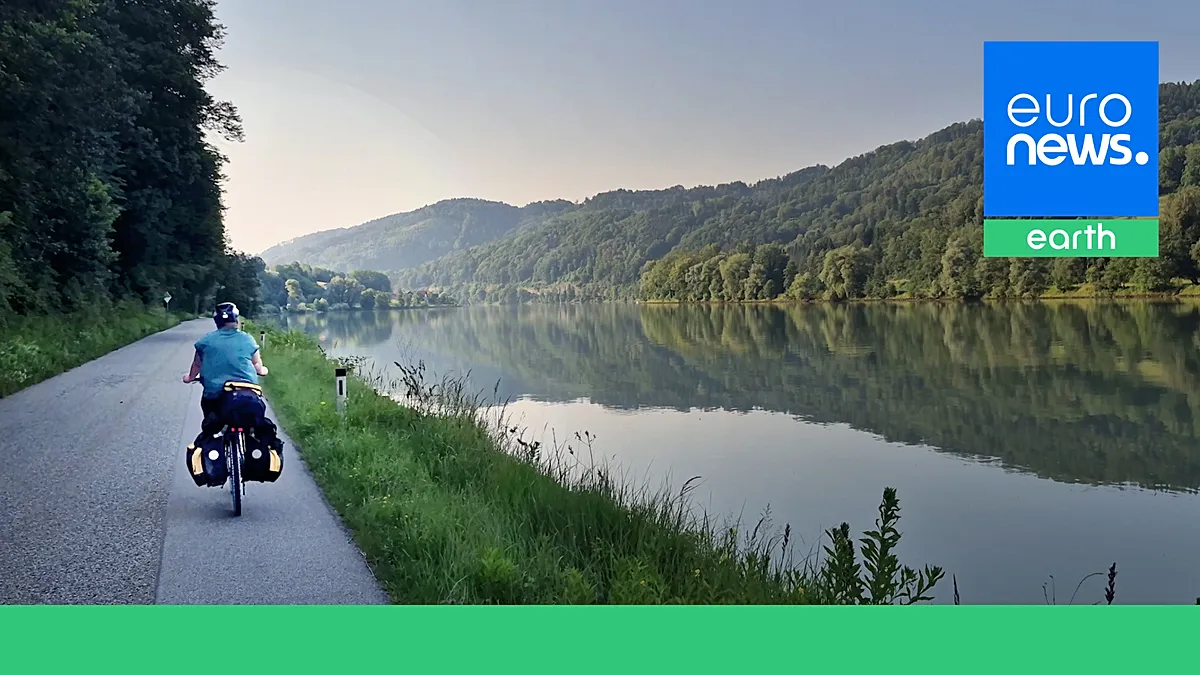
Table of Contents
Pedalling Through a Dying Waterway: A 3,000-Kilometre Ride Along the Danube
Poinews.com – Anna Wentsch and Callum Armstrong set out to cycle the full length of Europe’s longest river — a 3,000-kilometre traverse spanning ten nations — to document how drought is reshaping both human communities and the natural world along its banks. Midway through their journey, the river itself became a global news story.
When the River Stops Flowing
By early August, successive heatwaves and a near-total absence of rainfall had pushed Danube water levels to unprecedented lows. The consequences rippled outward: energy grids faltered, farmland cracked, shipping lanes dried up, and wildlife faced conditions far beyond anything recorded before.
The most dramatic intervention came on 3 August, when Romanian authorities detonated a controlled charge to force water toward the country’s sole nuclear power station — a facility responsible for roughly 20 per cent of national electricity generation and dependent on the river for its cooling systems.
“To me, it was that moment of, this is becoming real now: we are actively interfering in the river ecosystem to ensure that human electricity and power needs are being met.”
Anna Wentsch, the German-born co-founder of New Zealand-based charity Conservation Amplified, remembers the scene vividly. Yet even that extraordinary measure proved insufficient. On 13 August, the plant’s final reactor was taken offline after cooling water levels could no longer be sustained.
A Pattern Repeating Downstream
Romania’s crisis was not isolated. Two days later, on 15 August, Hungarian officials sank two barges directly into the Danube to artificially raise the water level and avert a shutdown of their own nuclear facility. Agriculture bore its own scars: dry soils devastated harvests, and Hungarian winegrowers reported a 30 per cent collapse in grape yields.
The parched landscape also became tinder. Anna and Callum encountered an active wildfire along their Serbian stretch of the route.
“It was hot, dry and windy. Just seeing how dry the ground was – just a spark’s needed for it to go up in flames.”
For residents of the region, such events have become routine. When the pair knocked on a door to warn a nearby town of the fire, welcoming locals dismissed the alarm:
“This is just normal, all the locals have called it in, people won’t respond until it actually gets to a really bad state.”
The scale of the problem is staggering: more than 580,000 hectares have burned across the European Union this year, per data from the European Forest Fire Information System.
When the Waterway Closes
At Germany’s Danube Gorge, the couple discovered their pre-booked ferry could not operate at all. Anna had to scramble onto one of the small wooden boats still capable of crossing.
“We had to catch one of those small wooden boats because they were the only ones that were still able to operate.”
Passenger services were only the visible symptom. Freight operators were rerouting cargo to sidestep the dried-up channel, while grain harvests sat idle at terminals — deepening food insecurity in already-stressed markets. The disruption was not confined to the Danube: Germany temporarily eased truck-driving hour limits to relieve pressure on supply chains choked by record-low Rhine levels.
The Wildlife Toll
Of all the consequences they witnessed, Anna says the suffering of animals struck closest to home. Birds were seen panting through the daytime heat — a sight that hit harder than their own exhaustion on the bike.
“We’ve seen a lot of wildlife, in particular birds, panting during the day. We’re obviously cycling in the heat, and we’re struggling. But then seeing them struggle is even worse. We can take ourselves out of that environment and go into the shade, but for a stork, for example, that nests on an open platform, they don’t have that ability.”
The extreme weather is compounding pressures on an ecosystem already weakened by decades of fragmentation. Power stations, dams, and other infrastructure have severed wetlands from floodplains, eroding biodiversity and stripping away the natural buffers that once absorbed drought shocks.
Speckles of Hope
Yet the journey also surfaced evidence that restoration is already underway and yielding results. An eight-kilometre fish bypass linking the stretches between Neuburg and Ingolstadt left a lasting impression on Callum. It forms part of a broader conservation programme aimed at reconnecting floodplains and rebuilding ecosystem functions lost to dam construction.
That project addresses only a sliver of the river’s full 2,857-kilometre course. Still, cross-border cooperation is scaling up. Anna highlights the 930,000-hectare Mura-Drava-Danube Biosphere Reserve as a model of multinational collaboration in restoring the river’s natural corridor.
For both riders, one conclusion emerged with clarity from the experience: safeguarding human communities and safeguarding the river’s ecology are not competing goals but inseparable ones. And amid the alarm, small but genuine signs of recovery persist.
“There are these speckles of hope everywhere of things that are already happening, and we’re seeing results.”
Related Reading
Frequently Asked Questions
What is Speckles of hope?
Speckles of hope is the main topic of this guide. The article explains the context, practical details, and next steps readers should understand.
Why does Speckles of hope matter?
Speckles of hope matters because readers are looking for a useful answer, not just a short summary. Good content should match search intent and help them decide what to do next.