Hardline Iranian MPs move to impeach foreign minister over UN General Assembly talks
Iran’s foreign policy debate has moved into parliament after a group of hardline MPs submitted a motion seeking the impeachment of Foreign Minister Abbas

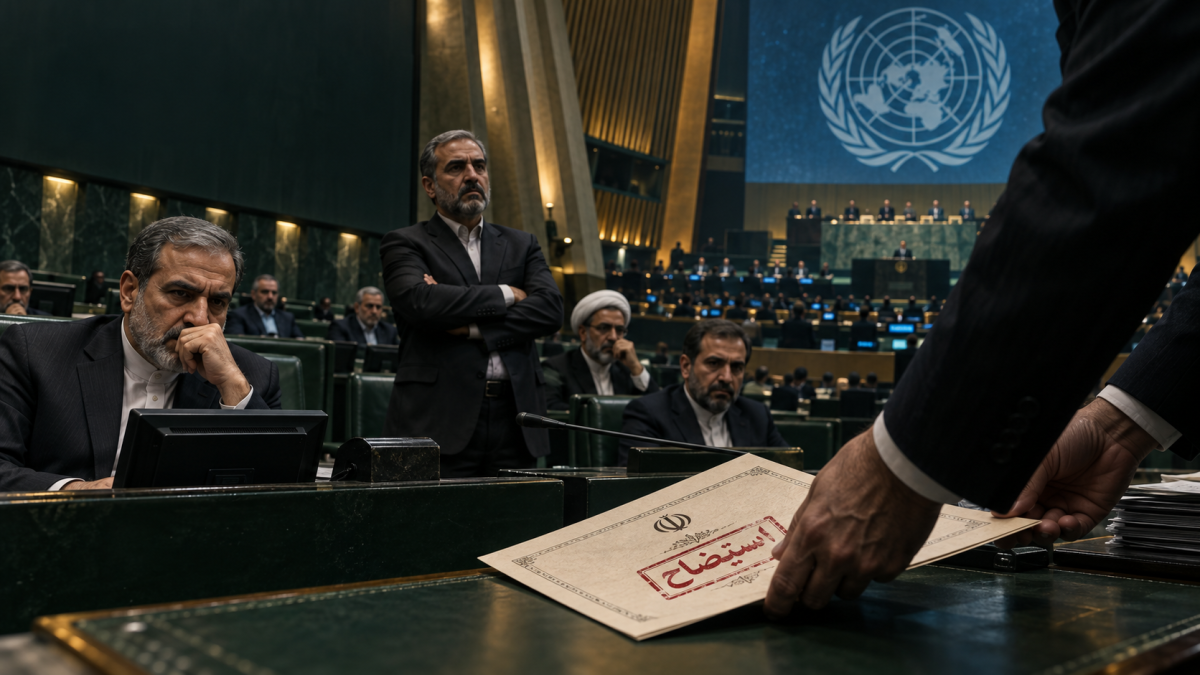
Table of Contents
Hardline lawmakers seek impeachment of Iran’s foreign minister after New York contacts
Poinews.com – Iran’s foreign policy debate has moved into parliament after a group of hardline MPs submitted a motion seeking the impeachment of Foreign Minister Abbas Araghchi over his contacts with US special envoy Steve Witkoff during last month’s UN General Assembly.
The move highlights continuing disagreement inside the Islamic Republic over whether, and on what terms, Tehran should engage with Washington while the war continues. The proposed impeachment has been formally registered but has not yet been sent to parliament’s presiding board or scheduled for debate.
Mohammad Rashidi, a member of the parliamentary presiding board, confirmed on Tuesday that the request had entered the legislature’s system. Registration alone does not ensure that the measure will be considered by lawmakers or reach a full parliamentary vote.
Dispute over authority for the talks
The initiative is led by Amirhossein Sabeti, a lawmaker from the hardline Paydari Front. Its supporters contend that Araghchi met Witkoff on 22 September without approval from Ayatollah Mojtaba Khamenei and without proper coordination with the Supreme National Security Council.
Qatar served as an intermediary in the discussions, which addressed conditions for reopening the Strait of Hormuz. The waterway has become a central obstacle in contacts between Tehran and Washington since the war began in late February. Its importance stems from its role as a major maritime route, making its status a politically and strategically sensitive issue for both sides.
Mohsen Rezaei, secretary of the Supreme National Security Council, rejected the claim that the foreign minister acted independently. He said Araghchi’s mission in New York had been agreed in advance by senior authorities.
“It was agreed that Mr Araghchi, during his trip to New York, would convey Iran’s conditions to the intermediaries,” Rezaei said.
His remarks indicate that the New York exchanges were part of an authorised diplomatic effort rather than an unsanctioned personal initiative by the foreign minister.
Iran’s terms and US rejection
During the talks, Araghchi presented Tehran’s conditions for progress. They included an immediate end to the US naval blockade, the prompt release of frozen Iranian assets and a halt to fighting across every front of the war.
US President Donald Trump rejected those terms. The failure to bridge the gap has left the dispute over negotiations highly charged inside Iran, where hardline lawmakers have repeatedly challenged the government’s handling of the US file.
Sabeti cited what he called the crossing of negotiating red lines, major errors in political assessment and poor management of relations with the United States as grounds for seeking impeachment. Another signatory, MP Hosseinali Hajideligani, accused Araghchi of using selected media interviews to help drive down oil prices for the United States.
Araghchi has faced similar pressure before. His name has appeared on several impeachment lists prepared by hardline MPs during the past two years. In August, Hajideligani said supporters of a formal motion were assembling documentation.
Parliamentary divisions emerge
Not all members of parliament support the effort. Alireza Salimi, a signatory and member of the presiding board, stressed that submitting an impeachment request does not mean parliament’s speaker backs it or that lawmakers will ultimately debate it.
The matter comes before a parliament chaired by Mohammad Bagher Ghalibaf, who is among Iran’s principal negotiators dealing with the US side. That political setting adds another layer to the dispute, as the legislature weighs a challenge to a minister involved in a sensitive diplomatic track during wartime.
Ruhollah Lak Aliabadi argued that pressing ahead against the foreign minister could harm Iran’s position.
“Impeachment proceedings, especially impeaching the foreign minister in this wartime situation, are definitely not in the country’s interest,” Aliabadi said.
He warned that such action could create “a negative signal and a sign of weakness to the enemy.” Aliabadi also pointed to what he described as close contact between diplomatic and military institutions. He said a recent parliamentary meeting with Araghchi lasted four and a half hours and that the commander of the Islamic Revolutionary Guard Corps called the minister at least three times during it.
For Aliabadi, those calls demonstrated coordination rather than a breakdown between Iran’s diplomatic and military leadership.
Conservative figure Mansour Haghighatpour likewise urged caution, framing the issue as one of maintaining continuity during a conflict.
“You do not change saddles in wartime,” Haghighatpour said.
Signals that Araghchi retains support
For now, Araghchi appears to retain significant backing within the state. After returning to Tehran from New York, he was the subject of online speculation claiming that he had sought asylum abroad. The foreign ministry responded by formally identifying him as one of Iran’s six decision-makers, a public indication that he remained trusted by the governing system.
The death of Araghchi’s sister while he was attending the UN General Assembly also became a notable domestic moment. Her memorial service drew one of the largest gatherings of Iranian officials since the war began, underscoring the prominence of the foreign minister within the country’s political establishment.
Ayatollah Mojtaba Khamenei did not attend the service. His absence continued a pattern of staying away from public events for more than seven months after taking power.
The impeachment motion therefore represents more than a procedural dispute. It reflects a wider contest over diplomacy, authority and wartime messaging. Its future will depend on whether parliamentary leaders allow the challenge to advance and whether the arguments of Araghchi’s critics outweigh concerns that removing a foreign minister during an active conflict could weaken Iran’s negotiating and political position.
Related Reading
Frequently Asked Questions
What is Hardline Iranian MPs move to impeach?
Hardline Iranian MPs move to impeach is the main topic of this guide. The article explains the context, practical details, and next steps readers should understand.
Why does Hardline Iranian MPs move to impeach matter?
Hardline Iranian MPs move to impeach matters because readers are looking for a useful answer, not just a short summary. Good content should match search intent and help them decide what to do next.