Mercedes global sales fall 6% as electric car sales hit record high
Mercedes-Benz posted lower worldwide vehicle sales in the third quarter of 2026, as continued pressure in China outweighed growth across Europe and North

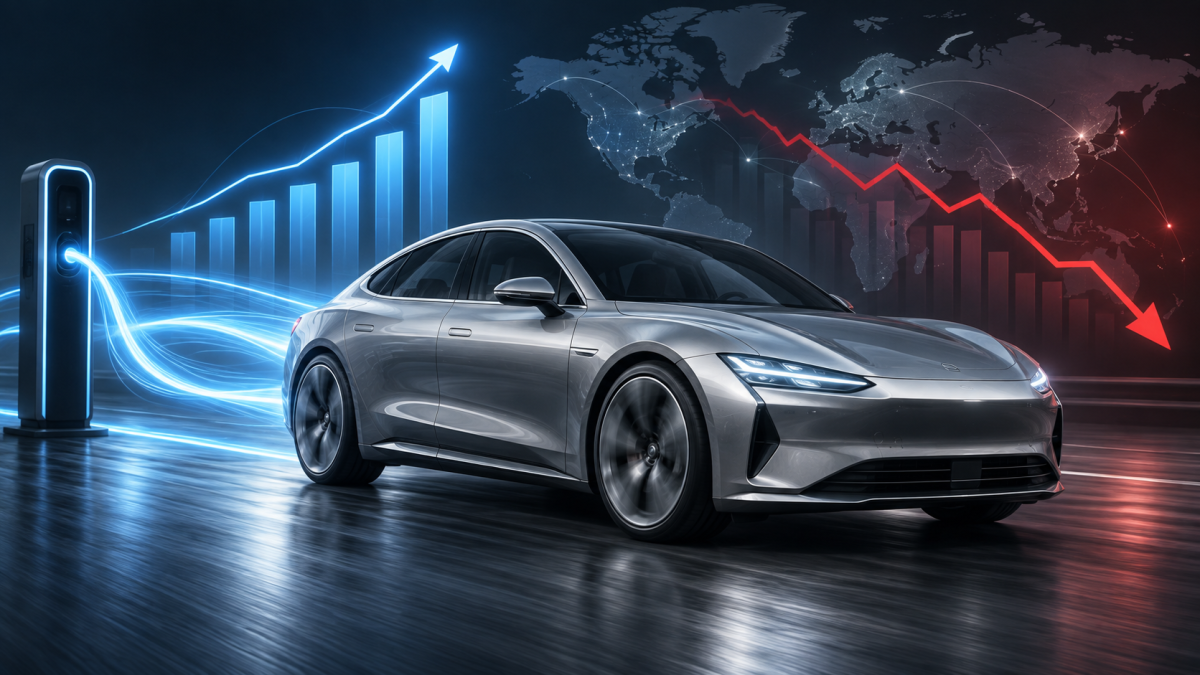
Table of Contents
Mercedes-Benz Records Strong Electric Vehicle Demand Despite Global Sales Decline
Poinews.com – Mercedes-Benz posted lower worldwide vehicle sales in the third quarter of 2026, as continued pressure in China outweighed growth across Europe and North America. The German carmaker delivered 491,700 cars and vans between July and September, representing a 6% decline from the same period last year.
Its shares dropped by about 4% around 1 pm CEST on Wednesday following the announcement, before recovering part of those losses. Investors were weighing the contrast between softer total deliveries and a sharp acceleration in fully electric vehicle sales.
Battery-electric vehicles became a particularly bright spot for the company. Global electric car sales climbed 61% year on year to 68,400 units, an increase of 29% compared with the previous quarter. Fully electric models made up a record 16.8% of Mercedes-Benz Cars sales worldwide, rising 7.2 percentage points from the third quarter of 2025.
“Mercedes-Benz Cars achieved the highest quarterly BEV sales in the company’s history, led by the electric GLC, whose sales more than tripled compared with Q2,” said Mathias Geisen, the Mercedes-Benz board member responsible for sales and customer experience.
China Remains the Main Drag on Deliveries
Mercedes-Benz Cars sales fell 8% globally during the quarter, to 407,200 vehicles. The largest setback came in Asia, where car deliveries dropped 25% to 132,300 units.
Within that regional total, sales in China slid 31% from a year earlier. Mercedes-Benz pointed to difficult market conditions and intense competition as factors affecting its performance in the country. China remains crucial to the manufacturer’s global position: it accounted for almost one-quarter of worldwide Mercedes-Benz car sales in the second quarter.
The GLC and E-Class were the strongest-performing Mercedes-Benz models in China during the third quarter. Together, they represented nearly two-thirds of the company’s car sales there. Even so, the strength of those nameplates was not sufficient to offset the broader decline in the market.
The latest result follows a 30% fall in Chinese car sales during the second quarter. In July, Mercedes-Benz reduced its outlook for full-year car sales and group revenue, citing a combination of weaker demand, more aggressive competition and changes to its model range in China.
Without China, the picture was more resilient. Group sales rose 2% outside the country, while Mercedes-Benz Cars sales increased 1%.
“Outside China, car sales increased for the third consecutive quarter in 2026,” Geisen said.
European Orders Push Plants Into Three-Shift Operations
Europe delivered meaningful support during the quarter, with Mercedes-Benz Cars sales increasing 5% to 168,700 vehicles. Germany led that advance with a 13% rise, while sales in the United Kingdom were 7% higher.
The region also produced a quarterly record for battery-electric vehicle deliveries. European BEV sales surged 78% from a year earlier and were 24% above the second-quarter level. Demand has been especially robust for Mercedes-Benz’s newer electric models, including the GLC, CLA, GLB and GLA.
“Our new electric models GLC, CLA, GLB and GLA are sold out in Europe for the rest of the year, with order books extending into 2027,” Geisen said.
Mercedes-Benz said factories in Bremen and Rastatt, Germany, along with its Kecskemét site in Hungary, were running three-shift schedules to meet demand. The production increase highlights the practical importance of the company’s growing electric order book: strong customer interest must be translated into manufacturing capacity and deliveries over coming quarters.
For buyers, extended order books may mean that availability for some electric Mercedes models remains constrained into next year. For the manufacturer, it provides visibility for future sales, although delivery timing and market conditions will remain important factors.
North America Adds Further Support
Mercedes-Benz Cars also expanded in North America during the third quarter. Regional sales rose 4% to 83,200 vehicles, while deliveries in the United States increased 6%.
Growth in Europe and North America softened the impact of China’s decline, but it did not fully reverse the fall in global volumes. The numbers underline how regional demand patterns are shaping the company’s current performance: established markets outside China are providing support, while the Chinese market remains a significant challenge because of its scale and competitive intensity.
Nine-Month Sales Show a Mixed Transition
Over the first nine months of 2026, Mercedes-Benz sold 1,244,400 cars worldwide, down 7% from the same period in 2025. At the same time, fully electric car sales increased 40% to 165,500 vehicles.
The results show that Mercedes-Benz is gaining momentum in electric vehicles even as total car deliveries decline. The record BEV share of global sales and the heavy demand for new electric models in Europe point to a faster shift in the company’s sales mix.
Still, the overall quarterly outcome demonstrates the limits of that momentum in the short term. A major sales slowdown in China can have a substantial effect on a global manufacturer, particularly when that market represents such an important portion of total deliveries. Mercedes-Benz enters the remainder of 2026 with strong electric demand in several markets, but also with the challenge of navigating continued weakness in China.
Related Reading
Frequently Asked Questions
What is Mercedes global sales fall 6 as electric?
Mercedes global sales fall 6 as electric is the main topic of this guide. The article explains the context, practical details, and next steps readers should understand.
Why does Mercedes global sales fall 6 as electric matter?
Mercedes global sales fall 6 as electric matters because readers are looking for a useful answer, not just a short summary. Good content should match search intent and help them decide what to do next.