Cashaw! US spelling bee champ Shrey Parikh wins the title in a rare spell-off
itle in a rare spell-off Cashaw US spelling bee champ Shrey - The 98th Scripps National Spelling Bee culminated in a dramatic showdown, resulting in the

Cashaw! US spelling bee champ Shrey Parikh wins the title in a rare spell-off
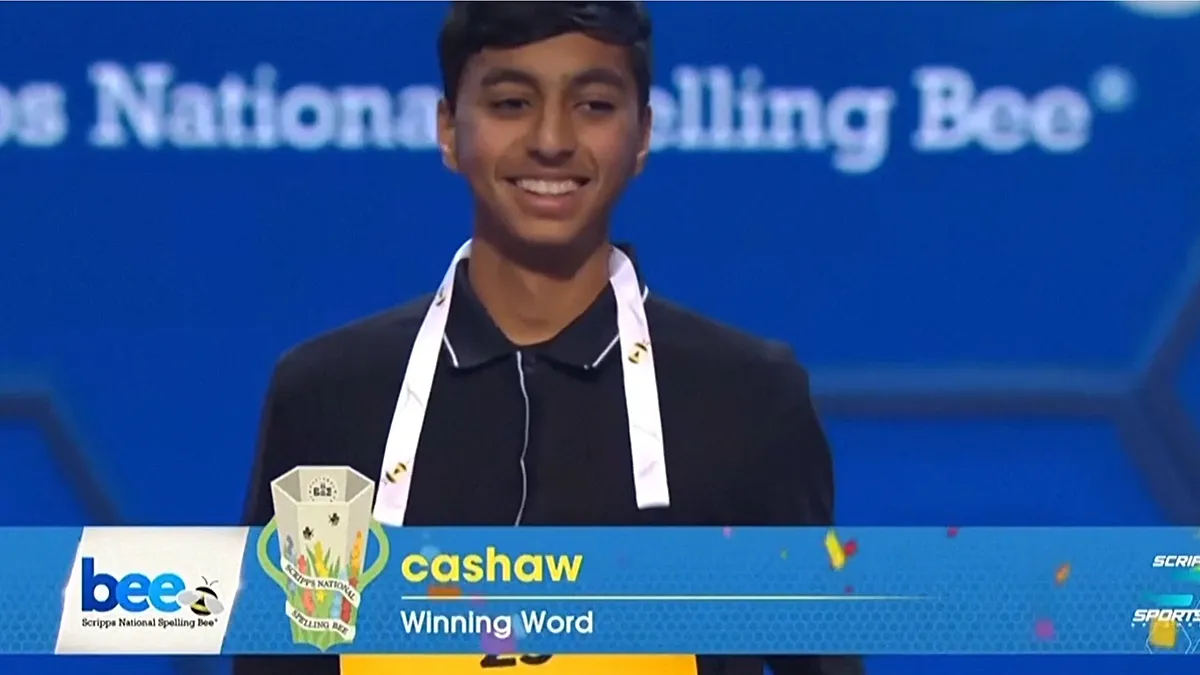
Poinews.com – The 98th Scripps National Spelling Bee culminated in a dramatic showdown, resulting in the crowning of Shrey Parikh as the latest champion. The contest, which spanned three days and featured 18 rounds of challenges, reached its climax with a 90-second spell-off that left spectators in awe of the linguistic feats on display. Fourteen-year-old Parikh, hailing from California, emerged victorious after a tense final round, edging out 12-year-old Ishaan Gupta from New Jersey in a rare tiebreaker scenario.
Over the course of the competition, 247 participants, including some from Guam, competed for the title. This year’s event marked a significant shift in format, aiming to modernize the traditional spelling bee for contemporary audiences. While the core focus on spelling remains unchanged, the organizers introduced a multiple-choice vocabulary segment to the televised finals in 2021, emphasizing language comprehension alongside rote memorization. The decision was part of a broader effort to infuse the contest with a gameshow-style appeal, drawing inspiration from TV producers like Michael Davies, who previously revitalized Jeopardy! and brought Who Wants to Be a Millionaire? to the UK.
The Spell-Off Decides the Champion
Following 18 rounds of spelling and vocabulary challenges, the competition narrowed down to two finalists. After a two-hour battle, the remaining contenders—Parikh and Gupta—were forced into a spell-off, a seldom-used method that hinged on speed as much as precision. Each participant was given 90 seconds to spell as many words as possible, with the winner determined by the number of correct entries. Parikh’s ability to recall 32 words in the final round, including the obscure ‘cashaw,’ proved decisive. The word itself, derived from the African oil palm tree, underscored the daunting lexicon participants faced, ranging from scientific terms to loanwords from other languages.
The spell-off format, introduced in 2021, added a new layer of excitement to the competition. Unlike the standard process, where accuracy alone determines the winner, this tiebreaker required competitors to demonstrate both knowledge and composure under pressure. The decision to implement this rule was part of an initiative to engage younger viewers and highlight the dynamic nature of language. With the addition of the multiple-choice round, the competition now blends traditional spelling tests with interactive elements, creating a more immersive experience for audiences.
A Legacy of Linguistic Challenge
The Scripps National Spelling Bee, established in 1925, has long been a staple of American academic culture. Every year, over 11 million students participate in local and regional rounds, vying for a chance to compete in the national finals. This year’s event, however, took a different approach, aiming to reshape the competition’s image while maintaining its rigorous standards. The organizers partnered with TV producer Michael Davies to enhance the visual and narrative appeal of the contest, ensuring it remained relevant in an era where attention spans are increasingly fleeting.
Despite these modern touches, the core of the competition remains the mastery of an extensive vocabulary. Contestants, aged 9 to 15, tackle words drawn from the Merriam-Webster Unabridged Dictionary, often unfamiliar to even seasoned linguists. Examples from past years include terms like ‘psammophile’ (a creature that thrives in sand) and ‘éclaircissement’ (a French word meaning clarification), illustrating the breadth of linguistic diversity required. This year’s finale featured words such as ‘Jatrorrhiza’ (a genus of flowering plants) and ‘Kadohadacho’ (a type of indigenous tree), further demonstrating the challenge participants face.
The final round’s outcome was not only a testament to Parikh’s dedication but also a reflection of the competition’s evolving nature. After a grueling year of preparation, Parikh’s victory marked a milestone in his journey. The 14-year-old had previously competed in 2022, finishing 89th, before rising to third place in 2024. His success was fueled by an intense study regimen, with reports indicating he spent around five hours daily honing his skills. For Parikh, the moment of correctly spelling ‘cashaw’ in the decisive round was the culmination of years of effort, solidifying his status as a national champion.
The event also showcased the role of media in amplifying the competition’s reach. ESPN’s talking head Mina Kimes, a former Celebrity Jeopardy! champion, hosted the coverage, bringing a dynamic energy to the proceedings. Her presence, combined with the gameshow-inspired format, aimed to attract a broader demographic, including younger viewers who might not have engaged with the contest in its earlier, more rigid form. This shift in tone and structure has sparked discussions about how traditional competitions can adapt to contemporary entertainment standards without compromising their intellectual rigor.
While the spell-off was a highlight, the competition’s endurance lies in its ability to challenge the limits of human memory and linguistic aptitude. Words like ‘catometope’ (a term relating to the measurement of distances) and ‘Faesulae’ (a type of ancient Roman cloak) exemplify the complexity participants must navigate. The Merriam-Webster Dictionary, which serves as the ultimate authority on spelling, continues to be a crucial resource for competitors, ensuring that the contest remains a benchmark for linguistic excellence. For audiences, the event offers a glimpse into the world of rare and often forgotten words, sparking curiosity about the English language’s vast vocabulary.
“It took years of preparation to get here, and the moment I spelled ‘cashaw’ felt like the peak of that journey,” Parikh said after the contest, capturing the emotional weight of his achievement.
The Scripps National Spelling Bee’s ability to remain a cultural touchstone, despite its challenges, speaks to the enduring appeal of language mastery. As the competition continues to evolve, it balances tradition with innovation, ensuring that it stays both a test of skill and a spectacle for modern audiences. For Shrey Parikh, the victory is not just a personal triumph but also a reflection of the dedication required to excel in this unique and demanding arena.