Paris Saint-Germain wins the Champions League after penalty shootout victory against Arsenal
Paris Saint-Germain Wins the Champions League After Penalty Shootout Victory Against Arsenal The Final Match Paris Saint Germain wins the Champions - Paris

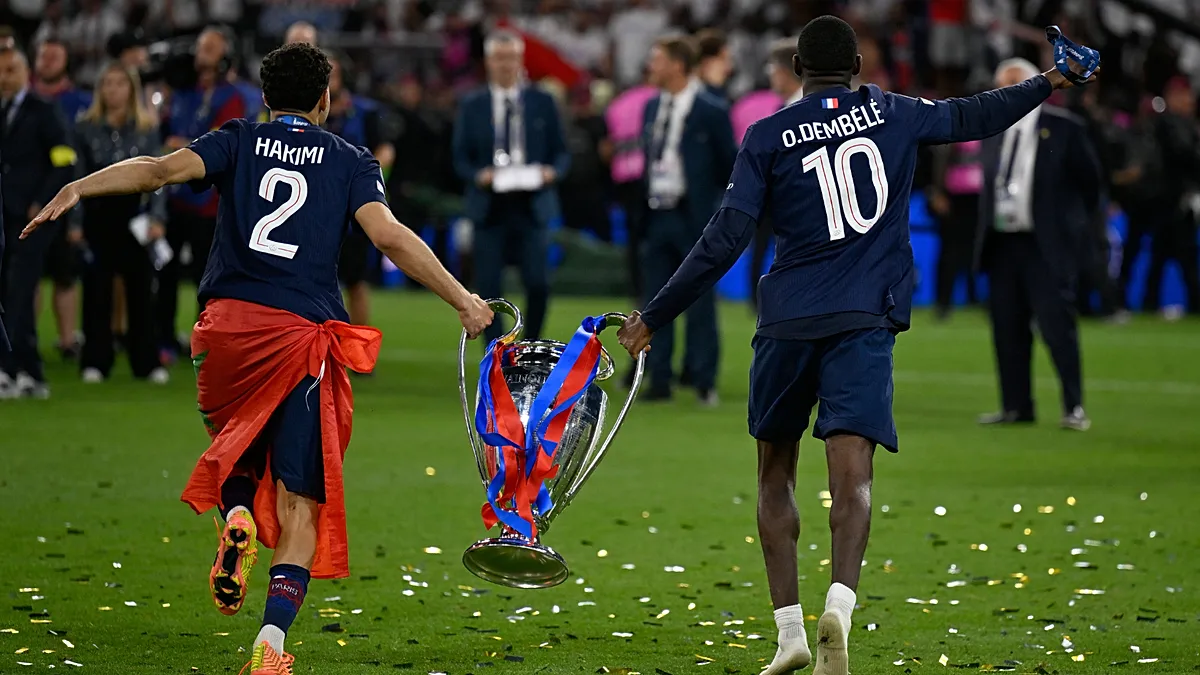
Paris Saint-Germain Wins the Champions League After Penalty Shootout Victory Against Arsenal
The Final Match
Poinews.com – Paris Saint-Germain claimed their second consecutive Champions League title in a tightly contested encounter against Arsenal, who had entered the game as one of Europe’s most formidable teams. The decisive moment came in a penalty shootout at the Puskás Aréna in Budapest, where the French club held their composure to secure victory after a 1–1 draw stretched into extra time. This marked a historic event, as it was the first time Hungary had hosted the tournament’s showpiece final, drawing global attention to the nation’s footballing stage.
Historical Context
The match brought together two giants of European football, with PSG making their third Champions League final appearance and Arsenal reaching the same stage for the second time in their storied history. The French side had previously lost to Bayern Munich in 2020, ending the German team’s reign in a 0–1 final. In contrast, PSG had triumphed in 2025 with a commanding 5–0 win over Inter Milan, showcasing their dominance in the competition. Arsenal, meanwhile, had last contested the final in 2006, falling to FC Barcelona with a 1–2 defeat. Their return to the final after two decades underscored their resilience and ambition on the European stage.
First Half Drama
The game opened with a swift goal from Arsenal, capitalizing on a defensive lapse by PSG. A poorly executed clearance by the Parisians allowed the ball to bounce off Trossard into the path of Kai Havertz, Arsenal’s German forward. Havertz quickly broke down the left wing before striking a powerful shot from just outside the penalty area, sending the ball into Szafonov’s net to give the English team an early lead. PSG struggled to respond, as Arsenal adopted a deep defensive structure to stifle their attacking plays. The French side, known for their fluid combination game, found themselves unable to generate a meaningful chance in the first half. Despite this, PSG’s defenders held firm, and the match remained at 1–1 heading into the break.
Second Half Equalizer
The second half saw a shift in momentum as PSG adjusted their tactics. The breakthrough came when Ousmane Dembélé converted a penalty after Khvicha Kvaratskhelia was fouled in the penalty box. The equalizer brought the score to 1–1, reigniting the French team’s hopes. Arsenal, emboldened by the goal, played more aggressively, but PSG’s attacking prowess proved more potent. In the final minutes of regulation time, Kvaratskhelia attempted a shot from distance, which hit the crossbar and deflected slightly off a defender before sailing wide. The moment highlighted the tension of the match, as neither team could find a decisive goal. With time running out, the game was forced into extra time, setting the stage for a penalty shootout.
Extra Time Stalemate
Extra time brought no resolution, as both teams exhausted their attacking options. The lack of goals in the first and second 15-minute periods of added time underscored the tactical discipline displayed by the players. Arsenal fans, who had filled the Puskás Aréna to capacity, began to express frustration when the referee denied a penalty appeal by Noni Madueke following a challenge by Willian Pacho. Declan Rice, visibly angered by the decision, took his discontent further by earning a yellow card for a reckless tackle. The atmosphere in the stadium shifted as the match entered its final stages. PSG, however, remained composed, with their players demonstrating the poise needed to win such a high-stakes encounter. The tension was palpable, and the anticipation for the penalties grew as the clock ticked down.
Penalty Shootout Details
With the score still at 1–1 after 120 minutes, the shootout began. PSG’s players executed their kicks with precision, while Arsenal faced challenges in maintaining their composure. The final was the eighth time a penalty shootout had decided the Champions League title since the competition rebranded in 1992, a rare but significant occurrence in the tournament’s history. The 2016 final between Real Madrid and Atlético Madrid had also ended in a shootout, with Cristiano Ronaldo converting the decisive kick and celebrating by flexing his muscles after removing his jersey. This year’s match echoed that dramatic finish, as the Parisians once again proved their ability to thrive under pressure. The victory marked a milestone for PSG, who now held the European crown for the second time in three years, while Arsenal’s quest for their first Champions League trophy ended in heartbreak.
A New Era for Hungary
The tournament’s return to Budapest signified a new chapter for Hungary in European football. Hosting the final for the first time, the Puskás Aréna became the backdrop for a thrilling showdown between two elite teams. The event not only highlighted the growing prominence of Hungarian football but also provided a platform for the country’s fans to witness a historic moment.
Throughout the match, the intensity of play and the strategic decisions by both managers were on full display. PSG’s ability to adapt and capitalize on Arsenal’s defensive errors proved crucial, particularly in the second half. Meanwhile, Arsenal’s resilience in the first half and their tactical adjustments in the second half showcased their quality, even as they fell short in the end. The final’s outcome was a testament to the Parisians’ consistency and ability to perform in high-pressure situations, contrasting with Arsenal’s valiant but ultimately unsuccessful campaign.
The referee’s decisions during the match further added to the narrative, with the missed penalty appeal by Noni Madueke and the yellow card to Declan Rice serving as pivotal moments. These decisions fueled the emotional rollercoaster for both teams, with Arsenal’s supporters feeling the sting of near-misses and PSG’s players embracing their role as the tournament’s reigning champions.
As the penalty shootout concluded, the weight of history rested on PSG’s shoulders. The French club had once again demonstrated their dominance, while Arsenal’s journey in the competition highlighted their potential as a European contender. The final in Budapest will be remembered not only for the nail-biting finish but also for the significance it held for the host nation.
Legacy of the Match
This victory cements Paris Saint-Germain’s status as a European powerhouse, with their ability to secure back-to-back titles reflecting their depth and tactical flexibility. For Arsenal, the loss serves as a reminder of the challenges they face in breaking their Champions League hoodoo. The match’s replay of the 2016 final’s format added an extra layer of drama, as both teams displayed the same determination to win in the most decisive manner.
The use of a penalty shootout also highlighted the evolving nature of the Champions League, where high-octane matches often require a tiebreaker to determine the champion. This year’s final exemplified the blend of skill, strategy, and nerves required to lift the trophy. As PSG celebrated their second European crown, the legacy of the match will be etched in the memories of fans and players alike, marking a defining moment in the tournament’s history.
Conclusion
The final between Paris Saint-Germain and Arsenal was a testament to the unpredictability of football at the highest level. Despite Arsenal’s strong domestic campaign, they were unable to translate that form into a European triumph. PSG, on the other hand, showcased their ability to perform consistently under pressure, securing their place in the annals of Champions League history. The match not only delivered an unforgettable conclusion but also underscored the importance of resilience, adaptability, and composure in elite competition.
“The last one was in 2016, when Cristiano Ronaldo converted the decisive kick for Real Madrid and flexed his muscles after removing his jersey.”
As the dust settled, the Puskás Aréna stood as a symbol of the tournament’s expanding reach, with Hungary now proud to host one of Europe’s most prestigious matches. The journey of both teams, from their initial struggles to their final moments of suspense, painted a vivid picture of the challenges and triumphs that define the Champions League.