Glue, glorious glue: Sticking together the Sagrada Familia’s central towers
The Secret Bond: How Adhesive Secured Sagrada Familia's Central Towers Glue glorious glue - Antoni Gaudí once envisioned the Sagrada Familia as a testament to

The Secret Bond: How Adhesive Secured Sagrada Familia’s Central Towers
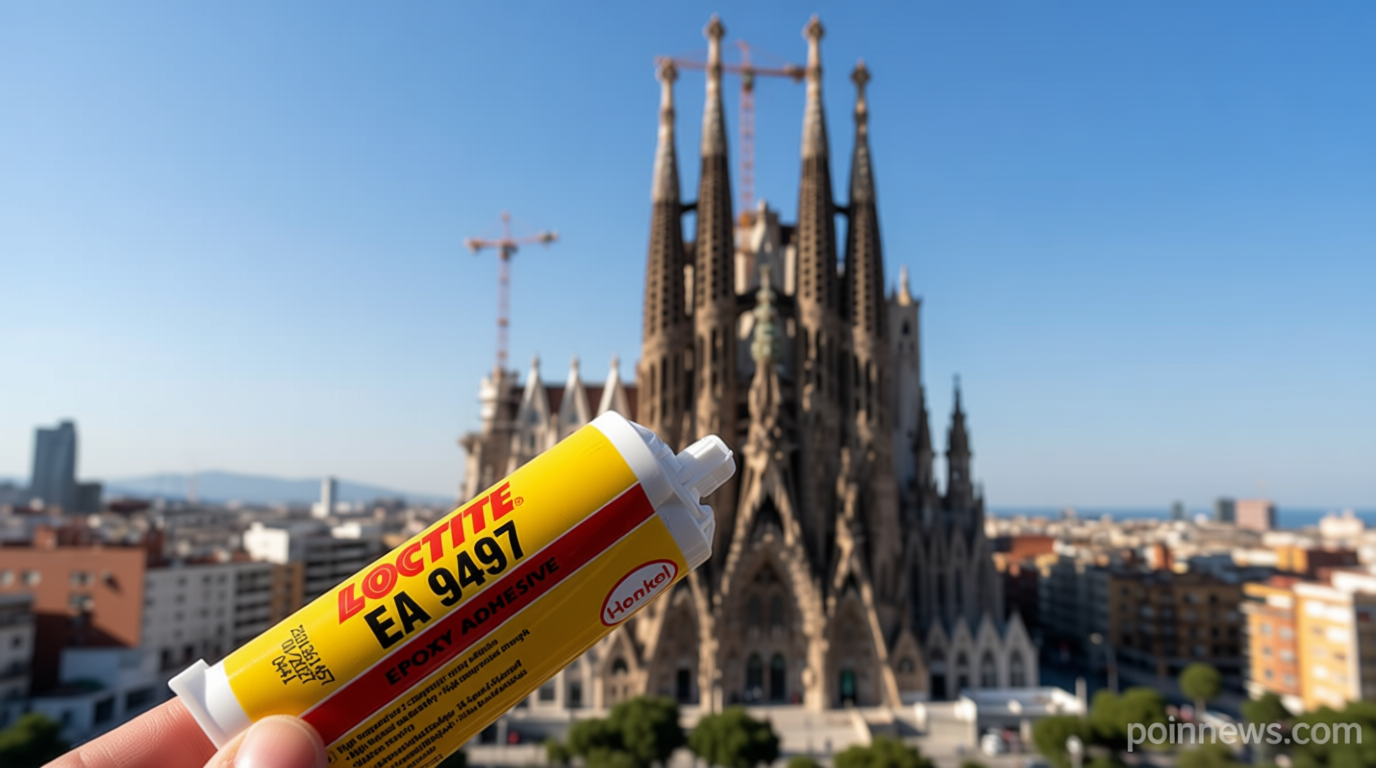
Poinews.com – Antoni Gaudí once envisioned the Sagrada Familia as a testament to time, not creativity. He had a clear vision for the six central towers, but he couldn’t have foreseen the role of an unlikely hero in their completion. A century after his death, the towers have finally risen, marking the centenary of the iconic Spanish architect’s passing. Yet, the real marvel behind this achievement is not the towering structures themselves, but the adhesive that binds them together.
The Role of Loctite EA 9497
Henkel’s Loctite EA 9497 has been instrumental in merging stone and steel into a unified structure. The towers were built using a modular system of 826 prestressed stone panels, each linked to metal frameworks. This method required precision, with every panel needing approximately 30 kilograms of adhesive. In total, 24 tonnes were applied, forming a liquid bond that fills gaps and ensures stability before curing over 24 hours.
Engineering Against Challenges
Building such a monumental structure presented significant hurdles. The basilica’s location near the Mediterranean exposes it to relentless salt air, accelerating corrosion risks. Additionally, underground metro lines generate vibrations that could compromise the integrity of the design. These factors made the adhesive’s performance critical, as it must withstand loads comparable to 100,000 people per square metre—equal to the strength of a stadium like Camp Nou or the weight of 1,600 African elephants.
Decades of Partnership
The collaboration between Henkel and the Sagrada Familia began more than a decade ago. It involved rigorous testing and adapting the logistics of a unique construction model: a project funded entirely by public donations, with no set deadline or fixed budget. This partnership has ensured that the adhesive meets extraordinary standards, enabling the towers to maintain millimetre-level stability.
A New Height in Architecture
Today, the completed Sagrada Familia stands at 172.5 metres, surpassing Ulm Minster in Germany to claim the title of the world’s tallest religious temple. “This project highlights how innovation and collaboration continue to drive progress,” says Adrián Orbea, president of Henkel Ibérica. His words echo the spirit of Gaudí’s original design, as if the architect himself might have penned them with an extra century of time.
Una publicación compartida de euronews español (@euronewses)