‘The United States scares me,’ former Commission deputy boss Vera Jourová tells Euronews
The United States scares me,' former Commission deputy boss Vera Jourová tells Euronews The United States scares me former - Vera Jourová, a former deputy

The United States scares me,’ former Commission deputy boss Vera Jourová tells Euronews
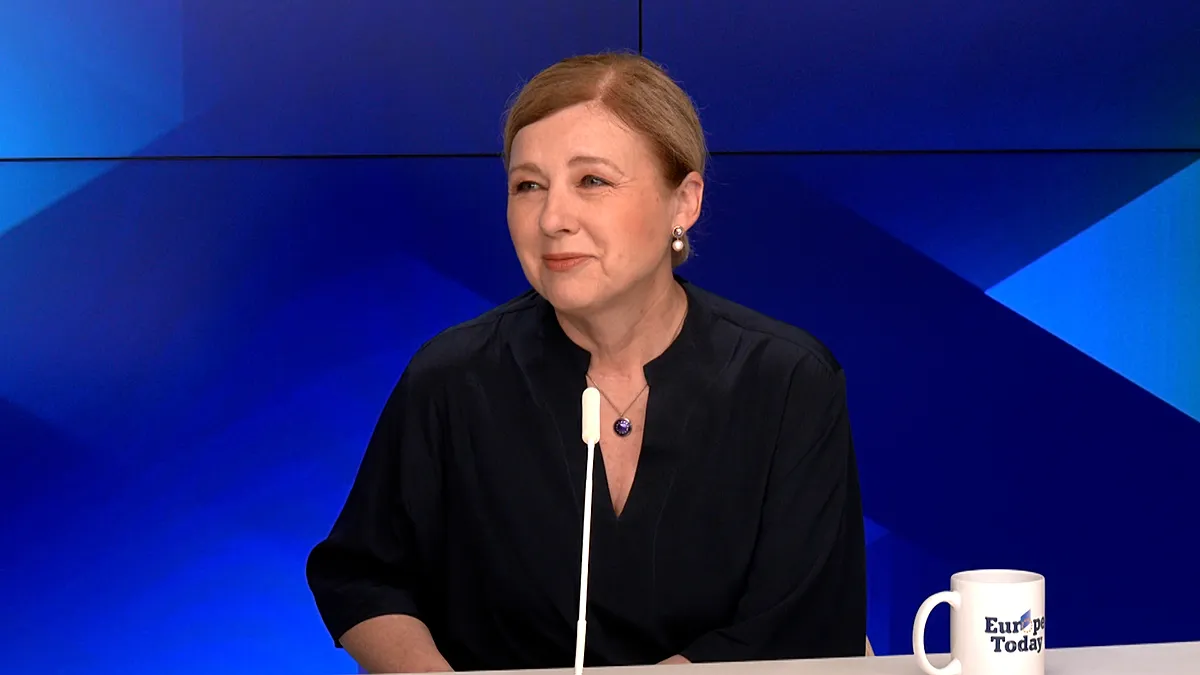
Poinews.com – Vera Jourová, a former deputy head of the European Commission’s rule of law division, recently shared her concerns with Euronews, highlighting that the current U.S. administration has become a source of greater unease for her than the challenges posed by Russia or China. In a discussion with the Europe Today news programme, she remarked that the United States is now the entity that truly unsettles her in foreign policy. While she acknowledged the geopolitical risks associated with both Russia and China, she pointed out that the U.S. represents a different kind of threat—one that is more insidious and persistent.
In terms of foreign policy, the United States is the entity that truly unsettles me,” Jourová stated. “It’s not just about the immediate challenges; it’s about the long-term implications of their approach.”
Despite her apprehensions about the U.S., Jourová expressed satisfaction with the recent political developments in Hungary. She emphasized that the outcome of the country’s elections marked a significant turning point, as Viktor Orbán’s prolonged rule came to an end. “It’s not only that Viktor Orbán is leaving after years of influence, but also that the democratic system in Hungary has demonstrated resilience,” she said. “This leadership transition in Budapest is a clear sign of progress.”
The new Hungarian government’s agreement with Brussels to unfreeze EU funds has been a crucial step. This deal, which unlocked billions of euros previously withheld due to concerns over corruption and rule-of-law violations, signals a shift in the country’s political landscape. However, Jourová warned that this achievement comes with its own set of challenges. “The new leadership has a multitude of tasks to accomplish within a brief window,” she explained. “The majority of the funds must be allocated, pledged, and utilized by August. This is an extremely tight deadline.”
She argued that the conditions attached to the EU funds were not unexpected. “European citizens have been pushing the Commission to ensure that the money sent to Hungary is safeguarded and not used as rewards for Viktor Orbán’s associates,” Jourová noted. “The reforms were always going to be difficult, but the urgency has only increased.”
Jourová identified several critical areas requiring reform, particularly the restructuring of Hungary’s justice system. She highlighted that strengthening judicial independence and rebalancing powers within the legal framework would be among the most challenging tasks. “The system needs to be reformed so that decisions are made independently and transparently,” she said. “This means addressing the concentration of authority that has been a concern for years.”
Another key reform involves media regulation. Jourová stressed that changes to how media operates in Hungary are essential to ensure a diverse and free press. “The current media landscape has been shaped by policies that prioritize control over pluralism,” she explained. “To restore public trust, there must be a shift toward impartiality and accountability.”
EU Enlargement and the Western Balkans
Turning her attention beyond Hungary, Jourová called for a renewed focus on EU enlargement, especially in the Western Balkans. She highlighted the importance of accelerating accession talks as European Council President António Costa initiates a regional tour to support this process. “Many people in the Western Balkans have grown weary of waiting for 20 years,” she said. “There must be some movement to show that the door is still open.”
I meet many Western Balkan people and they are fed up with being in the waiting room for 20 years,” she observed. “There must be some movement.”
Jourová argued that the EU’s strategic interests increasingly align with expansion. “Over time, I see that more and more we need them to join than they need Europe,” she said. “This is not just about political unity; it’s about economic and security benefits. We are under great pressure from outside, and we must act decisively.”
She urged European leaders to demonstrate the courage to grow politically and geographically. “The Western Balkans offer a unique opportunity to expand our influence and strengthen our alliances,” Jourová added. “If we hesitate, we risk losing momentum and credibility.”
Jourová also addressed the broader implications of the Hungary deal for the EU. “This agreement sets a precedent for how member states can be held accountable,” she said. “It shows that the Commission is willing to take action when necessary, but it also highlights the need for continued vigilance.”
While the immediate goal of unlocking funds has been achieved, Jourová emphasized that the real test lies in how Hungary uses the money. “The funds must be invested in ways that benefit the Hungarian people and support long-term stability,” she said. “If they are misused, the whole effort could be undermined.”
Looking ahead, Jourová believes that the EU must remain committed to its core values even as it expands. “The United States scares me because their policies seem to prioritize short-term gains over long-term principles,” she said. “But in the Western Balkans, we see a chance to reinforce those values through tangible action.”
Jourová’s comments reflect a broader trend of concern within the EU about the trajectory of U.S. foreign policy. “The U.S. has been a key ally, but their recent approach raises questions about their dedication to democratic ideals,” she noted. “This is a challenge that requires careful monitoring.”
As the EU moves forward, Jourová stressed the importance of balancing reform with diplomacy. “We need to ensure that the changes we push for in Hungary are mirrored across the region,” she said. “This will require a coordinated effort and a