AI and energy security drive investment focus at Baku Energy Week 2026
Baku Energy Week 2026 AI and energy security drive investment - Baku Energy Week 2026 has become a pivotal stage for energy stakeholders to address evolving

AI and Energy Security Drive Investment Focus at Baku Energy Week 2026
Poinews.com – Baku Energy Week 2026 has become a pivotal stage for energy stakeholders to address evolving challenges and opportunities in the sector. With geopolitical uncertainties shaping global markets, the event highlighted the increasing reliance on technological innovation and strategic energy policies to secure long-term viability. Two key venues—Caspian Oil & Gas exhibition at the Baku Expo Center and the Baku Energy Forum at the Baku Convention Center—served as hubs for dialogue, showcasing how industry leaders are redefining operations through automation, digital infrastructure, and emissions reduction initiatives.
Key Themes: AI, Automation, and Energy Security
Artificial intelligence (AI) was a dominant topic, underscoring its transformative potential in oil and gas operations. Companies demonstrated advanced systems designed to optimize drilling efficiency, predict equipment failures, and streamline data analysis. These tools are critical in an environment where fluctuating oil prices and supply chain disruptions demand greater operational precision. Concurrently, energy security remained a central concern, with discussions emphasizing the need for diversified energy sources and resilient infrastructure to mitigate risks from geopolitical tensions.
Abid Malik, President for Central Asia at ACWA Power, praised the event as a vital platform for cross-border collaboration. “Baku Energy Week has evolved into a key meeting point for energy professionals, uniting hydrocarbon producers, renewable developers, and infrastructure investors,” he remarked. Malik highlighted the forum’s role in identifying new investment avenues, not only within Azerbaijan but also across Central Asia, the Caucasus, and Eastern Europe. He noted that ACWA Power’s existing $740 million portfolio in the country includes the Khizi-Absheron 240-megawatt wind project, which began generating power earlier this year and has already supplied over 400 million kilowatt hours to the national grid.
“This forum also provides an extremely good opportunity for exploring more investment opportunities, not only in Azerbaijan, but in Central Asia, in Caucasus, and in the Eastern Europe as well.”
In addition to wind energy, Malik showcased ACWA Power’s Caspian Sea desalination project, the first of its kind in Azerbaijan and the broader Caucasus region. The initiative, expected to commence water production in 2028, aims to address regional water scarcity while supporting sustainable energy development. Malik emphasized Azerbaijan’s strategic location, which positions it as a bridge between Central Asian energy resources and European markets. “Azerbaijan is going to play a very important role,” he added. “Because of its geographical location, with all these initiatives they are working along with Central Asia and Europe, they’re going to elevate themselves at a different level on the global map.”
Commercial Agreements and Digital Transformation
At the Baku Expo Center, the emphasis on operational technology was palpable. Exhibitors presented AI-powered drilling systems, predictive analytics platforms, and automated monitoring tools, all aimed at reducing costs and boosting efficiency in upstream activities. These innovations reflect a broader industry shift toward digital optimization, as producers seek to maintain output levels despite volatile pricing conditions. Industry leaders stated that AI’s application in exploration and drilling is transitioning from experimental trials to full-scale implementation, with real-time analytics and automated maintenance systems becoming standard practices.
The forum also spotlighted the growing importance of emissions reduction strategies. With climate pressures intensifying, companies are prioritizing technologies that lower carbon footprints without compromising production. Methane reduction systems, leak-detection technologies, and carbon-management platforms were among the most discussed topics. These solutions are designed to enhance environmental compliance while aligning with financial goals, as investors increasingly demand sustainable practices.
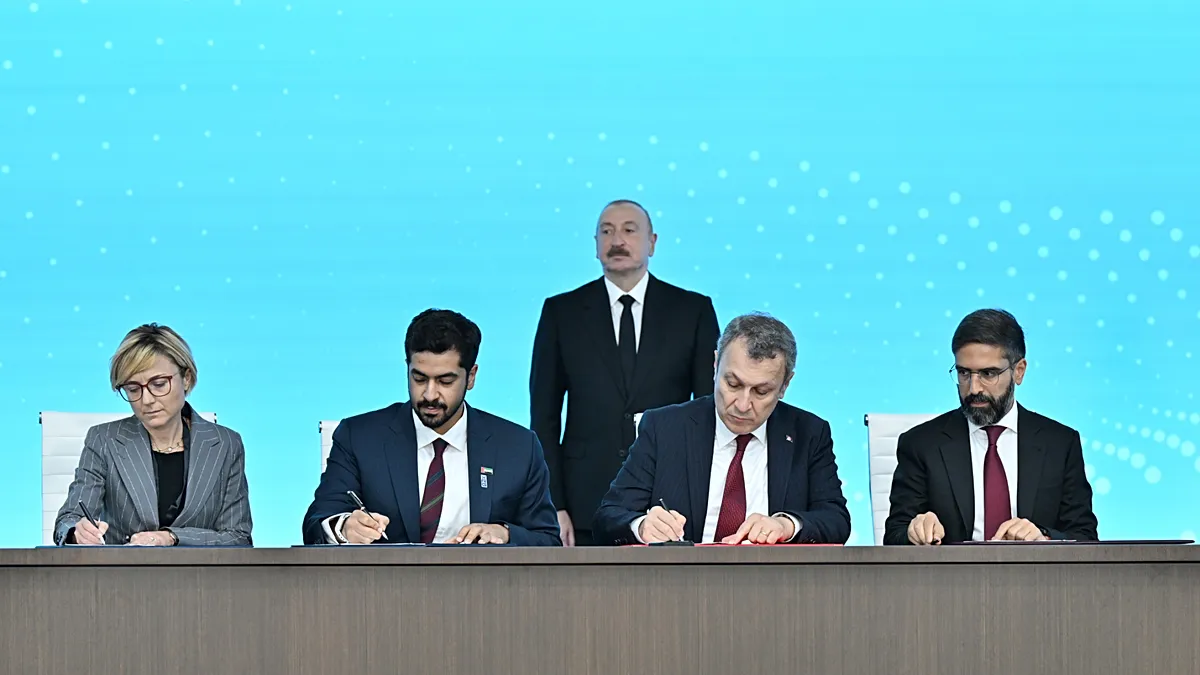
Bilal Khadra, Power and Energy Segment Leader at Borusan CAT, described the event as “one of the leading energy events in the Caspian region,” fostering partnerships between governments, investors, and energy firms. “The event is important because it promotes international energy cooperation, attracts foreign investment, and supports discussions on energy security, oil and gas development, and renewable energy,” he said. Khadra pointed to significant commercial agreements, including a 15-year natural gas pact involving Turkey’s BOTAŞ, SOCAR, TotalEnergies, and ADNOC. This deal is tied to Azerbaijan’s offshore Absheron field, symbolizing the region’s growing influence in global energy markets.
“The event also reflects Azerbaijan’s strategic position between the energy resources of the Caspian region and European markets, while serving as a platform for discussions on AI, digital infrastructure and cleaner energy investment.”
Shift in Investment Priorities
Industry participants noted that emissions reduction is now framed as both an environmental imperative and a financial strategy. “For many companies attending the event, emissions reduction is no longer being presented solely as an environmental obligation, but increasingly as a financial and regulatory necessity tied to long-term competitiveness and investor confidence,” said a representative. This mindset shift is driving greater emphasis on operational transparency and sustainability metrics, as international financiers and shareholders scrutinize energy firms more closely.
Azerbaijan’s energy landscape is undergoing a renaissance, fueled by its ability to balance traditional hydrocarbon production with emerging renewable ventures. The country’s focus on green energy corridors—linking Central Asia and Europe—has positioned it as a key player in the transition toward cleaner power. Experts argue that the nation’s dual role as a hydrocarbon hub and a renewable energy pioneer will shape its economic future. “The integration of AI and digital infrastructure is not just about efficiency; it’s about creating a sustainable framework for energy development,” noted one attendee.
As the energy sector navigates the intersection of technology and geopolitics, Baku Energy Week 2026 has reinforced Azerbaijan’s role as a regional leader. The discussions underscored the necessity of innovation in maintaining energy security and attracting investment. With digital tools and green technologies driving efficiency and sustainability, the event set the stage for a new era of energy production and distribution. The long-term implications for Azerbaijan’s economy and its position in global energy markets are clear: the country is poised to leverage its strategic location and technological advancements to secure a competitive edge in an increasingly complex industry.
Industry stakeholders also emphasized the importance of fostering international collaboration. “These partnerships are essential for overcoming regional challenges and capitalizing on shared opportunities,” said a participant. The forum’s success in uniting diverse voices—from traditional oil producers to renewable energy startups—has created a dynamic environment for innovation and growth. With AI and digital solutions reshaping operations, and emissions reduction becoming a core investment priority, the energy sector is on the cusp of a significant transformation. Azerbaijan’s commitment to these initiatives ensures its continued relevance in shaping the future of global energy supply chains.