Portugal general strike: What you need to know
Portugal General Strike: Key Details and Implications Portugal general strike - A nationwide labor strike is set to commence on Wednesday, June 3, 2026

Portugal General Strike: Key Details and Implications
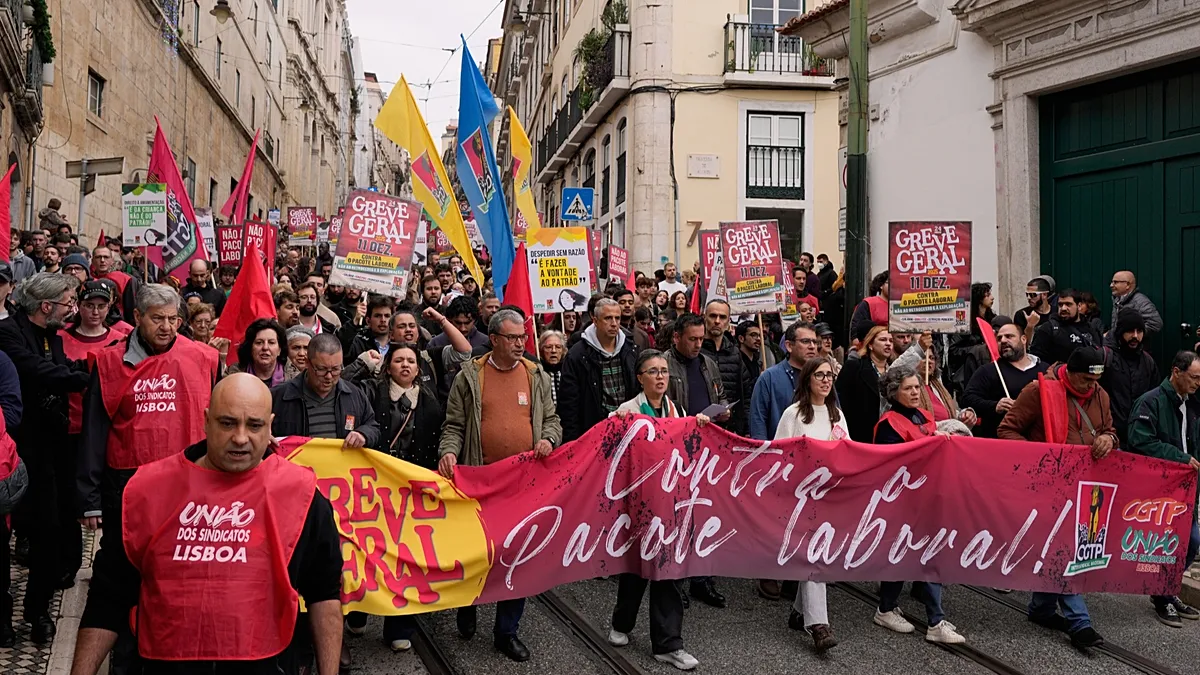
Poinews.com – A nationwide labor strike is set to commence on Wednesday, June 3, 2026, affecting critical sectors such as transportation, education, healthcare, and public services across Portugal. Organized by the General Confederation of Portuguese Workers (CGTP), the walkout was declared on May 1, 2026, coinciding with Labour Day. This strike follows a similar action in mid-December 2025, marking the first large-scale protest of its kind in 12 years. The unions anticipate widespread disruption, with multiple industries mobilizing their members to challenge the government’s proposed labor reforms.
Protest Against “Trabalho XXI” Labour Reform
The strike is a direct response to the “Trabalho XXI” legislation, a sweeping overhaul of Portugal’s labor code introduced by the PSD/CDS-PP coalition government. The reform, which includes over 100 amendments, seeks to modernize employment regulations to enhance productivity, increase wages, and align the labor market with digital economy challenges. However, the CGTP and other union groups have condemned the changes, arguing they undermine core worker protections.
“Trabalho XXI represents an ‘assault on workers’ rights’ and an ‘affront to the Constitution of the Portuguese Republic,’” stated the CGTP, highlighting concerns over the bill’s potential to erode labor safeguards.
Despite negotiations within the social concertation framework, the government led by Prime Minister Luís Montenegro failed to reach a consensus with social partners, prompting the strike as a final attempt to influence the legislation’s passage. The reform was approved by the Council of Ministers and submitted to the Assembly of the Republic, though no official date has been set for its general debate or vote, according to reports from *Jornal Económico*.
Transport Sector Disruptions
The transport industry is expected to face severe challenges during the strike. Lisbon Metro, for instance, has confirmed that its services will be suspended from 23:00 on June 2, 2026, and throughout June 3. Normal operations are anticipated to resume at 06:30 on June 4, according to a press release on its website. Meanwhile, the Porto Metro warns of limited services on June 3, with the Yellow Line operating between Santo Ovídio and Hospital de S. João, and the Blue Line running between Senhora da Hora and Estádio do Dragão. The other lines—Blue, Green, Red, Violet, and Orange—will be out of service entirely, with metro operations ending earlier on Tuesday evening.
Additional disruptions are expected in rail services. Comboios de Portugal (CP) has announced that train services will experience delays and possible ripple effects on the days before and after the strike. To compensate affected passengers, CP will offer full refunds or free rebooking for tickets on the same route and class. Minimum service levels have also been established for rail traffic, covering workers at Infraestruturas de Portugal (IP), CP, and regional services such as Alfa Pendular, Intercidades, and suburban trains in Coimbra, Porto, and Lisbon.
Impact on Air Travel
The strike extends to the aviation sector, with the Aviation and Airport Workers’ Union (SITAVA) and the National Union of Civil Aviation Flight Personnel (SNPVAC) joining the CGTP. These unions have signaled potential disruptions to air travel, though the extent remains uncertain. TAP, Portugal’s flagship airline, has already outlined its contingency plan, stating that only 79 flights will operate on the day of the strike, while the rest of the schedule will be canceled. The airline is contacting passengers with canceled bookings to explore alternative travel options, aiming to minimize the impact on travelers.
Healthcare and Education Services
The health sector is among the hardest-hit, with the Portuguese Nurses’ Union (SEP) mobilizing its members across public, private, and social healthcare institutions. The strike, set to run from midnight to midnight, will disrupt all shifts, including night, morning, and afternoon services. This could lead to prolonged delays in patient care and reduced availability of medical staff. In education, school closures and reduced public transport options are likely, compounding the strain on students and parents.
Public services such as postal delivery, waste management, and emergency response may also face operational challenges. The CGTP emphasizes that the strike is not just a protest against labor reforms but a broader movement to safeguard workers’ rights and hold the government accountable for its policies.
Historical Context and Union Solidarity
This strike is the latest in a series of labor actions aimed at challenging the government’s agenda. The previous walkout in December 2025, organized by the CGTP and UGT (General Union of Workers), saw significant participation across multiple sectors, demonstrating the unions’ ability to mobilize support. The current strike is anticipated to follow a similar pattern, with industries such as transport, education, and healthcare leading the way. The FECTRANS Federation, which represents transport and communications workers, has issued strike notices for June 3, underscoring the cross-sectoral nature of the protest.
Unions argue that the reforms, while framed as modernizing labor laws, disproportionately favor employers. They contend that the changes weaken job security, reduce social protections, and prioritize corporate interests over workers’ welfare. The CGTP’s warning about the “affront to the Constitution” highlights the union’s belief that the legislation threatens fundamental labor rights. Meanwhile, the government maintains that the reform is essential for economic growth and competitiveness, stating it is a “structural revision of labour legislation to boost productivity, improve wages, and adapt the labour market to the challenges of the digital economy.”
Broader Economic and Social Effects
The strike’s impact is expected to ripple through daily life, affecting commuters, students, and healthcare access. In cities like Lisbon, Porto, and Coimbra, the metro shutdowns will disrupt travel patterns, potentially leading to long queues and delays. Similarly, the rail sector’s limited services will challenge freight and passenger logistics, with CP’s refund policy aimed at easing the burden on affected individuals. The airline sector’s reduced flight capacity may also strain international connectivity, particularly for businesses reliant on cross-border travel.
For the government, the strike represents a test of its ability to navigate labor tensions amid economic pressures. With the reform already passed by the Council of Ministers, the CGTP’s action underscores the urgency of the debate. The Assembly of the Republic’s delayed vote on the bill adds to the uncertainty, leaving workers and businesses in limbo as the strike date approaches. The unions’ determination to push for amendments or a rollback of the legislation highlights the deepening divide between labor representatives and the ruling party.
Future Outlook and Recovery Plans
While the immediate effects of the strike are significant, recovery efforts are already underway. Lisbon Metro and Porto Metro have outlined restoration plans, with full network operations expected to resume on June 4. CP, meanwhile, anticipates a return to normal rail services after the strike, with additional support from the minimum service levels set for key routes. However, the extent of the economic damage, particularly in the transport and healthcare sectors, remains a concern for policymakers.
As the strike unfolds, the government faces pressure to address the unions’ grievances. The CGTP and its allies will continue to advocate for stronger worker protections, while the administration defends the reform as a necessary step for Portugal’s economic future. The outcome of this strike could shape the nation’s labor landscape for years to come, reflecting broader debates over balancing economic growth with social equity.