Samsung loses over $100bn in market value despite record AI-driven profit
Samsung loses over 100bn in market value despite record AI-driven profit Samsung loses over 100bn in market - Despite posting a record-breaking profit driven

Samsung loses over 100bn in market value despite record AI-driven profit
Poinews.com – Despite posting a record-breaking profit driven by the rapid growth of AI technology, Samsung experienced a significant drop in its market value, losing over 100bn in just one trading session. The tech giant’s financial performance for the April-June quarter revealed a projected operating profit of 89.4 trillion won, or €51 billion, marking a nearly nineteen-fold increase from the 4.7 trillion won, or €2.7 billion, recorded in the same period last year. This surge in profitability was fueled by surging demand for AI-related infrastructure, particularly in the realm of memory chips used in data centers and high-performance computing systems.
The Profit Surge and AI Market Dynamics
Samsung’s financial success in the AI sector has been bolstered by the global competition to develop cutting-edge AI systems. The demand for high-speed memory chips, such as DRAM and NAND flash, has skyrocketed as companies invest heavily in AI-driven applications, including machine learning models and autonomous systems. However, this booming market has also led to increased pricing pressures, with DRAM prices rising by 44% and NAND flash climbing 53% in the last quarter, according to Citi Research. These price increases have been driven by the need for more storage and processing power in AI projects, which have reshaped the semiconductor industry.
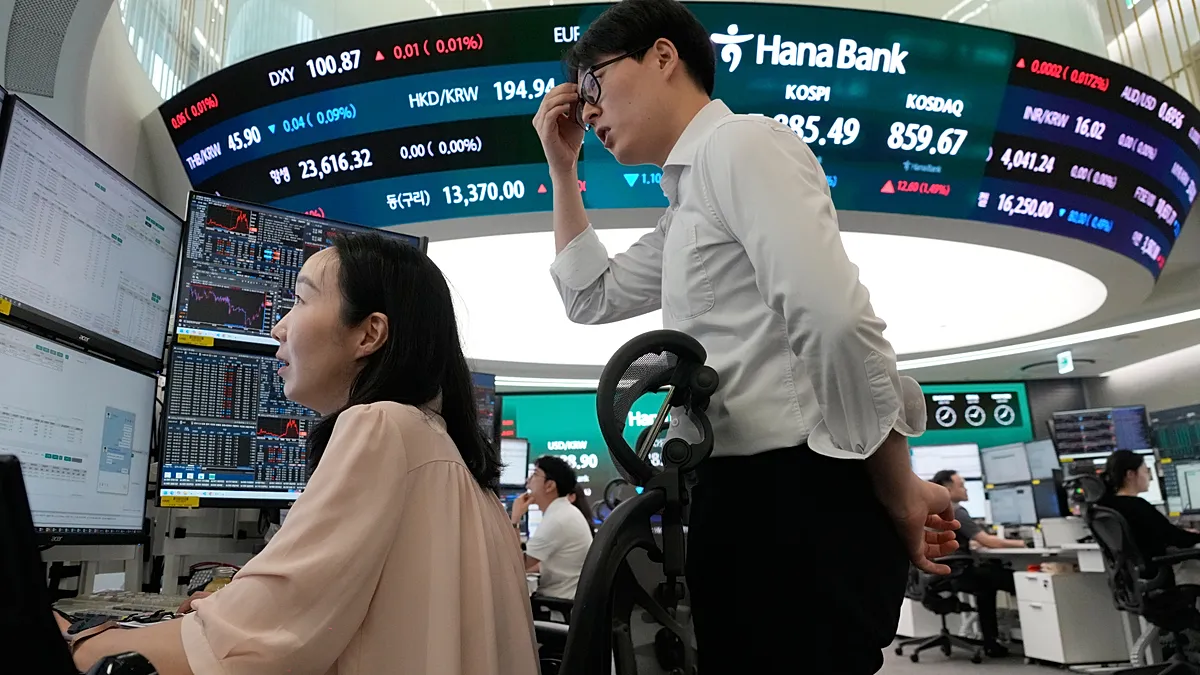
While Samsung’s AI-related revenue has grown exponentially, the company’s broader stock performance has suffered. Investors, anticipating sustained growth in memory chip prices, were initially optimistic about the tech giant’s financial stability. Yet, the market reacted negatively to the earnings report, with Samsung’s shares dropping over 10% in a single day. This sharp decline dragged down rival SK Hynix and the broader Kospi index, signaling a loss of confidence in the AI-driven profit trend.
Market Reactions and Investor Uncertainty
The sell-off in Samsung’s stock highlights the complex relationship between short-term profitability and long-term market expectations. Although the company’s earnings report exceeded analyst forecasts, the market interpreted the results as a sign of temporary gains rather than a sustainable upward trajectory. Analysts suggest that the drop may be attributed to a combination of factors, including a slight revenue shortfall and a more modest than anticipated increase in DRAM prices. This has raised concerns about the future of AI-driven investments, with investors questioning whether the current surge in chip prices is a structural shift or just the peak of a cyclical trend.
“The slight revenue shortfall appears to stem from more modest DRAM price increases than anticipated, which may have unsettled investors who are increasingly optimistic about sustained memory price growth,” noted Jing Jie Yu, an analyst at Morningstar.
Furthermore, the rapid rise in Samsung’s stock value this year—doubling in value—had already priced in a strong performance for the quarter. This made the market more sensitive to any signs of slowing momentum, leading to a sharp correction when the profit figures were announced. The uncertainty surrounding long-term returns from AI investments has also caused a broader sell-off in Asian chip markets, with investors shifting focus to more stable sectors.
Samsung is set to provide its full financial results, segmented by business unit, on 30 July. This detailed breakdown could offer insight into whether the AI-driven profit surge is a one-off phenomenon or indicative of a long-term structural shift in the semiconductor industry. Analysts will closely monitor the report to determine if Samsung can maintain its aggressive investments in AI infrastructure without accumulating significant debt, which could impact its market value in the long run.