EU still can’t prove €43 billion in home renovation funds actually saved energy
Renovation Funds Actually Saved Energy EU still can t prove 43 billion - The EU has yet to demonstrate that its €43 billion investment in home renovation

EU Still Can’t Prove €43 Billion in Home Renovation Funds Actually Saved Energy
Poinews.com – The EU has yet to demonstrate that its €43 billion investment in home renovation programs has effectively led to energy savings. Despite allocating the funds to improve energy efficiency across private homes in the wake of the pandemic, recent findings from the European Court of Auditors (ECA) suggest the initiative may have fallen short of its intended impact. The audit, released on Tuesday, highlights key shortcomings in energy savings tracking, project prioritization, and cost-effectiveness analysis. The focus keyword, “EU still can t prove 43,” remains central to understanding the program’s challenges and the need for improved accountability.
Program Design Prioritizes Simplicity Over Depth
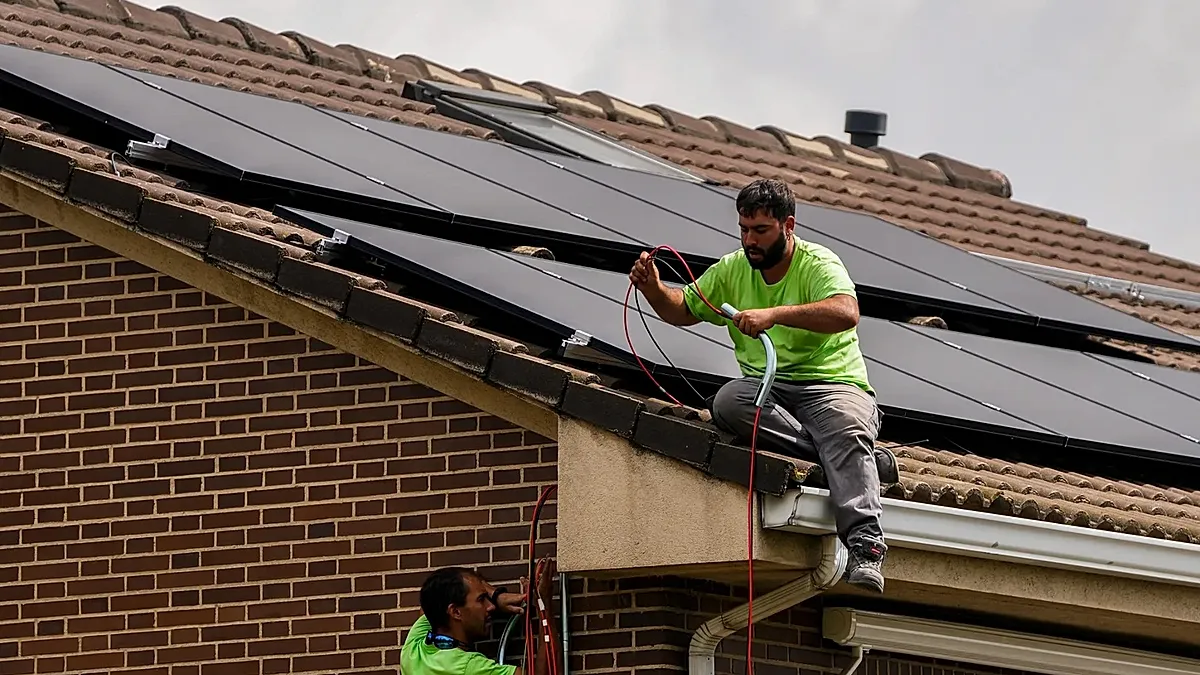
The ECA’s report underscores how the Recovery and Resilience Facility (RRF) was structured to prioritize straightforward projects over more complex, energy-intensive renovations. While this design aimed to streamline implementation and ensure rapid progress, it inadvertently led to a misallocation of resources. Nikolaos Milionis, the ECA member leading the review, pointed out that the ease of approval for simpler initiatives—such as solar panel installations or window replacements—overshadowed more transformative efforts like full insulation or deep retrofits. These larger projects, capable of reducing energy use by over 60%, faced delays and underinvestment, raising concerns about the long-term effectiveness of the program.
“EU renovation funding for private homes should target projects with the greatest potential for cutting energy use. However, we saw all too often that Recovery and Resilience Facility funds went where they were easiest to spend, not where they would make the biggest difference,” said Milionis.
The audit revealed that governments rushed to complete projects before the 2026 deadline, focusing on low-hanging fruit rather than long-term solutions. This led to a situation where energy savings were not maximized, and the program’s benefits were underestimated. The ECA’s findings indicate that the EU still can t prove 43 billion in funds translated to measurable energy reductions, prompting calls for a more strategic approach to future investments.
Measurement Systems Fall Short of Real-World Data
A critical flaw in the program’s framework lies in its reliance on Energy Performance Certificates (EPCs) to estimate energy savings. While EPCs are useful for assessing a building’s potential efficiency, the ECA argues they are not designed to track real-world performance. This discrepancy creates a “performance gap” between theoretical projections and actual outcomes, undermining the accuracy of energy-saving claims. The focus keyword, “EU still can t prove 43,” is further emphasized in this section, as the lack of robust monitoring tools leaves room for overstatement of results.
“Projects were often approved based on eligibility criteria alone, without comparing them to prioritize those with the highest energy savings,” Milionis added.
In countries like Belgium, Italy, Cyprus, and Lithuania, auditors found that estimated energy use frequently diverged from real-world data. In some cases, projected savings exceeded actual savings by hundreds of percent, casting doubt on the program’s efficacy. This inconsistency raises questions about how the EU still can t prove 43 billion in funds were spent wisely, with significant implications for public trust and climate targets.
Cost-Effectiveness Remains Unmeasured
The audit also highlights the EU’s failure to systematically track cost-effectiveness, a key element of performance-based funding. While the RRF is designed to reward projects that deliver tangible energy savings, neither the European Commission nor member states consistently measured how much energy was saved per euro invested. This oversight means the EU still can t prove 43 billion in funds achieved the most impactful results, leaving room for inefficiencies and misdirected spending.
“The EU spent billions on home renovations without tracking how much energy was saved for every euro invested,” the report stated.
Italy’s Superbonus scheme, which reimbursed homeowners up to 110% of renovation costs, exemplifies this issue. While it spurred widespread participation, the ECA found that the program inflated expenses, leading to an estimated €123 billion in overpaid funds. This case illustrates the broader problem of aligning financial incentives with energy efficiency outcomes, a challenge the EU still can t prove 43 billion in funds have fully addressed.
Broader Implications for Climate Goals
The findings suggest that the EU’s current approach may hinder its ability to meet ambitious climate targets. With energy efficiency critical to achieving carbon neutrality by 2050, the lack of accurate tracking and prioritization of high-impact projects could delay progress. The ECA’s report emphasizes that without a clear framework to assess real-world energy savings, the EU risks repeating past mistakes, despite the scale of its investments. This leaves the focus keyword, “EU still can t prove 43,” as a recurring point of concern for policymakers and environmental advocates.
“If the EU still can t prove 43 billion in funds delivered meaningful energy savings, it must rethink its strategy to ensure future investments align with climate goals,” Milionis remarked.
The audit also warns that the current model may not incentivize innovation or deeper retrofits, which are essential for achieving substantial reductions in energy consumption. As the EU continues to allocate resources to home renovation programs, the need for improved measurement tools and a more rigorous prioritization process becomes increasingly urgent. The ECA’s report serves as a reminder that without these changes, the EU still can t prove 43 billion in funding has the transformative impact it was intended to deliver.