The world’s most profitable airlines: Record earnings collide with the Iran war
ord Earnings Amid the Iran War The world s most profitable airlines - Amid the ongoing Iran war, the world’s most profitable airlines have posted record

The World’s Most Profitable Airlines: Record Earnings Amid the Iran War
Poinews.com – Amid the ongoing Iran war, the world’s most profitable airlines have posted record earnings, according to recent financial reports. The top nine carriers collectively generated $25.11 billion in net profits, as reported by Dubai-based One Investments. This surge in profitability highlights the resilience of the aviation sector despite the geopolitical tensions that have disrupted global air travel. The focus keyword, “the world’s most profitable,” underscores the remarkable performance of these airlines, which continue to dominate the industry’s financial landscape. However, the Iran war’s impact on regional airspace and fuel prices remains a critical factor influencing their future prospects.
Emirates: A Benchmark for Profitability
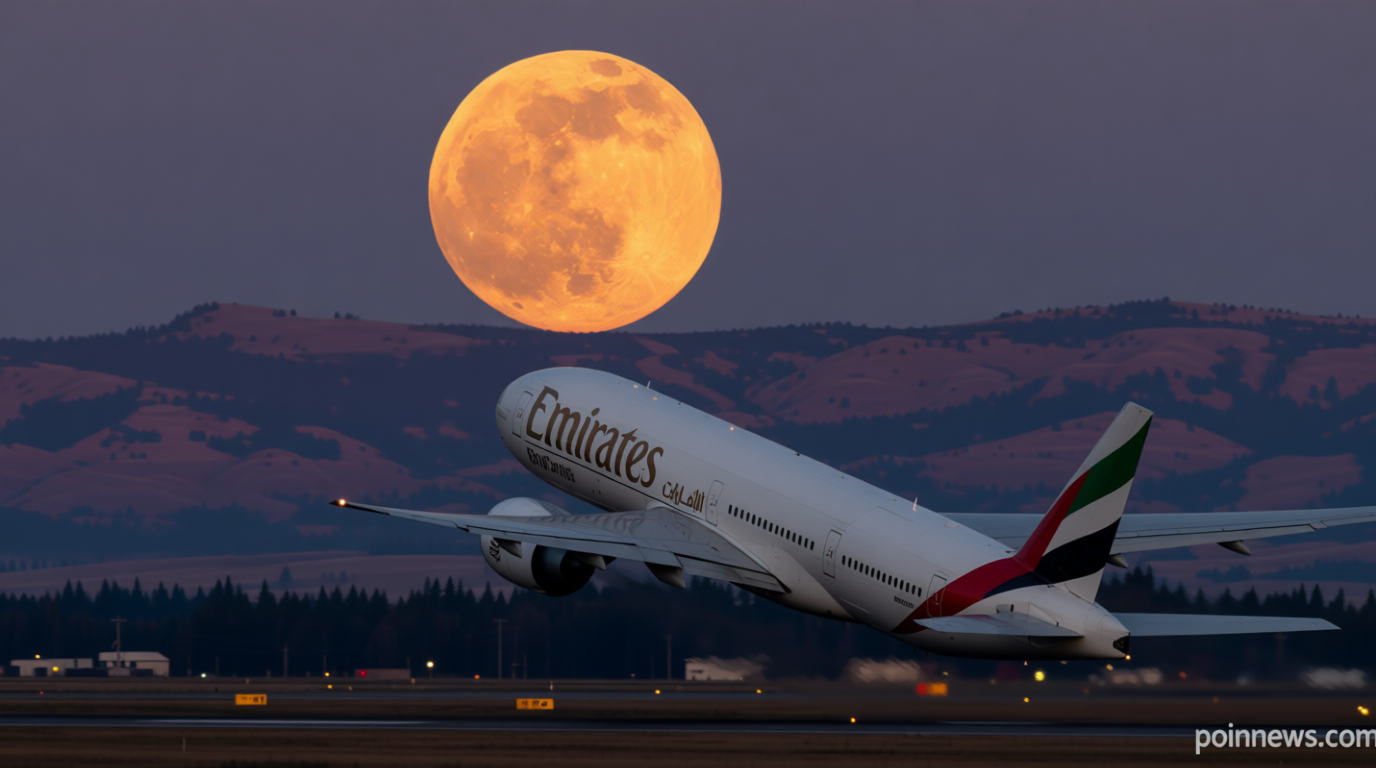
Emirates, the world’s most profitable airline, has once again led the pack with a record $5.4 billion net profit for the first quarter of 2026. This achievement is particularly notable given the challenges posed by the Iran war, which caused temporary disruptions in Gulf airspace in late February. While the conflict introduced volatility, Emirates’ strong financial results demonstrate the airline’s ability to adapt to turbulent conditions. Sheikh Ahmed bin Saeed Al Maktoum, Emirates’ chairman, acknowledged the challenges but emphasized that the airline’s performance remains robust, setting a benchmark for others in the industry.
Delta and United: Steady Growth in the U.S. Market
Delta Airlines and United Airlines have maintained their positions as the second and third most profitable airlines in the U.S. market, with net earnings of $5 billion and $3.4 billion respectively. These figures reflect the airlines’ strategic responses to shifting demand and rising operational costs. Meanwhile, Ryanair, a major European carrier, reported €2.26 billion in profits for its year ending March 2026, driven by a 40% fare increase. Turkish Airlines, however, saw a decline in profit despite generating roughly $2.4 billion in revenue, illustrating the mixed fortunes within the sector. The world’s most profitable airlines are now navigating a delicate balance between growth and the war’s economic repercussions.
Singapore Airlines: A One-time Gain Boosts Profitability
Singapore Airlines, another contender in the rankings, reported a $2.1 billion net profit, with a significant portion attributed to a one-time accounting gain of S$1.1 billion from the Air India-Vistara merger. This non-cash gain highlights how strategic corporate actions can influence financial outcomes, even for the world’s most profitable airlines. However, the airline’s underlying profit stands at approximately $1.3 billion, which still reflects strong operational performance. Notably, the results are reported at the group level, excluding multi-brand parent companies like IAG and Lufthansa Group, which could affect comparisons between airlines.
Global Market Trends and Fuel Costs
The world’s most profitable airlines are not only benefiting from strong passenger demand but also from favorable fuel cost management. Jet fuel prices, which accounted for 25.8% of operating expenses in 2025, have risen past $150 a barrel due to the Iran war’s disruption of the Strait of Hormuz. This increase has created pressure on carriers, with the International Air Transport Association cautioning that global airline profits could halve in 2026. Ryanair, which hedged 80% of its fuel needs at $67 a barrel, has opted to provide no annual guidance, signaling uncertainty in the market. Despite these challenges, the industry’s ability to maintain profitability remains a key indicator of its strength.
“The world’s most profitable airlines have shown remarkable agility in managing both external disruptions and internal efficiencies,” remarked a financial analyst. “However, the Iran war’s ongoing effects may challenge this momentum in the coming months.”
Regional Conflicts and Aviation Resilience
As the Iran war persists, its regional impact on air travel has become increasingly evident. Qatar Airways, which reported a nearly 10% decline in profit for its final quarter of 2026, exemplifies how even the world’s most profitable airlines are vulnerable to localized disruptions. The closure of Qatari airspace during the conflict forced carriers to reroute flights, increasing fuel consumption and operational costs. Despite these headwinds, the airline’s operating profit remains at record highs, showcasing resilience. This trend suggests that while the Iran war introduces short-term challenges, the aviation sector’s long-term profitability is still intact.
Other carriers, such as Emirates and Delta, have leveraged their global networks to mitigate the impact of the war. Emirates’ leadership in the world’s most profitable airlines category is bolstered by its strategic investments in long-haul routes and premium services. Delta, meanwhile, has focused on optimizing its domestic and international operations to maintain stability. The contrast between these airlines and those like Turkish Airlines, which faced a decline in profitability, underscores the importance of adaptability in a volatile market. As the conflict continues, the world’s most profitable airlines will need to balance growth with the risks posed by geopolitical uncertainty.
Looking ahead, the rankings of the world’s most profitable airlines may shift as the Iran war intensifies. The conflict’s effect on fuel prices and airspace access could alter the competitive landscape, particularly for carriers in the Middle East and Europe. However, the sector’s ability to generate record earnings in 2026 suggests a strong foundation for recovery. With ongoing efforts to stabilize supply chains and manage costs, the world’s most profitable airlines are positioned to maintain their dominance despite the challenges. The next edition of the rankings will likely reflect the industry’s ability to withstand and adapt to the evolving geopolitical environment.