Watermarks on the Silk Road: Following Uzbekistan’s rivers, waterfalls and ancient reservoirs
Long before modern infrastructure, the people of Bukhara understood the value of water storage. Situated on the Kyzylkum Desert's edge, this ancient city

Tracing Water Through Uzbekistan’s Historic Landscapes
Poinews.com – Long before modern infrastructure, the people of Bukhara understood the value of water storage. Situated on the Kyzylkum Desert’s edge, this ancient city relied on a network of public reservoirs called hovuzs. These structures provided drinking water, sustained daily life, and created communal spaces where residents could find relief from summer heat beneath tree canopies. Lyabi Hauz stands as one of the most remarkably preserved examples, an architectural ensemble that expanded throughout the sixteenth and seventeenth centuries around a substantial stone-lined reservoir.
The Ugam River: A Mountain Waterway Near Tashkent
Traveling eastward, the Ugam river carves its path through the Western Tian Shan foothills before reaching the Bo’stonliq District. This mountain waterway, positioned just beyond an hour’s journey from Tashkent, draws nourishment from snowmelt and mountain springs. It serves multiple purposes: sustaining nearby communities, supporting agricultural activities, and maintaining local ecosystems. The river has evolved into a favored destination for outdoor enthusiasts seeking recreation.
During warmer seasons, the riverbanks host an array of amenities. Swimming pools, restaurants, picnic areas, and dedicated recreation zones line portions of the waterway. Ravshan Temirov describes the offerings: “Along the Ugam river there is a children’s playground, various pools, special recreational areas where guests can relax, a restaurant, and facilities where people can prepare their own food.”
Nanay’s Hashar-Created Waterfall
Deeper within the mountains lies the village of Nanay, where an irrigation canal—originally constructed to nourish household gardens—now generates a seasonal waterfall. This natural attraction draws visitors throughout summer months. Dilshod Ashurmetov, a local guide, explains the waterfall’s origins: “This waterfall was created long ago through hashar, community work. We have special vehicles and young men assigned to bring visitors to the waterfall and then take them back. There are tapchans and seating platforms where people can relax, eat food and spend their free time.”
The hashar tradition, representing voluntary community labor, continues to thrive across Uzbekistan. For Sabohat Zakirova, a local visitor, the waterfall offers therapeutic benefits beyond its scenic beauty: “My little grandson had a cough. After coming here, his cough went away. We’ve spent fifteen days relaxing here by the waterfall, and we hope to come again next year.”
Jizzakh’s Natural Springs and Qizilsuv Waterfall
Heading southward into the Jizzakh mountains, natural springs emerge from rocky terrain, creating streams and waterfalls that maintain their flow year-round. Jahongir Shukurov, division head at Baxmal State Forestry, notes: “The waterfall you see here is natural. It is formed by springs that gather above and flow down naturally. People living below also use it as drinking water. In winter, this spring water does not freeze.”
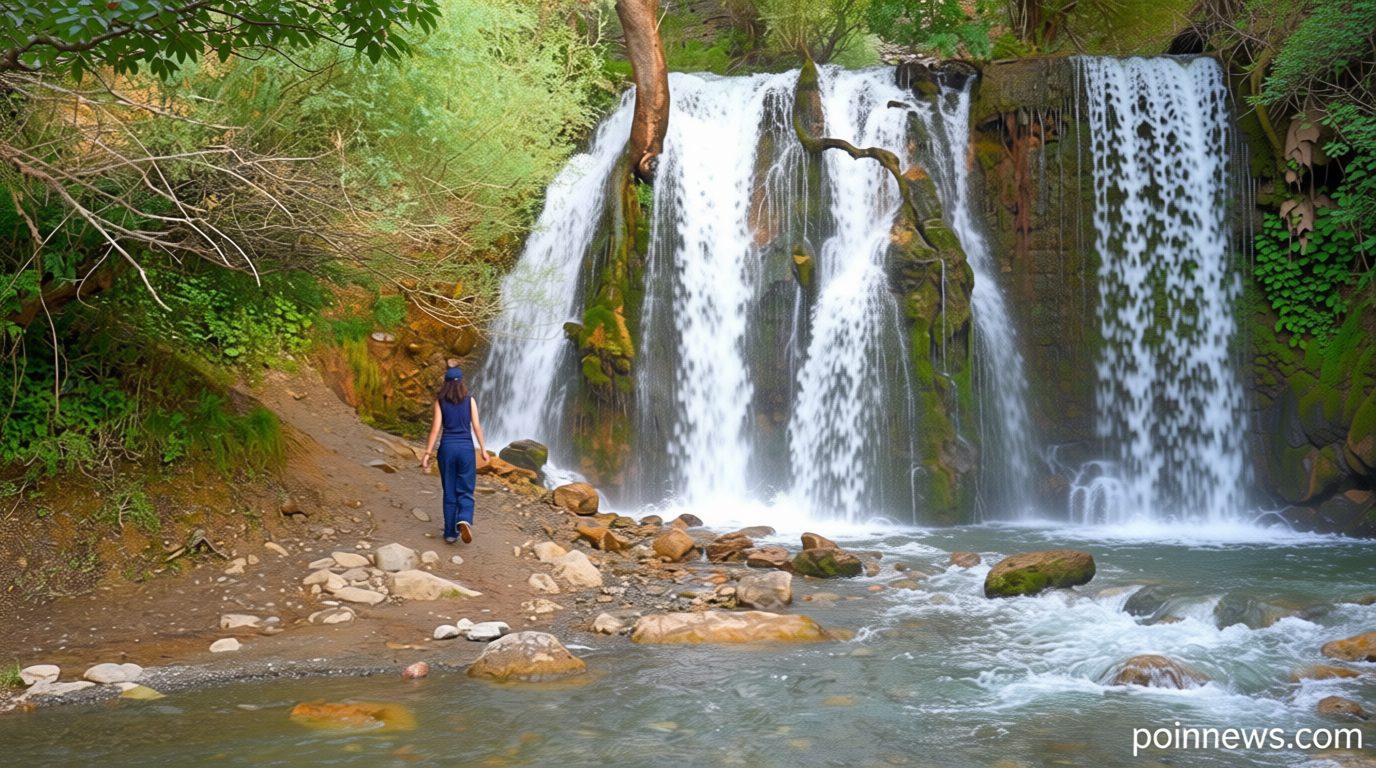
Among these mountain attractions, Qizilsuv waterfall holds particular distinction. Nestled within Bakhmal district’s forests and surrounded by greenery and rocky cliffs, it has gained popularity among hikers and nature enthusiasts seeking cooler summer temperatures. Scientific investigation has revealed elevated iron concentrations in the spring water. Akbarjon Qolberdiyev, chief engineer at Bakhmal State Forestry, shares: “We conducted research and laboratory analysis, which showed that Qizilsuv contains a high level of iron.”
The site welcomes between 2,000 and 3,000 international visitors annually, complemented by 30,000 to 50,000 domestic tourists. Local authorities are exploring infrastructure improvements, including camping zones and additional recreation facilities. Nargiza Oqilova, experiencing the location for the first time, appreciated its qualities: “This is my first time coming to the stream known as Qizilsuv. What I liked most was the cleanliness of the water, its clarity and its softness.”
Water’s Enduring Influence
Uzbekistan’s hydrological network encompasses more than 600 rivers and streams, approximately 300 natural and artificial lakes, and over 50 major reservoirs. These water sources provide drinking water, support agricultural production and hydropower generation, and increasingly draw visitors eager to discover the nation’s varied landscapes. Water has shaped settlement patterns, community development, and the historical routes of travelers across what is now Uzbekistan. From the Ugam river to Jizzakh’s waterfalls and Bukhara’s ancient hovuzs, each location contributes to a broader narrative—one that continues to serve local populations while offering alternative pathways for exploring the country’s rich heritage.