Could the EU kick Spain out of the Schengen area over the Ceuta crisis?
Could the EU kick Spain out of the Schengen area? This question has gained significant traction as approximately 60,000 migrants irregularly entered the

Could the EU kick Spain from Schengen Over Ceuta Migration Surge?
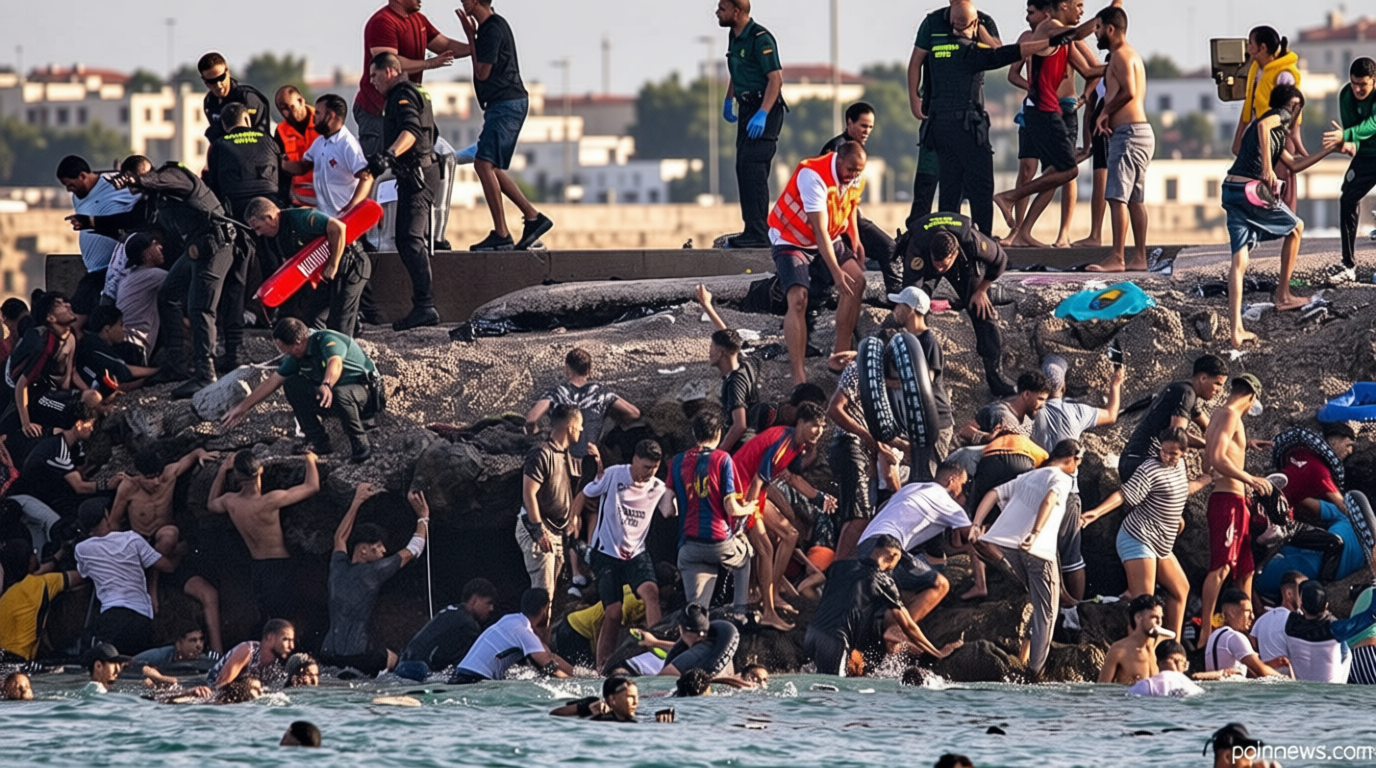
Poinews.com – Could the EU kick Spain out of the Schengen area? This question has gained significant traction as approximately 60,000 migrants irregularly entered the Spanish enclave of Ceuta, triggering concerns across European capitals. Several EU member states are now calling for Spain to be temporarily excluded from the free-movement Schengen zone, a last-resort mechanism reserved for exceptional circumstances. The unprecedented influx represents the largest surge of irregular arrivals ever recorded on EU territory within a single day. European governments remain concerned despite Ceuta’s geographical location on the African continent, which naturally limits migrants’ ability to reach mainland Europe quickly.
European Leaders Respond to the Crisis
Italian Prime Minister Giorgia Meloni emerged as the first major political figure to raise the possibility of Spain’s temporary exclusion. On Thursday, she announced “extraordinary measures” aimed at strengthening Italy’s borders against the migration pressure. Italy subsequently reintroduced both air and maritime border controls with Spain on Friday, following an emergency meeting chaired by Interior Minister Matteo Piantedosi. Finnish Interior Minister Mari Rantanen quickly backed Italy’s request, urging other European nations to adopt similar measures. Danish Prime Minister Mette Frederiksen also suggested that the suspension option warrant serious consideration. The proposal received additional support from prominent right-of-centre political figures throughout Europe.
Under the Schengen Borders Code, the EU possesses the authority to recommend suspending a country’s participation in Schengen as a final measure. This mechanism applies specifically to cases involving “persistent serious deficiencies relating to external border control.” Should such a scenario materialize, the European Commission would need to formally propose the suspension, requiring approval from other EU member states. The affected country would then be advised to reinstate controls at its internal borders with fellow member states. However, officials indicate that this procedure remains unlikely in the immediate future.
“There are regular evaluations and in case there are serious deficiencies detected at the border crossing point, we issue a report which is then discussed with the member state [concerned] first,” a EU official explained, avoiding further speculation about potential outcomes.
The European Commission has also clarified that special provisions govern Spanish enclaves of Ceuta and Melilla within the Schengen framework. These arrangements effectively classify the territories as external zones regarding free movement principles. “There is already border control between Ceuta and Melilla and the rest of the Schengen area,” confirmed another EU official. This existing infrastructure means that any suspension would primarily affect mainland Spain rather than the African territories themselves.
Any EU nation retains the right to temporarily reinstate checks at its internal borders with Spain for renewable periods extending up to six months. Italy implemented such controls for an initial one-month duration following the Ceuta developments. France maintains border controls across all its land boundaries with Spain, though these measures predate the current crisis. French restrictions stem from multiple factors including persistent jihadist threats, increased antisemitic incidents, and escalating violence among migrant populations. French Interior Minister Laurent Nuñez recently announced enhanced border controls specifically responding to the Ceuta situation.
Portugal, the sole other EU country sharing a land border with Spain, has not yet implemented similar measures. In a formal press release, Portuguese authorities emphasized that “the integrity of the Schengen system depends on tight external border controls.” As political discussions continue across Europe, the question of whether Could the EU kick Spain remains central to ongoing debates about migration management and Schengen cooperation.