Germany’s brigade key to deterring Russia, Lithuanian FM tells Euronews
Lithuania's Foreign Minister Kęstutis Budrys has emphasized that his country wishes to avoid extending Russian influence along its frontiers for numerous

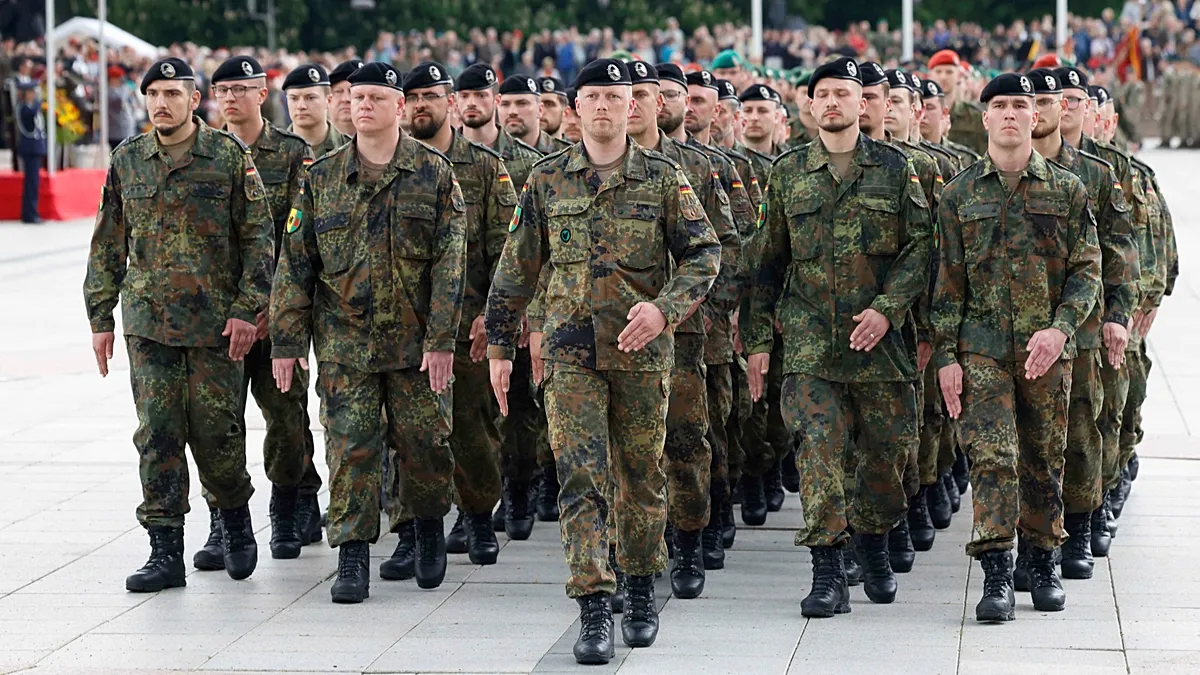
Table of Contents
Lithuania Sees German Brigade as Cornerstone of Regional Security
Poinews.com – Lithuania’s Foreign Minister Kęstutis Budrys has emphasized that his country wishes to avoid extending Russian influence along its frontiers for numerous strategic reasons. These geopolitical worries help explain why the Bundeswehr is establishing its inaugural permanent combat brigade overseas after seven decades of existence. By the close of 2027, approximately five thousand German troops will maintain a permanent presence in Lithuania, situated merely a handful of kilometers from Belarus. This deployment strengthens NATO’s eastern defensive perimeter.
Officially designated as Panzerbrigade 45, the Lithuania Brigade marks the Bundeswehr’s first enduring overseas commitment since the military organization’s creation in 1955. Budrys noted that Belarus occasionally undertakes independent initiatives frequently linked to hybrid operations targeting Lithuania. These include manipulating migration flows, employing meteorological balloons to breach national airspace, and having security services intimidate exiled political opponents.
Belarus as Russia’s Military Backyard
Sviatlana Tsikhanouskaya, the Belarusian exiled opposition leader and president-elect following the 2020 elections, told Euronews that Russia has transformed the nation into a military backyard. She highlighted that Moscow is deploying nuclear weapons and Oreshnik systems while utilizing Belarusian infrastructure and logistics. According to Tsikhanouskaya, President Lukashenka has militarized the economy, with roughly three hundred Belarusian enterprises manufacturing military equipment for Russia.
Budrys described Belarus as a formidable neighbor, stressing that Lithuania has recognized the importance of robust international partnerships. He explained that regional cooperation combined with EU and NATO membership provides crucial support during challenging periods. Such alliances offer not merely political backing but also collective mechanisms that member states can utilize effectively.
From Temporary Rotations to Permanent Presence
Germany’s military footprint in Lithuania is not entirely unprecedented. Since 2017, the Bundeswehr participated in NATO’s Enhanced Forward Presence mission, contributing personnel to a multinational battlegroup aimed at discouraging Russian aggression. However, those deployments remained temporary, with soldiers and equipment cycling through the country regularly.
The situation shifted dramatically following Russia’s comprehensive invasion of Ukraine in 2022. Vilnius requested enhanced security assurances, prompting then-Chancellor Olaf Scholz to commit to a permanent brigade stationing. In June 2022, Scholz addressed the Bundestag, declaring his promise to Lithuania that Germany would lead a strong brigade maintaining permanent presence and receiving immediate reinforcements during crises. He characterized this arrangement as solidarity in action between allies.
Initially, Berlin planned to place only a brigade headquarters in Lithuania while combat units continued rotating from Germany for exercises or operational needs under NATO’s existing framework. According to the German Bundeswehrverband, this approach evolved during the summer of 2023 after Wagner group leader Yevgeny Prigozhin’s unsuccessful rebellion against Russian military authorities. Thousands of Wagner fighters relocated to neighboring Belarus, bringing heavily armed mercenaries to NATO’s eastern frontier.
While German officials maintain that the Wagner mutiny and subsequent fighter relocation were not the exclusive catalysts for permanent deployment, they acknowledged these events provided additional impetus. Shortly afterward, Defence Minister Boris Pistorius and Chief of Defence General Carsten Breuer visited Lithuania to reveal a historic transformation: for the first time since the Bundeswehr’s founding, Germany would permanently station a fully operational combat brigade beyond its borders.
Pistorius stated that autumn that protecting NATO’s eastern flank represents a decisive mission for Germany.
Budrys told Euronews that deterrence must begin at the border, defending every centimeter with precise forces rather than relying on theoretical capabilities. He expressed gratitude for Germany assuming leadership and expanding its Lithuanian presence, viewing it as a model for other nations to emulate. The foreign minister called this arrangement the key to peace and success, clarifying that no one is preparing for war in the region. Instead, they are building stability through collective security measures.
Related Reading
Frequently Asked Questions
What is Germany s brigade key to deterring?
Germany s brigade key to deterring is the main topic of this guide. The article explains the context, practical details, and next steps readers should understand.
Why does Germany s brigade key to deterring matter?
Germany s brigade key to deterring matters because readers are looking for a useful answer, not just a short summary. Good content should match search intent and help them decide what to do next.